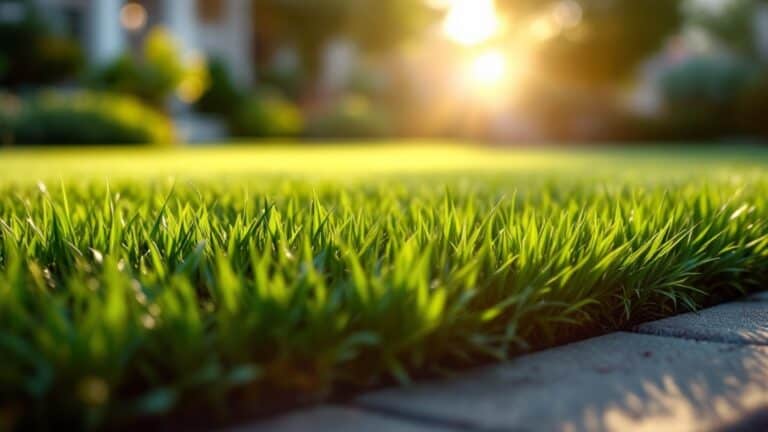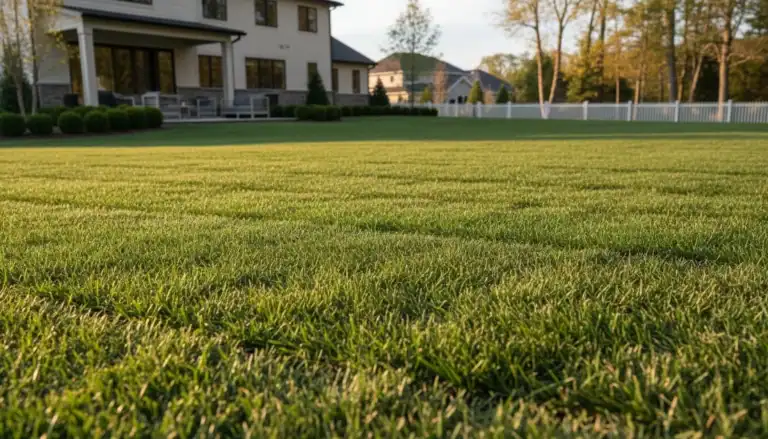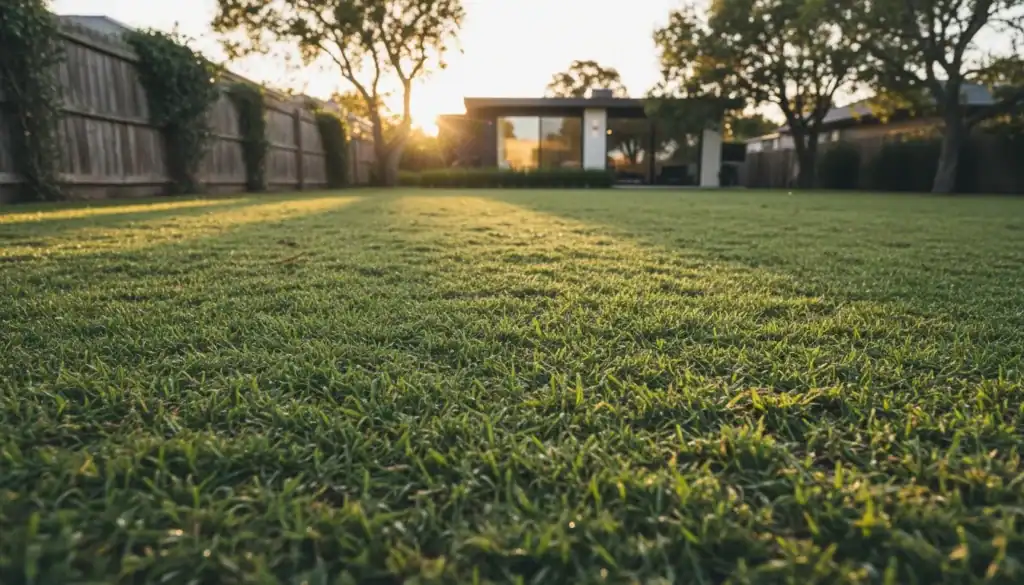
Kikuyu grass is an aggressive, bright green warm-season grass with distinctive pointed leaf tips, coarse texture, and fast-spreading runners. Look for its medium-width blades (4-8mm), sharp leaf points, prominent white midrib, and vigorous creeping growth that forms dense mats. The grass produces distinctive white pollen sacs on thin stalks during spring and summer.
Key Takeaways
- Leaf tips are sharply pointed (not rounded like Buffalo grass)
- Blade width ranges from 4-8mm with a prominent white midrib
- Produces white pollen sacs on 6-12 inch stalks during growing season
- Spreads aggressively via runners that can extend 3-6 feet annually
- Grows best in full sun and struggles in shade (less than 4 hours daily sun)
What are the key visual features of Kikuyu grass?
Kikuyu grass has several distinctive visual markers that make identification straightforward once you know what to look for. The most recognizable feature is the sharp, pointed leaf tip that comes to a fine point, completely different from Buffalo grass’s rounded, boat-shaped tips. The blades are medium-width at 4-8mm, with a coarse texture you can actually feel when running your hand across the lawn.
The color stays consistently bright to medium green, even during stress periods when other grasses might fade. Each blade features a prominent white or light-colored midrib running down the center, creating a striped appearance when viewed up close. The leaf surface has a slightly hairy texture, particularly on the underside.
From our experience testing grass identification, the leaf tip shape is the fastest way to distinguish Kikuyu from similar grasses. Hold a blade up to the light, Kikuyu’s point is needle-sharp, while Buffalo grass tips are blunt and rounded.

How does Kikuyu grass spread and grow?
Here’s where Kikuyu gets its reputation as a lawn bully. It spreads through aggressive above-ground runners called stolons, which can extend 3-6 feet in a single growing season. These runners are thick, pale green to white, and clearly visible on the soil surface. At each node along the runner, new shoots develop roots and establish independent plants.
The growth pattern creates a distinctive mat-like appearance with runners radiating outward from central clumps. Unlike grasses that spread primarily by underground rhizomes, Kikuyu’s surface runners make its invasive nature obvious. You’ll often see long trails of grass extending into garden beds, driveways, and neighboring properties.
During peak growing season (spring through early fall), established Kikuyu can grow 2-4 inches per week in optimal conditions. This rapid vertical growth, combined with horizontal spreading, creates the thick, dense lawn coverage Kikuyu is known for, and why it drives so many homeowners crazy.
What are Kikuyu’s distinctive seed heads and flowers?
Kikuyu produces some of the most recognizable seed heads in the grass world. During spring and summer, thin white to pale yellow stalks emerge 6-12 inches above the leaf canopy, each topped with small, finger-like seed heads that look like tiny white brushes or pollen sacs.
These seed heads appear in clusters of 2-7 fingers, each about 1-3 inches long. The timing varies by climate zone, but typically occurs from late spring through mid-summer in warm regions. The seed heads are particularly noticeable because they contrast sharply with the bright green foliage below.
Honestly, the presence of these distinctive white seed heads is often the first clue homeowners have that their grass is Kikuyu, especially when they appear suddenly and abundantly across the lawn.

How can you distinguish Kikuyu from similar grasses?
| Feature | Kikuyu Grass | Buffalo Grass | Bermuda Grass |
|---|---|---|---|
| Leaf Tip Shape | Sharp, pointed | Rounded, boat-shaped | Pointed but finer |
| Blade Width | 4-8mm (medium) | 8-15mm (wide) | 2-4mm (fine) |
| Texture | Coarse, slightly hairy | Soft, smooth | Fine, dense |
| Color | Bright to medium green | Dark blue-green | Dark green |
| Spread Pattern | Thick surface runners | Underground rhizomes | Both runners and rhizomes |
| Shade Tolerance | Poor (needs 6+ hours sun) | Moderate (4-6 hours) | Poor (needs full sun) |
The easiest distinguishing factor is the leaf tip, Kikuyu’s sharp points versus Buffalo’s rounded ends. Additionally, Kikuyu’s runners are much more visible and aggressive than Buffalo’s underground spreading system.
Where does Kikuyu grass typically grow?
Kikuyu thrives in full sun locations with at least 6 hours of direct sunlight daily. You’ll find it dominating open lawns, sports fields, and any sunny area with regular irrigation. The grass struggles significantly in shade, becoming thin and weak under trees or beside buildings.
This grass performs best in warm, humid climates and is particularly common in coastal areas, subtropical regions, and Mediterranean climates. In the United States, Kikuyu is most prevalent in California, Hawaii, and parts of the Southeast. It’s also widespread in Australia, New Zealand, and South Africa.
Get a Free Personalised Lawn Plan
Answer 3 quick questions about your lawn and we'll build a custom care plan — tailored to your grass type, climate, and biggest challenges.
Build My Lawn Plan →Kikuyu shows excellent drought tolerance once established but requires consistent moisture during establishment. It’s often found in areas with clay soils, as it handles heavy, compacted conditions better than many other warm-season grasses.

What growing conditions indicate Kikuyu grass presence?
Several environmental clues can help confirm Kikuyu identification. The grass maintains its bright green color even during mild drought conditions when other grasses begin to brown. It continues active growth at temperatures between 65-85°F, going dormant only when temperatures consistently drop below 50°F.
Kikuyu responds dramatically to fertilization and irrigation, almost embarrassingly so. We’ve seen it become the dominant grass in mixed lawns within one season after homeowners start fertilizing. If you notice one area of your lawn significantly outgrowing and crowding out other grasses after fertilizing, it’s likely Kikuyu.
The grass also shows distinctive seasonal behavior, rapid spring emergence, aggressive summer growth, and gradual fall dormancy. In mild winter areas, Kikuyu may remain semi-active while other warm-season grasses go completely dormant.
How can you confirm Kikuyu grass identification?
For definitive identification, examine multiple characteristics together rather than relying on a single feature. Start with the leaf tip test, pluck several blades from different areas and check that all have sharp, pointed ends. Measure blade width with a ruler; consistent 4-8mm width across the lawn indicates Kikuyu.
Look for the spreading pattern by following visible runners from the main lawn area. Kikuyu runners are substantial, clearly visible, and extend well beyond the intended lawn boundaries. Check for the characteristic white midrib on each blade, this should be prominent and consistent.
Finally, observe growth behavior over 2-3 weeks during growing season. Kikuyu’s rapid growth and aggressive spreading become obvious quickly, especially after watering or rain. In our testing, growth rate is often the most telling identifier for uncertain cases.

Frequently Asked Questions
Is Kikuyu grass invasive?
Absolutely. Kikuyu grass is considered invasive in many regions due to its aggressive spreading via runners. It can quickly overtake other grass types and spread into garden beds, natural areas, and neighboring properties. Many municipalities classify it as a noxious weed requiring control measures.
Can Kikuyu grass survive in shade?
No, Kikuyu grass performs poorly in shade and requires at least 6 hours of direct sunlight daily. In shaded areas, it becomes thin, weak, and eventually dies out. This sun requirement is one way to naturally limit its spread under trees or beside structures.
How fast does Kikuyu grass spread?
Kikuyu grass runners can extend 3-6 feet per growing season under optimal conditions. During peak growth periods, you may notice new runner growth of 6-12 inches per week. This rapid spreading makes containment challenging once established.
What time of year is easiest to identify Kikuyu grass?
Late spring through summer is ideal for Kikuyu identification when the grass is actively growing and producing its distinctive white seed heads. The contrast between rapid Kikuyu growth and slower cool-season grasses is most obvious during this period.
Does Kikuyu grass feel different from other grasses?
Yes, Kikuyu has a noticeably coarse texture compared to fine grasses like Bermuda, and feels slightly hairy or rough when touched. The blade thickness and stiff structure make it feel substantial underfoot, quite different from soft grasses like Buffalo.