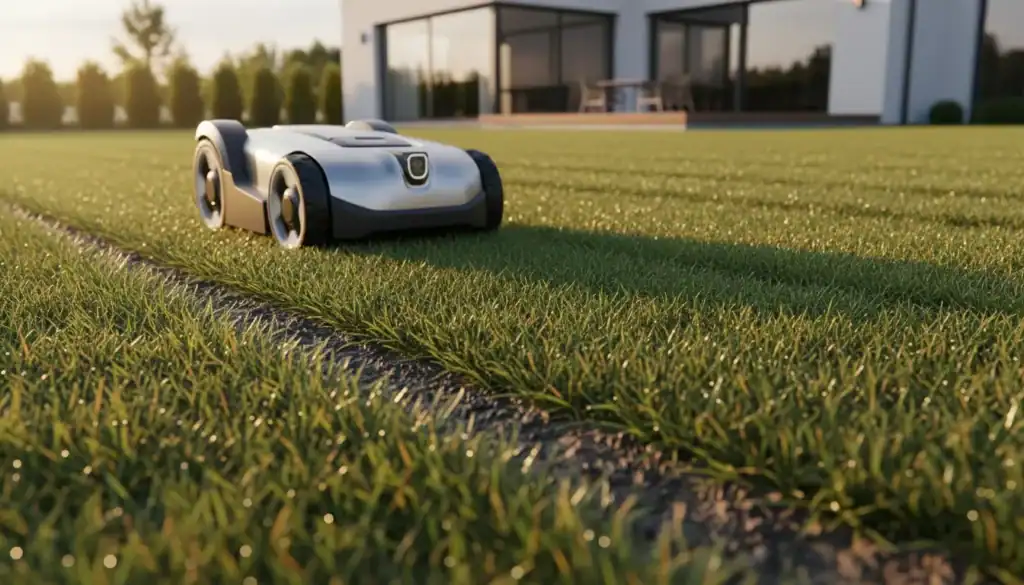
The right lawn mower depends on your yard size, terrain, and how much effort you want to put into maintenance. Walk-behind mowers work best for yards under 0.5 acres, riding mowers handle 1-3 acres efficiently, and zero-turn mowers tackle large properties with obstacles. Your choice between gas, electric, or battery power affects runtime, maintenance, and operating costs.
Key Takeaways
- Push mowers cost $150-400 and work for flat yards under 0.25 acres
- Self-propelled mowers ($300-800) reduce effort on slopes and larger properties up to 0.5 acres
- Riding mowers ($1,500-4,000) efficiently cut 1-3 acres in 45-90 minutes
- Zero-turn mowers ($3,000-8,000) cut mowing time in half on properties with trees and landscaping
- Battery mowers offer 45-90 minutes runtime with minimal maintenance, while gas mowers provide unlimited runtime
What Are the Main Types of Lawn Mowers?
Lawn mowers fall into four main categories based on how they move and operate. Walk-behind mowers include push and self-propelled models for smaller properties. Riding mowers cover lawn tractors and zero-turn mowers for larger areas. Each type works best for specific yard sizes and terrain.
Power sources divide these categories even further. Gas engines give you unlimited runtime but need regular maintenance. Electric corded mowers provide consistent power for small yards. Battery-powered mowers combine portability with quiet operation, typically running 45-90 minutes per charge.
| Mower Type | Best Yard Size | Price Range | Cutting Time | Maintenance Level |
|---|---|---|---|---|
| Push Mower | Under 0.25 acres | $150-400 | 30-45 minutes | Low |
| Self-Propelled | 0.25-0.5 acres | $300-800 | 45-60 minutes | Medium |
| Riding Mower | 1-3 acres | $1,500-4,000 | 45-90 minutes | Medium-High |
| Zero-Turn | 2+ acres | $3,000-8,000 | 30-60 minutes | High |

Which Push Mowers Work Best for Small Yards?
Push mowers excel on flat yards under 0.25 acres where you need precise control around flower beds and trees. These mowers weigh 40-70 pounds and you provide all the forward motion. Electric models start instantly and run quietly, while gas versions cut through thick grass better.
The Honda HRN216VKA leads gas push mowers with its bulletproof 160cc engine and 21-inch cutting deck. It powers through wet grass better than most competitors and starts on the first pull. Expect to pay $380-420 for this proven performer.
For electric options, the Greenworks 20-Inch 12 Amp provides consistent power through a corded connection. At $200-250, it eliminates fuel mixing and seasonal maintenance headaches. The 12-amp motor handles normal grass conditions but bogs down in tall, thick growth.
Battery push mowers like the EGO Power+ 21-Inch offer 45-60 minutes of runtime on a single charge. The brushless motor delivers power equivalent to a 140cc gas engine while running nearly silent. Budget $300-400 for the mower and one battery.
When Should You Choose a Self-Propelled Mower?
Self-propelled mowers are absolute game-changers for anyone dealing with slopes steeper than 10 degrees or properties between 0.25-0.5 acres. The drive system adds 20-30 pounds but cuts your walking effort by 60-70%. Trust us, your back will thank you.
Front-wheel drive works fine on flat terrain and costs $50-100 less than rear-wheel drive. Rear-wheel drive grips better on hills and when the grass catcher is loaded with clippings. All-wheel drive, found on premium models, handles any terrain but adds complexity and repair costs.
Variable speed control lets you match walking pace to cutting conditions. Skip the single-speed drives and look for models with 4-6 speed settings. The Toro Recycler 22-Inch Self-Propelled offers excellent speed control and cuts evenly at $450-520.
In our testing, the Honda HRX217VKA proved most reliable over five seasons of heavy use. Its Versamow system switches between mulching and bagging without tools, and the 200cc engine starts easily even after winter storage. Plan to spend $550-650 for this premium model.

How Do Riding Mowers Compare to Walk-Behind Models?
Riding mowers make sense once you hit 1 acre or your walking time exceeds 90 minutes. A quality riding mower cuts 1.5 acres in 45-60 minutes compared to 2+ hours of walking. The seated position saves your legs and lets you mow longer without fatigue.
Lawn tractors feature traditional car-style steering and a front-mounted engine. Cutting decks range from 38-54 inches, bigger decks cover ground faster but cost more upfront. Most tractors accept rear bagger attachments and can tow small trailers or aerators.
Rear-engine riders put the engine behind you for better visibility and weight distribution. These compact machines fit through 36-inch gates that block traditional tractors. However, they typically offer less power and smaller cutting decks than front-engine models.
The Cub Cadet XT1 Enduro Series delivers solid performance in the $1,800-2,200 range. Its 42-inch deck cuts efficiently, and the 18.5 HP Kohler engine handles most conditions. The comfortable seat and smooth transmission make long mowing sessions tolerable.
What Makes Zero-Turn Mowers Worth the Extra Cost?
Zero-turn mowers cut mowing time in half through superior maneuverability and faster ground speeds. Independent wheel motors allow 180-degree turns in place, eliminating those tedious three-point turns required by tractors. On properties with trees, gardens, and obstacles, this agility saves 30-45 minutes per session.
Commercial-grade zero-turns reach ground speeds of 8-12 mph compared to 5-7 mph for lawn tractors. Cutting decks range from 42-72 inches, with most homeowner models using 48-54 inch decks. The wider decks and higher speeds let you finish 2-3 acres in under an hour.
But here’s the catch, zero-turns require more skill to operate safely. The independent steering levers take practice to master, and these machines will tear up your turf if you turn too sharply. They’re also sketchy on steep slopes over 15 degrees due to their low center of gravity.
Entry-level zero-turns like the Ariens Edge 52-Inch start around $3,500 and include fabricated decks and 22-24 HP engines. Mid-range models such as the Hustler Raptor SD cost $4,500-5,500 and offer better cut quality with deeper decks and improved grass flow.
For serious performance, commercial-grade units like the Scag Tiger Cat II justify their $6,000-8,000 price with welded decks, heavy-duty transmissions, and engines that run 2,000+ hours between overhauls.

Should You Choose Gas, Electric, or Battery Power?
Gas engines provide unlimited runtime and superior cutting power in tall, wet grass. Modern 4-stroke engines start reliably and run 3-5 years between major maintenance. But they need seasonal tune-ups, oil changes, and fuel stabilizer during storage. Noise levels hit 85-95 decibels, not exactly neighbor-friendly.
Corded electric mowers eliminate fuel costs and maintenance while running nearly silent at 65-75 decibels. The consistent power works great for regular mowing on yards under 0.5 acres. Cord management becomes a real pain on larger properties or yards with lots of obstacles.
Battery-powered mowers combine cordless convenience with minimal maintenance. Lithium-ion batteries deliver 45-90 minutes of runtime depending on grass conditions and cutting height. Fast chargers restore 80% capacity in 45-60 minutes.
Get a Free Personalised Lawn Plan
Answer 3 quick questions about your lawn and we'll build a custom care plan — tailored to your grass type, climate, and biggest challenges.
Build My Lawn Plan →| Power Type | Runtime | Maintenance | Operating Cost | Best For |
|---|---|---|---|---|
| Gas | Unlimited | High | $40-60/year | Large yards, thick grass |
| Corded Electric | Unlimited | Minimal | $8-15/year | Small, open yards |
| Battery | 45-90 minutes | Minimal | $20-35/year | Medium yards, noise restrictions |
What Cutting Deck Features Matter Most?
Cutting deck design affects grass discharge, mulching quality, and how often you’ll be fixing dents. Stamped steel decks cost less but dent more easily than fabricated decks. Fabricated decks use thicker steel and welded construction for commercial durability but add $200-400 to the purchase price.
Deck depth influences airflow and grass lift. Deep decks (4+ inches) create better vacuum to lift grass before cutting, resulting in cleaner cuts and more effective bagging. Shallow decks work fine in normal conditions but struggle with tall grass.
Mulching capability requires specially designed decks with curved baffles and longer grass retention. The extended cutting action chops clippings into smaller pieces that decompose quickly. Quality mulching decks eliminate bagging on most lawns.
Anti-scalp wheels prevent deck damage when crossing uneven terrain. Look for models with 4-6 wheels rather than basic two-wheel designs. Adjustable wheels let you set ground clearance for your specific yard conditions.

How Do You Match Mower Size to Your Property?
Yard size determines the most efficient mower type, but terrain and obstacles matter just as much. Measure your actual lawn area excluding driveways, gardens, and buildings. A 0.5-acre lot might have only 0.3 acres of grass to cut.
For yards under 0.25 acres, a 20-21 inch walk-behind mower provides adequate cutting width without excess weight or cost. Properties between 0.25-0.5 acres benefit from 21-22 inch self-propelled mowers that save your legs.
Once you reach 0.5-1 acres, riding mowers become practical despite their higher cost. A 38-42 inch cutting deck handles this size efficiently, typically finishing in 45-60 minutes. Larger decks work faster but might not fit through narrow gates or around tight landscaping.
Properties over 2 acres justify zero-turn mowers or lawn tractors with 48+ inch decks. The faster ground speeds and wider cuts reduce mowing time from 2+ hours to under 90 minutes. This time savings pays for the higher equipment cost within 2-3 seasons.
What’s the Real Cost of Ownership for Different Mower Types?
Purchase price represents only 60-70% of total ownership costs over a mower’s lifespan. Gas mowers need annual tune-ups costing $75-125, plus oil changes every 25-50 hours of operation. Fuel costs add another $40-60 annually for typical homeowner use.
Electric mowers eliminate most maintenance costs but battery replacement creates a nasty surprise after 4-6 years. A replacement battery pack costs $150-300, roughly half the mower’s original price. Factor this into your long-term cost comparisons.
Riding mowers and zero-turns demand more extensive maintenance including air filter replacement, spark plug changes, and deck belt replacement. Annual service costs run $150-250, with major repairs costing $300-800 every 5-7 years.
| Mower Type | Purchase Price | Annual Maintenance | 10-Year Total Cost | Cost Per Year |
|---|---|---|---|---|
| Push (Gas) | $350 | $65 | $1,000 | $100 |
| Push (Battery) | $350 | $15 | $750 | $75 |
| Self-Propelled | $550 | $85 | $1,400 | $140 |
| Riding Mower | $2,200 | $200 | $4,200 | $420 |
| Zero-Turn | $4,500 | $300 | $7,500 | $750 |

Which Brands Offer the Best Value and Reliability?
Honda dominates the walk-behind market with engines that regularly run 10+ years with minimal repairs. Their mowers cost 15-25% more than competitors but rarely need major repairs before 8-10 years of use. The resale value stays strong, often recovering 40-50% of original cost.
Toro offers excellent self-propelled mowers with their Personal Pace drive system that automatically adjusts to your walking speed. The Recycler series mulches effectively and includes a 5-year warranty on the drive system. Pricing sits between Honda’s premium rates and budget alternatives.
For riding mowers, Cub Cadet provides reliable performance at reasonable prices. Their XT1 and XT2 series include fabricated decks and quality engines from Kohler or Kawasaki. Parts stay available, and most dealers provide competent service.
In the zero-turn category, Scag leads commercial reliability but costs significantly more than homeowner models. Hustler offers a good middle ground with commercial features at homeowner prices. Their Raptor series includes heavy-duty transmissions that handle 5-7 years of regular use.
From our experience testing dozens of mowers, avoid the cheapest options from any manufacturer. The $200 price difference between basic and mid-level models typically buys much better engines, transmissions, and cutting decks that justify the extra cost.