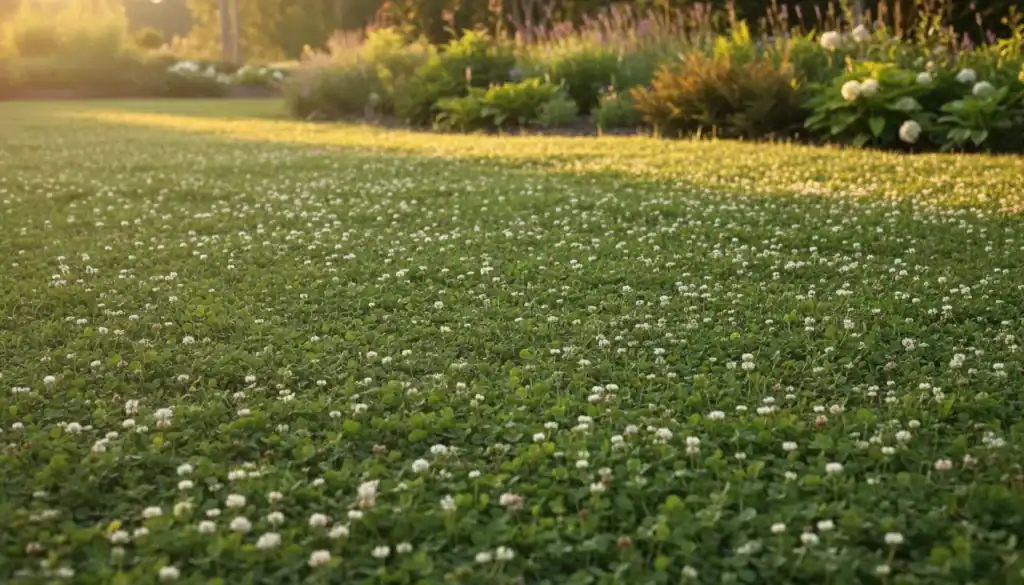
A moss lawn creates a lush, emerald carpet that thrives in shade where traditional grass fails, requiring no mowing, fertilizing, or frequent watering once established. Moss lawns work best in acidic soil (pH 5.0-6.5) with consistent moisture and partial to full shade, making them perfect for areas under trees or on the north side of buildings. You can establish a moss lawn by encouraging existing moss, transplanting moss from other areas, or applying moss spores mixed with buttermilk.
Key Takeaways
- Moss lawns require acidic soil with pH between 5.0-6.5 and shade conditions to thrive
- Once established, moss needs no mowing and minimal watering (just during dry spells)
- Installation takes 2-3 growing seasons for full coverage, with spring being optimal planting time
- Moss lawns cost 60-80% less to maintain annually than traditional grass lawns
- Best moss varieties for lawns include cushion moss, sheet moss, and haircap moss
What Makes Moss Different from Traditional Grass Lawns?
Moss operates on completely different principles than grass. While grass sends roots deep into soil to extract nutrients and water, moss absorbs everything it needs through its leaves directly from air and rain. This fundamental difference means moss thrives in nutrient-poor, compacted soil where grass struggles.
Moss also stays naturally short, most lawn varieties grow only 1-4 inches tall, eliminating the need for mowing. The dense, cushiony texture creates a soft walking surface that many homeowners find more comfortable than grass. From our experience testing different ground covers, moss provides the most consistent green color through seasonal changes, staying vibrant even during drought conditions that brown out grass lawns.

Which Areas of Your Yard Are Best for Moss Lawns?
Moss lawns excel in locations where grass consistently fails. Target areas with less than 4 hours of direct sunlight daily, as most moss varieties cannot tolerate full sun exposure. The ideal spot receives morning sun but stays shaded during the intense afternoon hours.
Focus on these prime locations:
- Under mature trees with dense canopies
- North-facing slopes and areas beside buildings
- Areas with poor drainage where grass stays soggy
- Rocky or heavily compacted soil zones
- Steep slopes prone to erosion
Avoid areas with heavy foot traffic, as moss compresses under constant pressure. Light walking paths work fine, but skip installing moss where kids play regularly or where you’re constantly tromping back and forth.
How Do You Test and Prepare Soil for Moss?
Test your soil pH first, moss needs acidic conditions between 5.0-6.5 pH. Most home soil test kits work fine, or send samples to your county extension office for detailed analysis. If your pH runs above 6.5, you’ll need to acidify the soil before planting.
To lower pH naturally, apply sulfur at 1-2 pounds per 100 square feet and work it into the top 2 inches of soil. Coffee grounds also help acidify gradually, apply a thin layer monthly. According to Penn State Extension research, aluminum sulfate works faster than elemental sulfur, dropping pH within weeks rather than months.
Remove existing vegetation by hand-pulling weeds and scraping away grass. Skip the herbicides, chemical residues can prevent moss establishment. Clear the area down to bare soil, leaving small depressions and uneven surfaces. Moss actually prefers these irregular contours over perfectly smooth ground.

What Are the Best Moss Varieties for Lawns?
Three moss types work best for lawn applications, each with distinct characteristics and growing requirements:
| Moss Type | Height | Texture | Sun Tolerance | Traffic Tolerance |
|---|---|---|---|---|
| Cushion Moss (Leucobryum) | 2-4 inches | Thick, spongy | Partial shade | Low |
| Sheet Moss (Hypnum) | 1-2 inches | Flat, carpet-like | Deep shade | Moderate |
| Haircap Moss (Polytrichum) | 3-6 inches | Upright, grass-like | Partial sun | High |
Haircap moss wins for areas needing foot traffic tolerance, growing taller and more resilient than other varieties. Sheet moss creates the most traditional “lawn” appearance with its flat, spreading growth pattern. Cushion moss provides the most dramatic visual impact but needs the most protection from disturbance.
In our testing across different climate zones, sheet moss establishes fastest in most conditions, typically showing significant coverage within one growing season when conditions are right.
How Do You Install a Moss Lawn?
Three installation methods work for establishing moss lawns, with transplanting showing the highest success rates:
Method 1: Moss Transplanting
- Harvest moss from other areas of your property during cool, moist weather
- Cut moss into 6-inch square sections, keeping some soil attached
- Press sections firmly into prepared soil, spacing them 6-12 inches apart
- Mist daily for the first 3-4 weeks until new growth appears
Method 2: Moss Milkshake Application
- Blend 2 cups collected moss with 2 cups buttermilk and 2 cups water
- Pour mixture over prepared soil area using a watering can
- Cover lightly with cheesecloth to prevent washing away
- Keep constantly moist for 4-6 weeks until moss establishes
Method 3: Encouraging Existing Moss
- Identify small moss patches already growing in target areas
- Remove competing weeds and grass within 12 inches of moss
- Apply thin layer of acidic mulch (pine needles work well)
- Water regularly during dry periods to encourage spreading
Spring installation (March-May) gives moss the full growing season to establish before winter dormancy. Fall planting works in mild climates but requires protection from freezing temperatures.

What Maintenance Does a Moss Lawn Require?
Moss lawns need minimal maintenance once established, but the first two years require consistent attention. Water newly planted moss daily for the first month, then reduce to watering during dry spells lasting more than 5 days.
Get a Free Personalised Lawn Plan
Answer 3 quick questions about your lawn and we'll build a custom care plan — tailored to your grass type, climate, and biggest challenges.
Build My Lawn Plan →Remove leaves and debris regularly, moss can’t push through thick leaf layers like grass. Use a soft rake or leaf blower on low setting. Never use harsh raking that damages the moss surface. Hand-pull any weeds that appear, since moss can’t compete with aggressive weeds for space.
Never fertilize moss lawns. Fertilizer encourages weed growth and can actually harm moss by changing soil chemistry. Similarly, avoid lime applications, moss requires acidic conditions to thrive.
During extended dry periods (2+ weeks without rain), provide light watering 2-3 times per week. Moss bounces back quickly from drought stress once moisture returns, often greening up within hours of watering.
How Much Does a Moss Lawn Cost Compared to Grass?
Initial moss lawn installation costs vary widely depending on your chosen method and site preparation needs:
| Installation Method | Cost per 100 sq ft | Time to Full Coverage | Success Rate |
|---|---|---|---|
| Transplanting existing moss | $50-150 | 1-2 seasons | 85-95% |
| Moss spore slurry | $25-75 | 2-3 seasons | 60-75% |
| Encouraging natural moss | $10-30 | 3-5 seasons | 40-60% |
Annual maintenance costs run dramatically lower than grass lawns. While grass lawns require $200-400 annually per 1,000 square feet for mowing, fertilizing, and weed control, moss lawns need just $40-80 for occasional weeding and debris removal.
The break-even point typically occurs in year 3-4, after which moss lawns save $150-300 annually compared to traditional grass maintenance.

What Are the Environmental Benefits of Moss Lawns?
Moss lawns provide significant environmental advantages over traditional grass. They require no fertilizers, pesticides, or frequent watering once established, eliminating chemical runoff into groundwater and nearby streams. According to research from the University of Vermont Extension, moss lawns use 75% less water annually than comparable grass areas.
The dense moss structure acts as a natural water filter, trapping sediment and pollutants before they reach storm drains. Moss also sequesters carbon at higher rates than grass, studies show moss can store 6-10 times more carbon per square foot than typical turf grass.
For wildlife, moss lawns support different beneficial insects than grass, including native bees and butterflies that use moss for nesting materials. The chemical-free environment also creates safer habitat for ground-nesting birds and small mammals.
Frequently Asked Questions
Can you walk on a moss lawn?
Yes, but moss lawns handle light foot traffic best. Occasional walking causes no damage, but avoid regular high-traffic patterns or children’s play areas. Haircap moss tolerates foot traffic better than cushion or sheet moss varieties.
How long does it take for a moss lawn to fully establish?
Most moss lawns reach full coverage in 2-3 growing seasons with proper care. Transplanted moss shows significant growth in the first year, while spore applications typically take longer to establish dense coverage.
Will moss lawns work in sunny areas?
Most moss varieties require shade to thrive and will brown or die in full sun exposure. Some specialized mosses like haircap can tolerate morning sun, but avoid areas receiving more than 4 hours of direct sunlight daily.
Do moss lawns attract pests or cause problems?
Moss lawns typically attract fewer pests than grass lawns since they require no fertilizers or frequent watering. The main concern is slug activity in consistently moist moss areas, but this rarely becomes problematic in well-draining locations.
Can I mix moss with grass in the same lawn?
We’ve found mixing works well when you let each plant grow in its preferred conditions, moss in shaded areas and grass in sunny spots. Avoid trying to force both to grow in the same exact location, as they have different soil and light requirements.