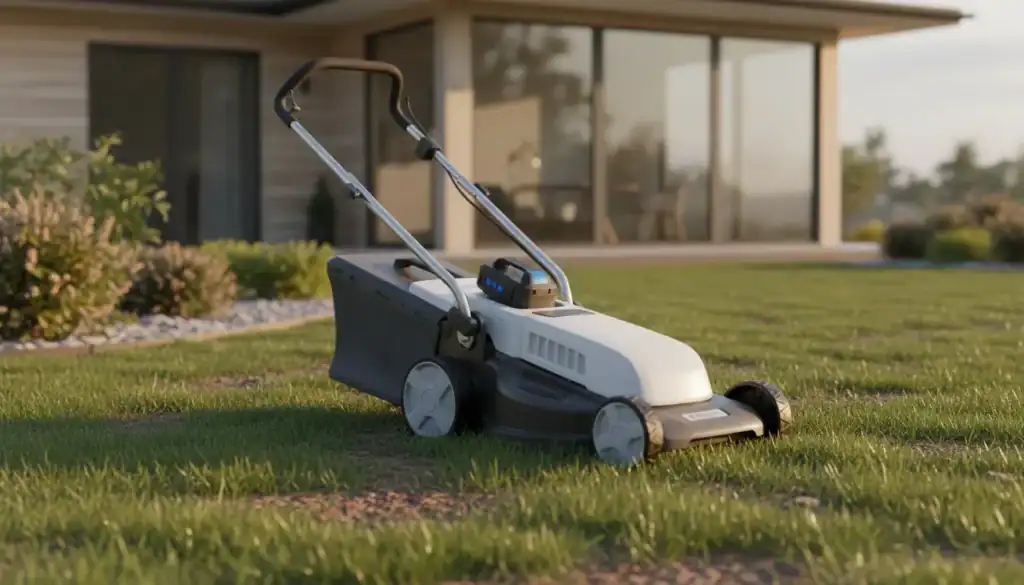
For small yards under 1/4 acre, a battery-powered electric mower delivers the best combination of convenience, quiet operation, and sufficient cutting power without the storage hassles of gas models. Most homeowners with yards between 2,000-8,000 square feet will find a 40-60 volt cordless electric mower cuts their entire lawn on a single charge while being lighter and easier to maneuver than gas alternatives.
Key Takeaways
- Battery mowers run 30-45 minutes per charge, perfect for lawns up to 1/4 acre (10,890 square feet)
- Electric mowers weigh 15-25 pounds less than comparable gas models, reducing fatigue
- Reel mowers work best for perfectly flat yards under 3,000 square feet with fine grasses
- Robot mowers handle yards up to 1/3 acre but require $800-2,500 investment
- Self-propelled models reduce pushing effort by 70% on slopes over 10 degrees
What Size Mower Works Best for Small Yards?
Small yards between 2,000-8,000 square feet need a 16-21 inch cutting deck. Anything smaller takes forever, anything larger becomes unwieldy around flower beds and tight spaces. We’ve found the sweet spot sits at 20 inches, wide enough to finish quickly but narrow enough to navigate between your car and fence gate.
Walk-behind mowers work perfectly for these yard sizes. Zero-turn mowers are overkill unless you’re cutting more than 1/2 acre, and their wider turning radius actually makes them slower in small spaces with lots of obstacles.

Should You Choose Battery, Gas, or Reel for Small Yards?
Battery-powered mowers dominate small yard performance because they start instantly, run quietly, and need zero maintenance beyond blade sharpening. Gas mowers make sense for larger properties, but in small yards? You’ll spend more time on maintenance than actual cutting.
| Mower Type | Best Yard Size | Runtime | Noise Level | Annual Maintenance Cost |
|---|---|---|---|---|
| Battery Electric | 2,000-10,000 sq ft | 30-60 minutes | 65 dB | $15 (blade sharpening) |
| Gas Push | 5,000+ sq ft | 45-90 minutes | 95 dB | $85 (oil, spark plug, filter) |
| Reel Manual | Under 3,000 sq ft | Unlimited | 45 dB | $10 (blade adjustment) |
| Robot | 3,000-15,000 sq ft | 60-180 minutes | 60 dB | $30 (blade replacement) |
What Are the Best Battery Mowers for Small Yards?
The Greenworks 60V 21-inch delivers exceptional value at $399, cutting up to 8,000 square feet per charge with enough power for thick spring grass. Its 60-volt system provides more consistent power than 40-volt competitors when the battery drops below 50% charge.
For premium performance, the Ryobi 40V HP 20-inch ($449) uses dual batteries for extended runtime and maintains full power throughout the entire cutting session. The HP brushless motor cuts through wet grass better than single-battery models.
Budget-conscious homeowners should consider the Kobalt 80V 21-inch at $349. While louder than Greenworks or Ryobi, it matches their cutting performance and includes a 5-year battery warranty, double the industry standard.

When Should You Consider a Reel Mower?
Reel mowers excel on flat yards under 3,000 square feet with fine grasses like Kentucky bluegrass or perennial ryegrass. They provide the cleanest cut possible, creating that golf-course appearance, but struggle with thick-stemmed grasses and any terrain variation over 5 degrees.
The Fiskars StaySharp Max ($199) cuts 18 inches wide and needs zero maintenance for the first three years. Its advanced reel design cuts grass stems cleanly rather than tearing them like rotary mowers, reducing brown tips and disease susceptibility.
Skip reel mowers if you have Bermuda grass, St. Augustine, or any weeds mixed in your lawn. These tough-stemmed plants will jam the cutting mechanism and make you want to throw the thing in the trash.
Are Robot Mowers Worth It for Small Yards?
Robot mowers transform lawn care from a weekly chore into a background task, but the initial investment ranges from $800-2,500. For yards under 1/4 acre, the Worx Landroid M 20V ($899) navigates complex layouts better than competitors and cuts right to lawn edges.
The premium Husqvarna Automower 315X ($2,199) handles slopes up to 40% grade and operates in light rain, making it ideal for challenging small yards with steep areas. Its GPS theft protection and smartphone control justify the price for busy homeowners.
Get a Free Personalised Lawn Plan
Answer 3 quick questions about your lawn and we'll build a custom care plan — tailored to your grass type, climate, and biggest challenges.
Build My Lawn Plan →Robot mowers work best on established lawns without major obstacles. If you’re constantly replanting sections or have lots of garden decorations to move, stick with a traditional mower until your landscape stabilizes.

How Much Should You Spend on a Small Yard Mower?
Quality battery mowers for small yards range from $250-500, with the best value sitting around $350-400. Spending less usually means shorter battery life and weaker motors that bog down in thick grass. Spending more gets you conveniences like self-propulsion and larger batteries, but doesn’t improve cut quality.
Factor in battery replacement costs when calculating total ownership. Most mower batteries last 3-5 years with regular use, and replacements cost $100-200. Gas mowers avoid this expense but need $60-80 annual maintenance.
What Features Matter Most in Small Yard Mowers?
Height adjustment matters more than most realize. Look for single-lever adjustment that changes all four wheels simultaneously, individual wheel adjustment wastes time and creates uneven cuts. The range should span 1.5-4 inches to handle different grass types and seasonal needs.
Folding handles reduce storage space by 60%, crucial if you’re storing the mower in a garage alongside two cars. Side discharge works better than bagging for most small yards since you’re cutting frequently and don’t generate large volumes of clippings.
Self-propulsion adds $100-150 to the price but reduces pushing effort dramatically on any slope over 8%. For flat yards, skip this feature and put the savings toward a better battery system instead.

Frequently Asked Questions
How long do battery mower batteries last per charge?
Most 40-60 volt batteries run 30-45 minutes, enough to cut 6,000-10,000 square feet of grass. Runtime depends on grass thickness, cutting height, and terrain slope. From our testing, thick spring grass reduces runtime by 20-30% compared to summer maintenance cuts.
Can I use a push mower on a sloped small yard?
Push mowers handle slopes up to 15 degrees safely, but become difficult to control on steeper grades. For slopes over 10 degrees, choose a self-propelled model or consider a lightweight reel mower that’s easier to control going downhill.
What’s the smallest yard size worth buying a mower for?
Yards under 1,500 square feet often make more financial sense to hire out or use a reel mower. A $350 battery mower needs 3-4 years of weekly use to justify its cost compared to paying $40 per cut for professional service.
Should I bag clippings or leave them on small yards?
Leave clippings on the lawn unless they’re longer than 1 inch. Short clippings decompose within 1-2 weeks and provide 25% of your lawn’s nitrogen needs. Only bag when cutting overgrown grass or during fall leaf cleanup.
How often should I sharpen small yard mower blades?
Sharpen blades once per season or after 25 hours of cutting. Dull blades tear grass instead of cutting cleanly, creating brown tips and increasing disease risk. Most hardware stores sharpen mower blades for $10-15.