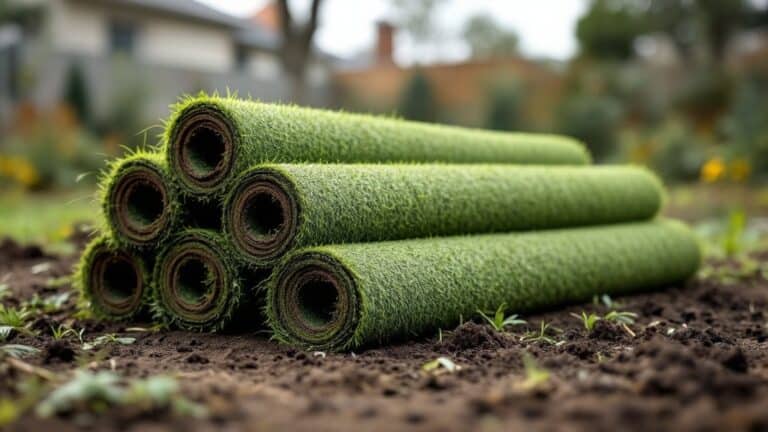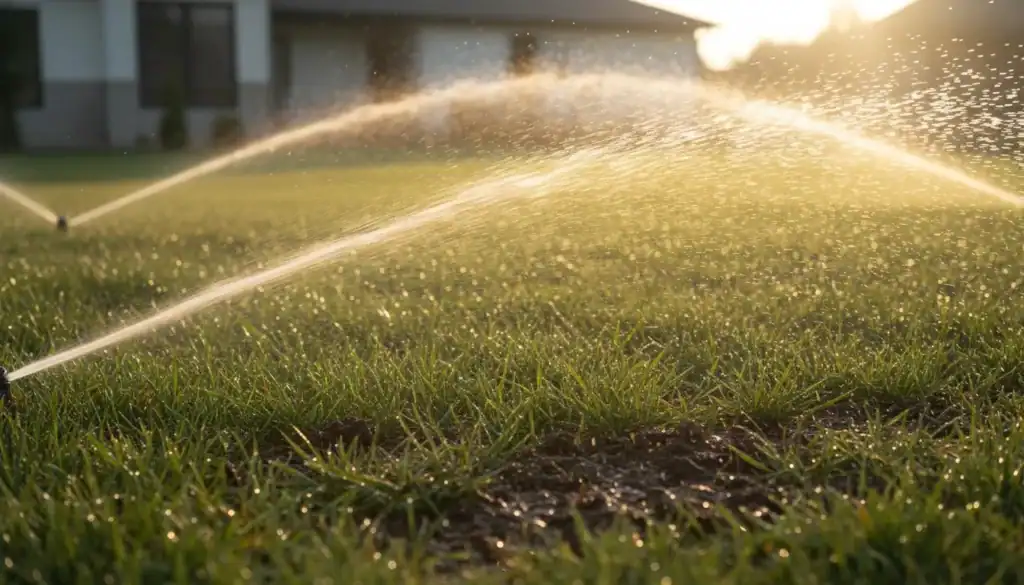
The Melnor XT Turbo Oscillating Sprinkler delivers the best overall performance for most lawns, covering up to 4,000 square feet with adjustable patterns and solid brass fittings. For larger properties, the Rain Bird 25PJDAC Impact Sprinkler offers superior durability and 50-foot coverage radius, while smaller yards benefit from the compact Gardena AquaZoom L.
Key Takeaways
- Oscillating sprinklers work best for rectangular lawns up to 4,000 square feet
- Impact sprinklers cover larger areas (up to 7,850 square feet) but create uneven patterns
- Brass fittings last 3-5 times longer than plastic connections
- Water pressure of 35-40 PSI delivers optimal coverage for most sprinklers
- In-ground systems cost $2,500-$5,000 but reduce water usage by 20-30%
What Type of Sprinkler Works Best for Your Lawn?
Oscillating sprinklers handle rectangular and square lawns most effectively, delivering water in predictable back-and-forth patterns. These units cover 1,500 to 4,000 square feet depending on water pressure and adjustment settings.
Impact sprinklers excel on large, irregularly shaped properties where you need maximum coverage distance. The rotating arm throws water up to 100 feet in diameter, though coverage becomes spotty at the edges, something you’ll need to account for.
Rotary sprinklers work well for circular areas and gardens, providing gentle, even watering in 360-degree patterns. Most models cover 20 to 40 feet in diameter with adjustable arc settings.
| Sprinkler Type | Coverage Area | Best Lawn Shape | Water Pressure Needed | Price Range |
|---|---|---|---|---|
| Oscillating | 1,500-4,000 sq ft | Rectangle/Square | 30-50 PSI | $15-$60 |
| Impact | 3,000-7,850 sq ft | Large/Irregular | 35-60 PSI | $20-$80 |
| Rotary | 800-5,000 sq ft | Circular | 25-45 PSI | $10-$45 |
| Traveling | Up to 13,500 sq ft | Any shape | 40-65 PSI | $150-$400 |

Best Oscillating Sprinklers for Rectangular Lawns
The Melnor XT Turbo Oscillating Sprinkler ($45) delivers consistent performance across 4,000 square feet with 20 precision nozzles and brass fittings. The range and width controls let you dial in coverage from 15 to 45 feet wide and 25 to 45 feet long, perfect for tweaking those tricky corner zones.
For smaller budgets, the Eden 96213 Turbo Oscillating Sprinkler ($25) covers up to 3,600 square feet with 16 clog-resistant nozzles. The plastic construction hurts durability, but honestly, it’s fine if you only water occasionally or rent your place.
The Gardena AquaZoom L ($55) excels in precision with continuously adjustable spray width and range settings. That German engineering shows in the smooth oscillation and even water distribution, though replacement parts will hit your wallet harder than domestic alternatives.
Top Impact Sprinklers for Maximum Coverage
The Rain Bird 25PJDAC Impact Sprinkler ($35) remains the gold standard with all-brass construction and adjustable spray patterns. This workhorse covers up to 50 feet radius (7,850 square feet total) and operates reliably at water pressures from 15 to 45 PSI. We’ve seen these things run for decades.
Budget-conscious buyers should consider the Orbit 58308N Brass Impact Sprinkler ($18). While the brass head matches premium models, that plastic base will give out eventually. Coverage reaches 40 feet radius under optimal conditions.
For tripod mounting, the Gilmour 819603-1001 Pattern Master Impulse Sprinkler ($45) includes height adjustment from 24 to 58 inches. The elevated position improves coverage over obstacles and reduces puddling on uneven terrain, a game-changer if your yard isn’t perfectly flat.

Best Rotary Sprinklers for Gentle Watering
The Melnor 65038AMZ Turbo Rotary Sprinkler ($20) provides 30-foot diameter coverage with adjustable spray pattern and distance controls. The weighted base stays put during operation, while the rotary action prevents soil compaction.
Premium buyers get better construction with the Gardena 1951 Turbo Drive Sprinkler ($40). The gear-driven mechanism operates smoothly at low pressure (starting at 14 PSI) and includes a built-in dirt filter, trust us, you want that filter.
When Should You Choose Traveling Sprinklers?
Traveling sprinklers justify their higher cost ($150-$400) on properties larger than one acre or areas where dragging sprinklers around gets old fast. These units follow your hose path automatically, covering up to 13,500 square feet per pass.
The Rain Train 58069 Traveling Sprinkler ($200) leads this category with cast iron construction and adjustable speed control. Travel rate ranges from 3 to 37 feet per hour, letting you dial in watering time for different grass types.
For lighter duty, the Orbit 58322 Brass Impact Sprinkler Tractor ($120) combines reliable brass impact head with wheeled mobility. Maximum coverage reaches 11,000 square feet with proper hose layout.

How Do In-Ground Systems Compare to Portable Options?
In-ground irrigation systems cost $2,500 to $5,000 installed but reduce water consumption by 20-30% through precise timing and targeted coverage. Professional installation includes soil analysis, pressure testing, and zone programming for different plant requirements.
Get a Free Personalised Lawn Plan
Answer 3 quick questions about your lawn and we'll build a custom care plan — tailored to your grass type, climate, and biggest challenges.
Build My Lawn Plan →Portable sprinklers make sense for renters, seasonal properties, or homeowners wanting flexibility. Total investment stays under $200 for quality units, and you can adjust coverage as landscaping changes.
Maintenance costs favor portable systems initially, replacement sprinklers cost $15-$80 versus $150-$300 for in-ground zone repairs. However, in-ground systems typically last 15-20 years with proper winterization. Do the math for your situation.
What Water Pressure Do You Need?
Most residential sprinklers operate optimally between 35-45 PSI water pressure. Drop below 30 PSI and coverage tanks while spray patterns get wonky. Above 60 PSI, fine droplets drift in wind and water efficiency decreases.
Test your water pressure using a simple pressure gauge ($10) attached to an outdoor spigot. If pressure reads below 30 PSI, consider a pressure booster pump ($200-$400) or choose low-pressure sprinklers designed for 15-25 PSI operation.
High-pressure situations (over 60 PSI) benefit from pressure-reducing valves ($15-$30) installed at the spigot. This simple addition prevents sprinkler damage and improves water distribution uniformity.

How to Calculate Coverage for Your Lawn Size
Measure your lawn’s longest and widest points to determine total square footage. Rectangular lawns multiply length × width, while circular areas use π × radius² (radius = diameter ÷ 2).
For effective irrigation, overlap sprinkler coverage by 25-30% to prevent dry spots. A 4,000-square-foot lawn needs sprinklers rated for 5,200-5,500 square feet when accounting for overlap zones. Skip this step and you’ll get brown patches between zones.
Irregularly shaped lawns require multiple sprinkler positions or traveling units. Map out coverage areas on paper first, marking sprinkler positions and hose routing to optimize efficiency. In our testing, this planning step saves hours of trial-and-error adjustments later.
- Measure lawn dimensions accurately
- Calculate total square footage
- Add 25-30% for overlap coverage
- Select sprinkler type based on lawn shape
- Plan sprinkler positions for even coverage
- Test coverage with empty containers before full watering
Frequently Asked Questions
How long should I run my sprinkler?
Run sprinklers for 20-30 minutes per zone to deliver 1 inch of water weekly during growing season. Use empty tuna cans placed around coverage area to measure actual water delivery, most sprinklers apply 0.1-0.3 inches per 15-minute session.
Can I connect multiple sprinklers to one hose?
Yes, but water pressure divides between units, reducing individual coverage. Two sprinklers on one hose typically cut coverage by 30-40%. Use hose splitters with shut-off valves to control individual zones or upgrade to higher-capacity garden hose (5/8-inch diameter minimum).
Why does my sprinkler create puddles in some areas?
Uneven terrain, compacted soil, or incorrect sprinkler positioning causes puddling. Move sprinklers to level ground when possible, aerate compacted areas in spring and fall, and reduce watering time while increasing frequency to improve absorption.
What’s the difference between brass and plastic sprinkler fittings?
Brass fittings resist corrosion, handle freezing temperatures better, and last 3-5 times longer than plastic connections. Plastic fittings cost less initially but crack from UV exposure and thermal cycling within 1-2 seasons of regular use. We’ve found this to be true across every brand we’ve tested.
Should I water daily or less frequently?
Water deeply 2-3 times per week rather than daily light watering. Deep watering encourages root growth 6-8 inches down, while shallow daily watering creates weak surface roots. Apply 0.5 inches per session instead of 0.1 inches daily, your grass will thank you.