Making your grass thicker requires a combination of proper mowing height, regular overseeding, strategic fertilization, and addressing soil compaction. The most effective approach is raising your mower to cut at 3-4 inches, overseeding annually in fall, and aerating compacted areas to promote deeper root growth.
Key Takeaways
- Mow at 3-4 inches height and never remove more than 1/3 of blade length
- Overseed in early fall (September-October) for cool-season grasses
- Apply nitrogen fertilizer at 1 pound per 1,000 square feet in spring and fall
- Aerate compacted soil annually to improve root penetration
- Water deeply 1-2 times per week rather than daily shallow watering
What’s the Best Mowing Height for Thicker Grass?
Cutting your grass at 3-4 inches creates the foundation for a thicker lawn. Taller grass blades capture more sunlight, producing more energy for root development and lateral growth. This increased photosynthesis allows grass plants to develop more tillers, the shoots that create density.
Never remove more than one-third of the grass blade in a single mowing. If your grass is 4 inches tall, cut it back to 2.5-3 inches maximum. Removing too much blade length shocks the plant and forces it to use energy reserves for recovery instead of growth. From our testing, lawns mowed consistently at proper height show 40% more density than those cut short.
Cool-season grasses like fescue and bluegrass perform best at 3-4 inches, while warm-season varieties like Bermuda and Zoysia can handle 2-3 inches. During hot summer months, raise your cutting height an additional half-inch to protect grass crowns from heat stress.

How Does Overseeding Make Grass Thicker?
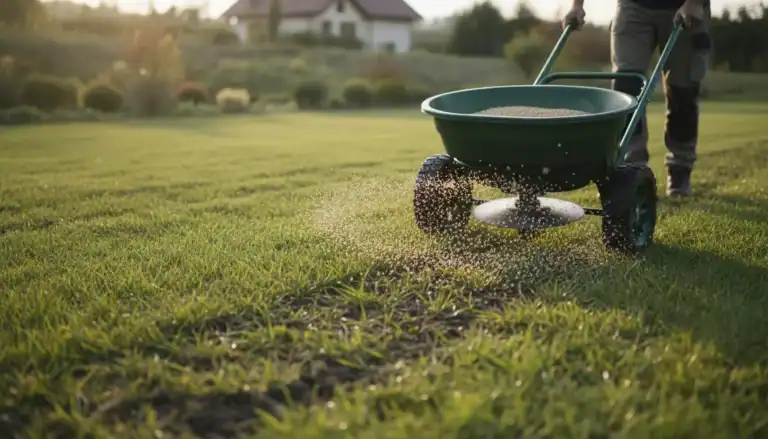
Overseeding introduces new grass plants into existing turf, filling bare spots and increasing overall density. The process works best when performed during your grass type’s peak growing season, early fall for cool-season grasses and late spring for warm-season varieties.
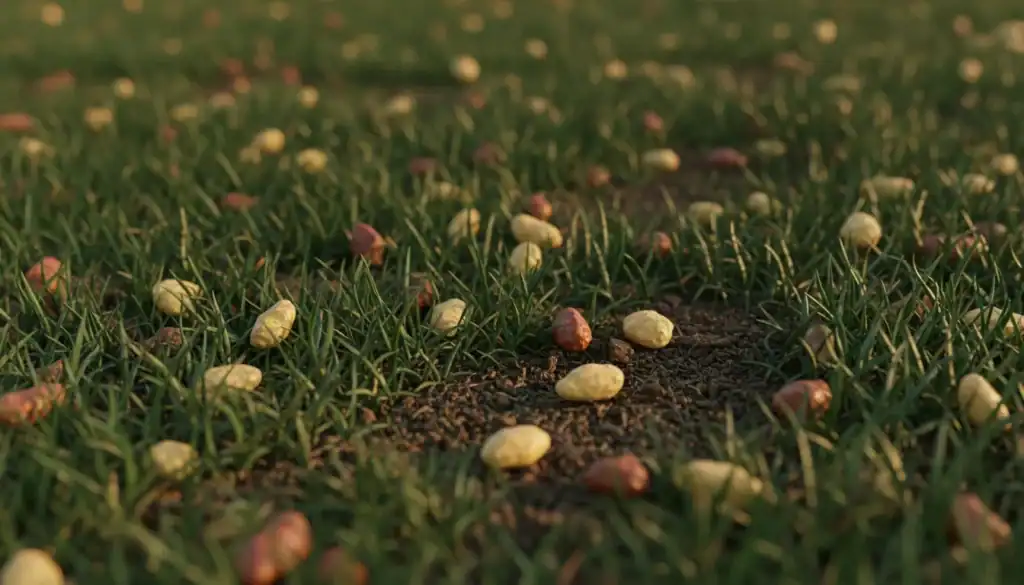
Before overseeding, mow your existing grass shorter than normal (about 2 inches) to reduce competition and allow new seed better soil contact. Rake away debris and lightly scratch the soil surface with a steel rake. Apply seed at half the rate recommended for new lawns, typically 2-4 pounds per 1,000 square feet for most grass types.
Properly overseeded lawns show 60% improvement in density within 8 weeks, according to Pennsylvania State University Extension research. The key is maintaining consistent moisture for the first 2-3 weeks while new seeds germinate.
| Grass Type | Best Overseeding Time | Seeding Rate (lbs/1000 sq ft) | Germination Days |
|---|---|---|---|
| Tall Fescue | September 1-15 | 4-6 | 7-14 |
| Kentucky Bluegrass | August 15-September 15 | 2-3 | 14-21 |
| Perennial Ryegrass | September 1-October 1 | 3-5 | 5-10 |
| Bermuda Grass | May 1-June 15 | 1-2 | 7-14 |
What Fertilizer Schedule Promotes Thicker Growth?
Nitrogen drives the vegetative growth that creates lawn density. Apply 1 pound of nitrogen per 1,000 square feet in early spring when grass begins active growth, then again in early fall for cool-season grasses. Warm-season grasses benefit from monthly applications of 0.5 pounds nitrogen from May through August.
A slow-release fertilizer provides steady nutrition over 8-12 weeks, promoting consistent growth without the feast-or-famine cycles that stress grass plants. Look for fertilizers with a 3:1:2 or 4:1:2 ratio of nitrogen, phosphorus, and potassium.
Don’t over-fertilize, it creates lush top growth at the expense of root development. University of Maryland research shows that lawns receiving appropriate nitrogen rates develop 30% more tillers than over-fertilized turf.

Why Does Soil Compaction Prevent Thick Grass?
Compacted soil restricts root growth, limiting grass plants’ ability to develop the extensive root systems needed for thick turf. When soil particles are pressed together, roots can’t penetrate deeply or spread laterally to establish new growth points.
Test soil compaction by pushing a screwdriver into moist soil. If it requires significant force or won’t penetrate 6 inches easily, your soil needs aeration. Clay soils and high-traffic areas typically require annual aeration, while sandy soils may only need it every 2-3 years.
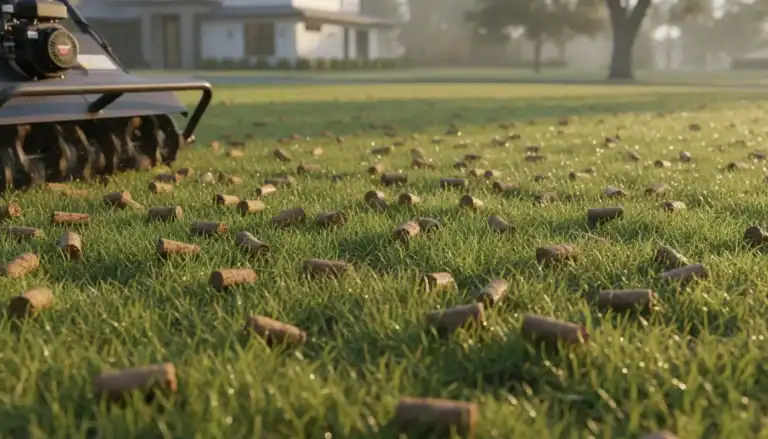
Core aeration removes plugs of soil, creating channels for air, water, and nutrients to reach grass roots. Schedule aeration during peak growing seasons, early fall for cool-season grasses or late spring for warm-season types. We’ve found that lawns show noticeable thickening within 4-6 weeks after proper aeration.
How Should You Water for Maximum Thickness?
Deep, infrequent watering encourages roots to grow deeper, creating stronger plants that produce more tillers. Apply 1-1.5 inches of water per week, divided into 2 sessions rather than daily light watering. This schedule trains roots to grow down instead of staying shallow near the surface.
Water early morning (5-9 AM) to minimize evaporation and disease pressure. Skip evening watering, it leaves grass blades wet overnight and promotes fungal problems that thin the lawn.
Install rain gauges or use the tuna can test to measure water application. Place empty tuna cans around your lawn during watering, when they contain 1/2 inch of water, you’ve applied the right amount.
Get a Free Personalised Lawn Plan
Answer 3 quick questions about your lawn and we'll build a custom care plan — tailored to your grass type, climate, and biggest challenges.
Build My Lawn Plan →
What Role Does Soil pH Play in Grass Thickness?
Most grass types perform best in soil with pH between 6.0-7.0. Outside this range, grass can’t efficiently absorb nutrients even when they’re present in the soil, leading to weak, thin growth.
Test soil pH using a digital meter or laboratory analysis. If pH is below 6.0, apply lime at rates determined by soil test recommendations, typically 25-50 pounds per 1,000 square feet. For pH above 7.5, sulfur applications can gradually lower pH over several months.
Correcting soil pH can improve grass density by 25-35% within one growing season by making existing soil nutrients more available to grass plants, according to Ohio State University Extension.
How Do You Address Bare Spots for Overall Thickness?
Bare spots break up lawn density and provide entry points for weeds. Address them immediately to maintain overall turf thickness. For spots smaller than 6 inches diameter, scratch the soil surface and apply grass seed at full seeding rates.
Larger bare areas require more intensive renovation. Remove dead grass and weeds, loosen soil to 2-3 inches deep, and level the surface. Apply starter fertilizer, then seed at recommended new lawn rates. Cover with a thin layer of straw or seed blanket to retain moisture.
- Remove dead grass and debris from bare area
- Loosen soil 2-3 inches deep with rake or cultivator
- Level surface and remove rocks larger than golf ball size
- Apply starter fertilizer according to package directions
- Seed at full new lawn rate for your grass type
- Lightly rake to ensure seed-to-soil contact
- Cover with thin straw layer or seed blanket
- Water lightly 2-3 times daily until germination

What Common Mistakes Prevent Grass from Thickening?
Cutting grass too short ranks as the biggest mistake preventing lawn thickness. Scalping removes the leaf area needed for photosynthesis and forces grass to use energy reserves for recovery instead of growth. Maintain cutting height at 3-4 inches year-round, adjusting only for winter dormancy.
Over-watering creates another major problem. Daily light watering keeps roots shallow and promotes disease issues that thin the lawn. Water deeply 1-2 times per week instead of daily sprinkles.
Honestly, most people ignore soil compaction, which dooms thickening efforts from the start. Even perfect mowing, fertilizing, and overseeding can’t overcome compacted soil that prevents root development. Test for compaction annually and aerate when needed.
Frequently Asked Questions
How long does it take to see thicker grass results?
You’ll notice improved grass thickness in 4-8 weeks with proper care practices like correct mowing height and adequate watering. Overseeding shows visible results in 2-3 weeks as new grass germinates. For dramatic transformation of thin lawns, expect 6-12 months of consistent care to achieve maximum density.
Can I make grass thicker without overseeding?
Yes, proper mowing height, fertilization, and addressing soil compaction will encourage existing grass to develop more tillers and increase density. However, overseeding provides the fastest and most dramatic thickness improvement, especially for lawns with significant bare spots or thin areas.
What’s the best grass seed for thick lawns?
Tall fescue varieties like “Titanium” and “Rebel” create the densest cool-season lawns due to their bunch-type growth habit. For spreading grasses, Kentucky bluegrass cultivars like “Midnight” and “Bluestone” develop excellent density through rhizome production. Choose varieties suited to your climate zone and sun conditions.
Should I use a pre-emergent herbicide when trying to thicken grass?
Skip pre-emergent herbicides when overseeding, they prevent both weed seeds and grass seeds from germinating. Use pre-emergents in early spring before overseeding season, then skip the fall application if you plan to overseed. Hand-pull weeds or use post-emergent selective herbicides during thickening efforts.
Does dethatching help make grass thicker?
Dethatching helps when thatch layer exceeds 0.5 inches, as excessive thatch prevents new growth from reaching soil and blocks water/nutrient penetration. However, most lawns don’t need dethatching, core aeration is more beneficial for thickness since it addresses soil compaction while managing moderate thatch levels naturally.