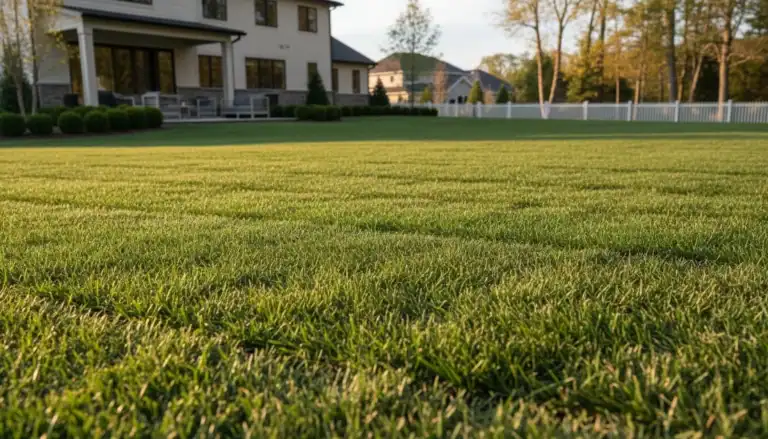
Bermuda grass is a warm-season turf that thrives in full sun across USDA zones 7 to 10, growing best in soil temperatures above 65°F and needing at least 7 hours of direct sun a day. It greens up in late spring, spreads fast by runners, and turns brown and dormant after the first hard frost. This guide covers where Bermuda grows, how to mow, water, and feed it, how to start a new lawn from seed or sod, and the problems to watch for.
Key Takeaways
- Bermuda needs full sun (7+ hours). It struggles badly under 4 hours and will thin out in shade.
- Mow common Bermuda to 1 to 2 inches, hybrids to 0.5 to 1.5 inches, every 5 to 7 days in season.
- Water 1 to 1.25 inches per week in 2 to 3 deep soakings, not daily sprinkles.
- It is a heavy feeder: roughly 4 to 6 lbs of nitrogen per 1,000 sq ft across the growing season.
- Start common Bermuda from seed in late spring; hybrids are sterile and go in as sod or sprigs.
Bermuda gets a reputation as both the best and the most frustrating lawn grass in the South, and both are fair. It recovers from heat, drought, and foot traffic better than almost anything, but it also creeps into garden beds and builds thatch if you ignore it. Below we cover identification and climate, the day-to-day care numbers, how to establish a new lawn, the main varieties, and the problems that catch people out.
Where does Bermuda grass grow best?
Bermuda grows best in hot, sunny regions across the southern United States and the transition zone, roughly USDA hardiness zones 7 through 10. It is a warm-season grass, so it does its growing when soil temperatures sit above 65°F and air temperatures run between 75 and 95°F.
The non-negotiable is sun. Bermuda has the worst shade tolerance of any common warm-season lawn grass, so a yard shaded by trees or buildings for much of the day will leave it thin and patchy no matter how well you feed it. If your lawn gets fewer than 4 hours of direct sun, a shade-tolerant grass like St. Augustine or Zoysia is the smarter choice.
How do you identify Bermuda grass?
Bermuda grass has fine to medium blades, a gray-green to deep-green color, and spreads by both above-ground runners (stolons) and below-ground stems (rhizomes). The giveaway is the seed head: three to seven finger-like spikes that fan out from a single point, like a tiny bird’s foot.
That dual-spreading habit is why Bermuda fills in bare spots on its own, and also why it climbs over edging into flower beds and driveways. If you see grass runners creeping sideways across the soil surface and rooting as they go, that is almost certainly Bermuda.
What height should you mow Bermuda grass?
Mow common Bermuda grass to 1 to 2 inches and hybrid Bermuda to 0.5 to 1.5 inches, cutting every 5 to 7 days during active growth. Bermuda is one of the few home lawns that genuinely benefits from a low, frequent cut: it grows denser and crowds out weeds when kept short.
The one rule you cannot break is the one-third rule. Never remove more than a third of the blade height in a single mow, or you scalp the lawn and stress the roots. If your Bermuda has gotten away from you, step the height down over two or three mows rather than dropping it all at once.
| Variety | Mowing height | Established by | Best for |
|---|---|---|---|
| Common Bermuda | 1 to 2 in | Seed, sod, or sprigs | Budget lawns, large areas |
| Tifway 419 (hybrid) | 0.5 to 1.5 in | Sod or sprigs only | Sports fields, fine home lawns |
| TifTuf (hybrid) | 0.75 to 1.5 in | Sod or sprigs only | Drought-prone yards |
| Celebration (hybrid) | 0.5 to 1.5 in | Sod or sprigs only | Shade-tolerant (for Bermuda) lawns |
A quick field note: turf managers keep a sharp blade because Bermuda’s fine texture shows a ragged, white-tipped cut almost immediately. Sharpen your mower blade about every 20 to 25 hours of use and the lawn will look cleaner for it.
How often should you water Bermuda grass?
Water established Bermuda grass about 1 to 1.25 inches per week during the growing season, delivered in 2 to 3 deep sessions rather than a little every day. Deep, infrequent watering pushes roots down and makes the lawn far more drought-resistant.
Bermuda is one of the most drought-tolerant lawn grasses there is. Once established, it can survive extended dry spells by going semi-dormant and bouncing back after rain. New plantings are the exception: keep seed or fresh sod consistently moist until it roots, then taper off to the deep-soak schedule.
One common mistake we see is daily light watering through summer. It keeps the surface wet, encourages shallow roots and fungus, and ironically leaves the lawn less able to handle heat. Switch to two longer soaks a week and most “summer brown patch” complaints sort themselves out.
How do you fertilize Bermuda grass?
Bermuda is a heavy feeder. Across the growing season it wants roughly 4 to 6 lbs of nitrogen per 1,000 sq ft, applied as about 1 lb per 1,000 sq ft every 4 to 6 weeks from late spring green-up through late summer. Stop feeding nitrogen 6 to 8 weeks before your first expected frost so you are not pushing tender growth into dormancy.
Get a soil test before you guess at it: Bermuda prefers a pH of 6.0 to 7.0, and the test tells you whether you actually need phosphorus and potassium or just nitrogen. For product picks, rates, and a liquid-versus-granular breakdown, see our dedicated guide to the best fertilizer for Bermuda grass.
Get a Free Personalised Lawn Plan
Answer 3 quick questions about your lawn and we'll build a custom care plan — tailored to your grass type, climate, and biggest challenges.
Build My Lawn Plan →How do you start a new Bermuda lawn?
How you start depends on the variety. Common Bermuda can be seeded once soil temperatures reach 65 to 70°F, usually late spring to early summer. Hybrid Bermudas are sterile, so they cannot be grown from seed: they go in as sod, plugs, or sprigs.
- Test and adjust soil pH to 6.0 to 7.0, then till and level the seedbed.
- For seed, sow 1 to 2 lbs per 1,000 sq ft and rake in lightly so seed sits just below the surface.
- Keep the top inch of soil consistently moist with light daily watering until germination (7 to 21 days).
- Once it is 2 inches tall, cut back to deep, infrequent watering and take the first mow.
- Begin a light fertilizer program about 3 to 4 weeks after germination or sodding.
Sod gives you an instant lawn and is the only route for hybrids, but it costs more. Seed is cheaper and covers large areas, just slower and limited to common Bermuda. Either way, late spring is the window: planting into warm soil is the single biggest factor in how fast Bermuda establishes.
What problems should you watch for?
The most common Bermuda problems are thatch buildup, encroachment into beds, and a handful of diseases and pests that show up when conditions are off. Because Bermuda grows so aggressively, most issues come from too much of a good thing rather than neglect.
- Thatch: Bermuda’s vigorous runners build a spongy layer fast. Dethatch or scalp in early spring if thatch is over half an inch.
- Spreading into beds: Those rhizomes cross edging easily. A deep physical edge or border is the only reliable fix.
- Spring dead spot: Circular dead patches that appear at green-up, most common in heavily fed lawns; balanced fall potassium helps.
- Armyworms: They can chew a Bermuda lawn down in days in late summer; scout for them after a brown patch appears overnight.
- Dollar spot: Small, silver-dollar-sized straw patches, usually a sign of low nitrogen or extended leaf wetness.
If your established Bermuda lawn suddenly browns in a defined area during late summer, check for armyworms before you reach for fungicide. We have seen plenty of “disease” calls that turned out to be caterpillars working overnight.
Frequently Asked Questions
Is Bermuda grass hard to maintain?
Bermuda is low-effort to keep alive but higher-effort to keep looking sharp. It tolerates heat, drought, and traffic with little help, but its fast growth means frequent mowing in summer and occasional dethatching. Most of the work is mowing on schedule, not rescuing a struggling lawn.
Will Bermuda grass grow in shade?
Not well. Bermuda has the lowest shade tolerance of the common warm-season grasses and needs at least 7 hours of direct sun to thrive. In areas with under 4 hours of sun it thins out and bare patches appear, so a shade-tolerant grass like St. Augustine or Zoysia is a better fit.
Should I plant Bermuda from seed or sod?
Use seed for common Bermuda on a budget or over large areas, sown once soil hits 65 to 70°F. Use sod or sprigs for hybrid varieties like Tifway 419 and TifTuf, which are sterile and cannot be grown from seed. Sod gives an instant lawn at higher cost; seed is cheaper but slower.
When does Bermuda grass turn green and go dormant?
Bermuda greens up in late spring once soil temperatures stay above 65°F, and it goes dormant and turns brown after the first hard frost in fall. The brown winter color is normal dormancy, not death, and it will green back up the following spring.
How do I stop Bermuda grass from spreading into my garden beds?
Install a deep physical barrier or edging that extends a few inches below the surface, since Bermuda spreads by underground rhizomes that step over shallow borders. Maintain a clean edge regularly and spot-treat runners that escape, because once it roots in a bed it is stubborn to remove.
Explore more in our grass types hub, compare options in Bermuda grass vs St. Augustine, and dial in feeding with the best fertilizer for Bermuda grass.