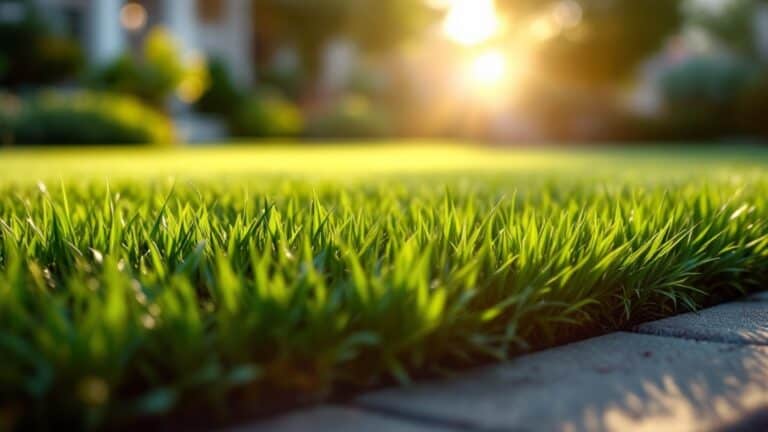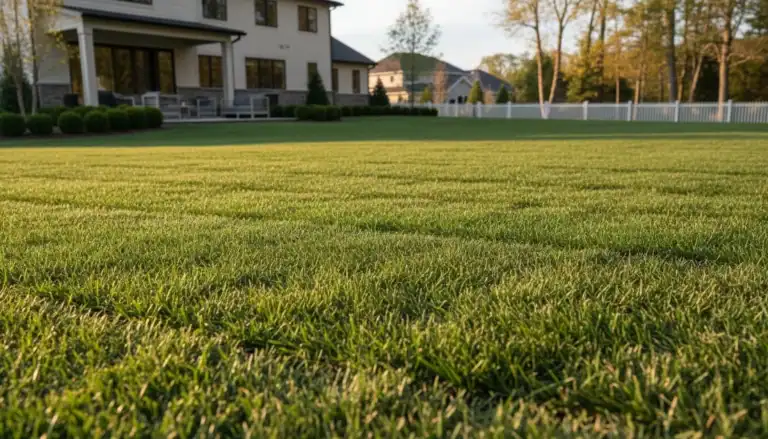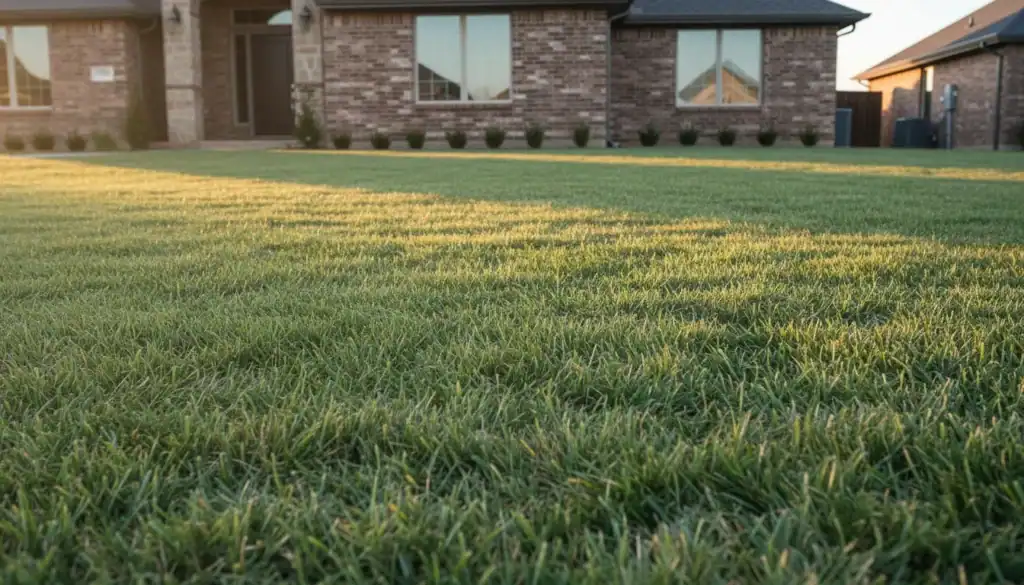
Zoysia grass creates dense, carpet-like lawns that thrive in hot climates while tolerating drought, heavy foot traffic, and moderate shade better than most warm-season grasses. This slow-growing but durable turfgrass spreads through underground rhizomes and above-ground stolons, forming thick turf that naturally crowds out weeds. Zoysia needs less water and fertilizer than cool-season grasses once established, making it an excellent choice for low-maintenance landscapes in USDA zones 6-11.
Key Takeaways
- Zoysia grass tolerates temperatures from 80-95°F optimal growth range and survives down to 20°F
- Establishment takes 2-3 years from seed or plugs, but creates extremely dense, weed-resistant turf
- Water requirements are 30-40% less than cool-season grasses once mature (0.5-1 inch per week)
- Three main varieties: Zoysia japonica (most cold-hardy), Z. matrella (finest texture), Z. tenuifolia (ultra-fine)
- Mowing height should stay between 0.5-2 inches depending on variety, with sharp blades essential
What Makes Zoysia Grass Different from Other Lawn Types?
Zoysia grass stands apart from other turfgrasses through its unique growth pattern and seasonal behavior. Unlike fast-spreading Bermuda grass or quick-germinating fescue, zoysia grows slowly but deliberately, sending out rhizomes underground and stolons above ground to create an incredibly dense mat.
This warm-season grass goes completely dormant in winter, turning golden-brown when temperatures consistently drop below 50°F. While this dormancy period can last 4-5 months in northern regions, the grass bounces back vigorously each spring. From our experience testing different grass types, zoysia’s dormancy is more complete than Bermuda grass but less unsightly than centipede grass.
The key difference lies in zoysia’s texture and density. A mature zoysia lawn feels almost spongy underfoot due to the thick thatch layer it naturally develops. This same density makes it nearly impossible for weeds to establish once the grass fills in completely.

Which Zoysia Variety Should You Choose?
Three main zoysia species dominate the market, each with distinct characteristics for different climates and uses:
| Variety | Cold Tolerance | Texture | Drought Tolerance | Best For |
|---|---|---|---|---|
| Zoysia japonica | Hardy to Zone 6 | Coarse | Excellent | Northern climates, high traffic |
| Zoysia matrella | Hardy to Zone 7-8 | Medium-fine | Very good | Golf courses, premium lawns |
| Zoysia tenuifolia | Hardy to Zone 8-9 | Ultra-fine | Good | Ornamental areas, low traffic |
Zoysia japonica varieties like ‘Meyer’, ‘Palisades’, and ‘Compadre’ offer the best cold tolerance, surviving winters as far north as Kansas and Kentucky. These coarser varieties handle heavy foot traffic and recover well from damage.
Zoysia matrella cultivars including ‘Diamond’, ‘Zorro’, and ‘Cavalier’ provide the sweet spot between durability and aesthetics. They create beautiful, medium-textured lawns that work well for most residential applications in the transition zone.
Zoysia tenuifolia, often called Korean grass or temple grass, produces an ultra-fine, almost moss-like appearance. This variety works best in warm coastal areas and needs minimal foot traffic.
How Do You Establish Zoysia Grass Successfully?
Zoysia establishment takes patience but rewards you with decades of low-maintenance turf. You have three main options: seed, plugs, or sod, each with distinct timelines and costs.
Seeding Zoysia Grass
Zoysia seed costs $3-8 per pound and covers approximately 1,000 square feet. Plant seed when soil temperatures reach 65-70°F consistently, typically late April through July in most regions. Expect 14-21 days for germination and 2-3 growing seasons for full establishment.
The main challenge with zoysia seed is its slow germination and establishment rate. We’ve found that maintaining consistent moisture for the first 30 days is critical – the seedbed should never completely dry out during this period.
Zoysia Plugs
Plugs cost $0.25-0.75 each and are typically planted on 12-18 inch centers. A 1,000 square foot lawn needs approximately 300-500 plugs. Plant plugs from April through August, spacing them according to how quickly you want full coverage.
Plugs establish faster than seed but slower than sod. Expect 12-18 months for plugs to begin filling in significantly and 2-3 years for complete coverage when planted on 12-inch centers.
Zoysia Sod
Sod provides instant coverage at $0.50-1.50 per square foot installed. While expensive upfront, sod gives you immediate lawn use and eliminates the patience needed for other establishment methods.

What Are Zoysia’s Growing Requirements?
Zoysia thrives in full sun but tolerates partial shade better than most warm-season grasses. It needs at least 4-6 hours of direct sunlight daily, though performance decreases gradually as shade increases.
Soil requirements are flexible – zoysia adapts to clay, sand, or loam as long as drainage is adequate. The grass prefers pH levels between 6.0-7.0 but tolerates slightly acidic to slightly alkaline conditions (5.5-7.5 pH range).
Temperature tolerance spans a wide range. Zoysia begins active growth when soil temperatures reach 65°F and thrives in air temperatures between 80-95°F. Growth slows significantly above 100°F and stops completely below 50°F.
Water needs vary by establishment stage. New plantings need daily watering to maintain soil moisture. Established zoysia needs only 0.5-1 inch of water weekly, including rainfall. According to University of Georgia Extension research, mature zoysia uses 30-40% less water than tall fescue or bluegrass.
How Should You Maintain Zoysia Grass?
Mowing Requirements
Zoysia mowing height depends on the variety and intended use. Cut coarse varieties like Meyer zoysia at 1-2 inches, medium varieties at 0.5-1.5 inches, and fine varieties at 0.5-1 inch.
Sharp mower blades are absolutely critical – dull blades shred zoysia’s tough leaves, creating brown, frayed tips that invite disease. Plan to sharpen or replace blades every 25-30 hours of use, more frequently than with other grass types. Trust me, this is one maintenance task you don’t want to skip.
Mowing frequency varies by season. During peak growth (May-August), mow weekly or when grass reaches 1.5 times the desired height. In shoulder seasons, every 2-3 weeks may suffice.
Fertilization Schedule
Zoysia needs less fertilizer than most grasses once established. Apply 2-4 pounds of nitrogen per 1,000 square feet annually, split into 2-3 applications during the growing season.
Time the first application when grass begins greening up in spring (soil temperature 65°F+). Make the second application in mid-summer, and if needed, a third light application in early fall, at least 6-8 weeks before expected dormancy.
Thatch Management
Zoysia naturally develops thatch – the layer of dead and living organic matter between grass blades and soil. While some thatch benefits the lawn, excessive buildup (over 0.5 inches) creates problems.
Get a Free Personalised Lawn Plan
Answer 3 quick questions about your lawn and we'll build a custom care plan — tailored to your grass type, climate, and biggest challenges.
Build My Lawn Plan →Plan to dethatch zoysia every 2-3 years during late spring or early summer when grass is actively growing. Use a power rake or vertical mower, then overseed thin areas if necessary.

What Problems Should You Watch For?
Zoysia faces fewer pest and disease issues than many turfgrasses, but several problems can occur:
Common Diseases
Large patch disease (formerly called brown patch) appears as circular brown areas 3-10 feet in diameter, typically in fall or spring during cool, wet weather. Improve air circulation and avoid excessive nitrogen fertilization.
Dollar spot creates small, silver dollar-sized brown patches during warm, humid conditions with heavy dew. This fungal disease usually signals low nitrogen levels – a light fertilizer application often resolves the issue.
Insect Pests
Chinch bugs cause irregular yellow to brown patches that spread outward. These tiny insects are most active during hot, dry weather and concentrate along sidewalks and driveways.
Grubs (beetle larvae) feed on zoysia roots, creating loose, easily-lifted turf sections. Peak damage occurs in late summer when grubs are largest.
Cultural Problems
Slow spring green-up is normal for zoysia but can be concerning for new owners. Zoysia typically begins greening when soil temperatures consistently reach 65°F, often 2-4 weeks later than Bermuda grass. Don’t panic – this is completely normal.
Scalping damage occurs when mowing too short or letting grass get too tall before cutting. Always follow the one-third rule – never remove more than one-third of the blade length in a single mowing.
Is Zoysia Right for Your Lawn?
Zoysia works best for homeowners who prioritize long-term durability over quick establishment. Consider zoysia if you:
- Live in USDA zones 6-11 with hot summers and moderate winters
- Want reduced watering and fertilization requirements
- Need grass that handles heavy foot traffic
- Prefer dense turf that naturally resists weeds
- Can wait 2-3 years for full establishment
Skip zoysia if you:
- Need immediate lawn establishment
- Live in areas with short growing seasons (less than 150 frost-free days)
- Prefer year-round green color
- Have heavily shaded areas (less than 4 hours direct sun)
- Want to overseed with cool-season grass for winter color

Regional Considerations for Zoysia Success
Transition Zone (Virginia to Kansas): Zoysia performs exceptionally well here, often outperforming both warm and cool-season alternatives. Choose cold-hardy varieties like Meyer or Palisades.
Deep South (Florida to Texas): All zoysia varieties thrive, but fine-textured types like Diamond and Cavalier create premium lawns. Watch for increased pest pressure in humid coastal areas.
Southwest (Arizona, Nevada, Southern California): Zoysia handles heat well but may struggle with extremely alkaline soils. Soil amendments and careful variety selection are crucial.
Pacific Northwest: Generally too cool and wet for zoysia success. Cool-season grasses perform better in this region.
In our testing across different regions, zoysia consistently performs best where summer temperatures regularly exceed 85°F and winter lows stay above 0°F. Areas experiencing sudden temperature swings or extended periods below 20°F may see winter damage.
Comparing Zoysia to Other Warm-Season Grasses
| Feature | Zoysia | Bermuda | St. Augustine | Centipede |
|---|---|---|---|---|
| Establishment Time | 2-3 years | 1 season | 1-2 seasons | 2-3 seasons |
| Cold Tolerance | Excellent (to Zone 6) | Good (to Zone 7) | Poor (Zone 8+) | Fair (Zone 7+) |
| Drought Tolerance | Excellent | Excellent | Fair | Good |
| Shade Tolerance | Good (4+ hours sun) | Poor (6+ hours sun) | Good (4+ hours sun) | Fair (4-5 hours sun) |
| Traffic Tolerance | Excellent | Excellent | Fair | Poor |
| Maintenance Level | Low-Medium | Medium-High | Medium | Low |
This comparison shows zoysia’s unique position as a slow-establishing but extremely durable option. While Bermuda grass spreads faster and St. Augustine provides quicker coverage, neither matches zoysia’s combination of cold tolerance, drought resistance, and long-term durability. Honestly, if you can handle the wait, zoysia beats them all in the long run.