A clover lawn is a ground cover made up mostly of clover species instead of traditional grass, basically a low-maintenance, drought-tolerant alternative that needs way less water, fertilizer, and mowing. White clover (Trifolium repens) and micro clover are your go-to varieties, with micro clover giving you a cleaner, fine-textured look that’s closer to regular turf. Here’s the kicker: clover lawns naturally pump nitrogen into the soil, stay green longer when it’s dry, and can slash your lawn care costs by up to 40% every year.
Key Takeaways
- Micro clover creates a 50% finer texture than white clover, blending better with existing grass
- Clover lawns require 30% less water than traditional grass and stay green in temperatures up to 85°F without irrigation
- Plant clover seed at 1-2 pounds per 1,000 square feet in early fall for best establishment
- Mow clover lawns at 3-4 inches height only 3-4 times per growing season
- Pure clover lawns cost 40-60% less to maintain annually compared to traditional turf
What Are the Different Types of Clover for Lawns?
White clover (Trifolium repens) and micro clover are your two main options for lawn applications. Each has its own personality for different yard situations.
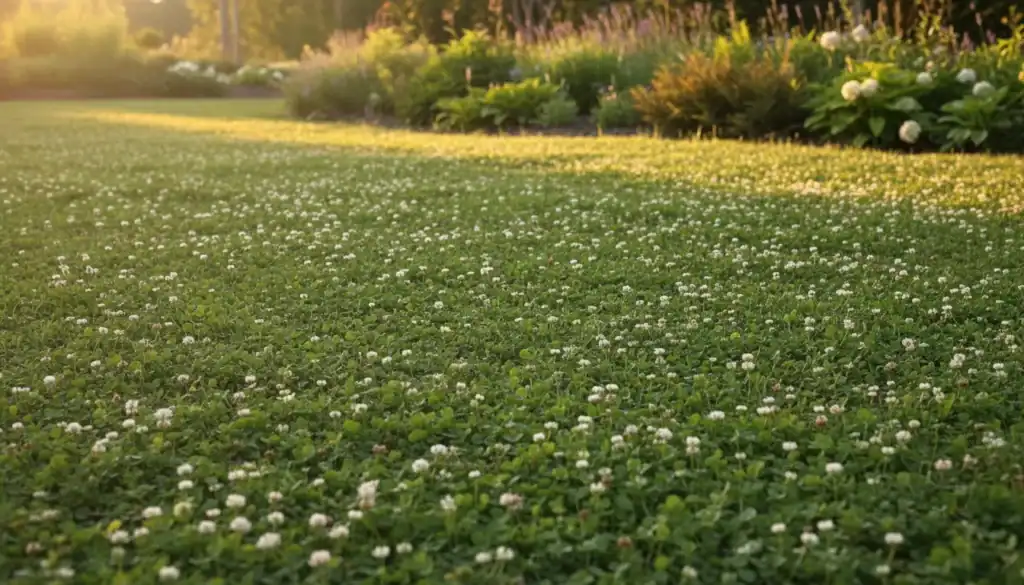
White clover gives you that classic three-leaf look with white flowers and grows 4-6 inches tall when you don’t mow it. This stuff spreads like crazy through stolons, blanket your yard in one growing season. The flowers are bee magnets, which is great for the environment but maybe not what you want if you’re after that perfectly manicured look.
Micro clover, also called dwarf white clover, is basically white clover’s well-behaved cousin. Plant breeders designed it for smaller leaves and shorter growth. It only hits 2-4 inches tall, barely flowers, and creates a much cleaner lawn texture. Varieties like ‘Pipolina’ and ‘Pirouette’ actually blend so well with grass seed mixes that most people can’t tell the difference.
| Feature | White Clover | Micro Clover |
|---|---|---|
| Leaf size | 0.5-1 inch diameter | 0.25-0.5 inch diameter |
| Growth height | 4-6 inches | 2-4 inches |
| Flower production | Heavy flowering | Minimal flowering |
| Seed cost per pound | $8-12 | $15-25 |
| Best use | Pure clover lawns | Mixed with grass |

What Are the Benefits of a Clover Lawn?
Clover lawns crush traditional grass lawns when it comes to environmental and money-saving benefits, especially water conservation and soil health.
Nitrogen fixation is clover’s superpower. The roots team up with rhizobia bacteria that grab nitrogen right out of the air and turn it into plant food, no fertilizer needed. We’re talking about 2-4 pounds of nitrogen per 1,000 square feet every year, according to the University of Minnesota Extension. That’s free fertilizer, folks.
Water needs drop like a rock with clover. Cool-season grasses are thirsty, they want 1-1.5 inches of water every week. Established clover? Only 0.5-1 inch per week. That’s because clover sends its taproot 24 inches deep to find moisture, while grass roots barely scratch the surface at 2-6 inches deep.
Pest resistance comes built-in. Clover’s natural compounds keep nasty lawn pests like chinch bugs and billbugs away, the same bugs that love to munch on grass lawns. The trade-off? You’ll get more beneficial insects like bees and butterflies during flowering, which honestly is a good thing.
Your wallet will thank you. Pure clover lawns eliminate fertilizer costs completely and cut mowing from weekly to monthly during growing season. From our experience, annual maintenance runs $200-400 per acre for clover versus $500-800 for traditional turf.
What Are the Drawbacks of Clover Lawns?
Let’s be real, clover lawns aren’t perfect. There are some legitimate downsides you need to know about, especially if durability and year-round green color matter to you.
Traffic tolerance is clover’s biggest weakness. High-traffic areas turn into bare patches fast because clover stems are way more fragile than grass blades. If an area gets heavy foot traffic more than 3-4 times weekly, you’ll see noticeable wear within one growing season. Not great if you have kids or host backyard parties regularly.
Winter dormancy kills the aesthetic in many climates. White clover goes completely brown when soil temps drop below 40°F, leaving your lawn looking dead for 3-5 months in northern regions. That dormancy period actually lasts longer than cool-season grasses, which at least keep some green color through winter.
Staining is annoying. Clover’s soft, moisture-packed leaves stain clothes and shoes way worse than grass when you step on them. We’ve found this is especially noticeable on light-colored surfaces and clothing.
Bee activity spikes during flowering. Environmentally awesome, but maybe concerning if you have family members with allergies or young kids. Peak flowering hits for 2-3 weeks in late spring and again in early fall, that’s when your yard becomes bee central.

How Do You Plant a Clover Lawn?
Getting clover established right requires different timing and techniques than grass installation. The good news? It’s actually simpler once you know the basics.
Timing is everything with clover. Plant seed 6-8 weeks before your first expected frost in fall, this gives roots time to establish before winter hits. Spring planting works in northern climates but you’ll deal with way more weed competition during establishment.
Start with a pH test. Clover loves soil pH between 6.0-7.0 but handles slightly acidic conditions better than most grasses. If your soil tests below 5.5, apply lime at 50 pounds per 1,000 square feet for each 0.5 pH unit you need to raise.
Remove existing vegetation completely, and I mean completely. Half-hearted grass removal leads to patchy, disappointing results. Use glyphosate herbicide 2-3 weeks before planting, or rent a sod cutter and do it mechanically.
Here’s our proven seeding process:
- Rake soil surface to create light furrows 0.25 inches deep
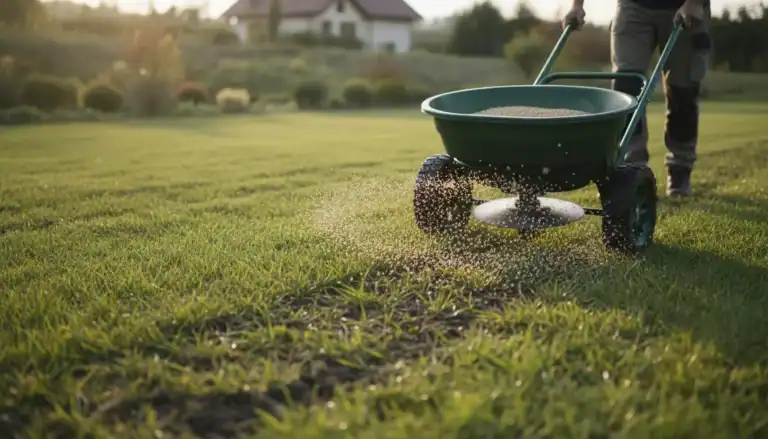
- Apply clover seed at 1-2 pounds per 1,000 square feet using a drop spreader
- Rake lightly to cover seed with thin soil layer
- Water gently with fine spray 2-3 times daily for first 2 weeks
- Reduce watering to every other day once seedlings reach 1 inch height
- Avoid foot traffic for first 6-8 weeks during establishment
Germination typically happens within 7-14 days under optimal conditions, with full coverage developing over 2-3 months.
How Do You Maintain a Clover Lawn?
Maintaining clover is refreshingly different from grass care, less work, different timing, and way more hands-off approach.
Mow only 3-4 times per growing season for pure clover lawns. Set your mower to 3-4 inches to keep clover’s natural growth habit and avoid scalping. Pro tip: mow before flowering if you want to minimize bee activity, usually late May and again in August.
Skip fertilization once clover is established. Seriously, don’t use nitrogen fertilizers at all. Excess nitrogen actually hurts clover’s nitrogen-fixing superpower and encourages grass weeds. Only apply phosphorus if soil tests show you’re severely deficient below 25 ppm.
Water needs vary by season. Give established clover 1 inch weekly during establishment and drought periods longer than 3 weeks. Deep, infrequent watering beats frequent shallow watering every time, it pushes those roots deeper.
Weed control gets tricky since most herbicides that kill weeds also damage clover. Hand-pull broadleaf weeds like dandelions. For crabgrass prevention, corn gluten meal applied in early spring works without harming established clover.
Overseed every 2-3 years to maintain thick coverage. Apply new clover seed at 0.5-1 pound per 1,000 square feet in early fall to fill thin spots and keep everything vigorous.
Get a Free Personalised Lawn Plan
Answer 3 quick questions about your lawn and we'll build a custom care plan — tailored to your grass type, climate, and biggest challenges.
Build My Lawn Plan →
Can You Mix Clover with Grass?
Grass-clover mixtures are honestly the sweet spot for most homeowners, you get the benefits of both plants while covering up their individual weaknesses.
Mixing ratios depend on what you prioritize. For nitrogen benefits with grass toughness, go 20-30% clover seed by weight mixed with grass seed. Want maximum eco-benefits while keeping some traffic tolerance? Bump clover up to 40-50% of the mix.
Cool-season grasses pair beautifully with clover in northern climates. Fine fescue plays nice with clover and creates attractive mixed stands. Perennial ryegrass and tall fescue work too, but they might outcompete clover if your soil gets nitrogen-rich.
In our testing, micro clover blends way better with grass than white clover. The smaller leaf size and minimal flowering create a uniform look that keeps traditional lawn lovers happy while cutting maintenance.
Plant timing follows the same fall schedule as pure clover. Mix seeds thoroughly before spreading and keep soil consistently moist during the 3-4 week establishment period when both species are vulnerable.
How Much Does a Clover Lawn Cost?
Clover lawn costs vary based on installation method and clover type, but they generally save money over time compared to traditional turf.
DIY seeding runs $0.50-1.25 per square foot for initial installation. White clover seed costs $8-12 per pound and covers 500-1,000 square feet depending on seeding rate. Micro clover costs more at $15-25 per pound but covers similar area.
Professional installation adds $1.50-3.00 per square foot in labor, including soil prep, seeding, and establishment care. Total professional installation ranges $2.00-4.25 per square foot for complete clover conversion.
Here’s where clover really shines: annual maintenance costs plummet after establishment. Pure clover lawns need no fertilizer, less water, and minimal mowing, you’re looking at $150-300 per acre yearly. Traditional grass runs $400-800 per acre annually with fertilizer, water, and regular mowing.
| Cost Category | Clover Lawn (Annual) | Traditional Grass (Annual) |
|---|---|---|
| Fertilizer | $0 | $200-400 |
| Water costs | $100-200 | $250-500 |
| Mowing | $50-100 | $200-400 |
| Pest control | $0-50 | $100-200 |
| Total per acre | $150-350 | $750-1,500 |

When Should You Avoid Clover Lawns?
Some situations make clover lawns a bad choice, despite all their environmental benefits. Be honest about your property’s needs before making the switch.
High-traffic areas are clover killers. If you’ve got kids’ play areas, sports activities, or regular entertaining, you need grass durability. Clover just can’t handle concentrated foot traffic and develops bare patches within one season under heavy use.
HOA restrictions often ban clover in managed communities. Many homeowner associations literally classify clover as a weed and require traditional turf grass. Check your community covenants before spending money on clover conversion, nobody wants a compliance headache.
Extreme climates limit clover success. Regions where summer temps consistently hit above 90°F stress clover significantly. Areas with less than 20 inches annual rainfall need supplemental irrigation that kills the water-saving benefits.
Bee sting allergies make clover risky. While you can manage flowering through mowing, some flower production happens naturally, bringing bees and other pollinators during peak bloom periods.
Frequently Asked Questions
How long does it take for a clover lawn to establish?
Clover seed germinates in 7-14 days under optimal conditions, with visible coverage developing within 4-6 weeks. Full establishment and dense coverage typically takes 2-3 months from seeding, depending on weather conditions and soil quality. Fall-planted clover achieves better establishment than spring seeding due to reduced weed competition.
Will clover take over my existing grass lawn?
Clover spreads naturally through stolons and self-seeding but rarely takes over healthy, well-maintained grass. In mixed lawns, clover typically stabilizes at 20-40% coverage depending on soil nitrogen levels and mowing practices. Clover spreads more aggressively in nitrogen-poor soils where grass struggles to compete effectively.
Can you use regular lawn fertilizer on clover?
Avoid nitrogen-based fertilizers on clover lawns as excess nitrogen disrupts the plant’s natural nitrogen-fixing ability and encourages grass weeds. Clover produces its own nitrogen and requires no additional fertilization once established. Apply phosphorus only if soil tests indicate severe deficiency below 25 ppm.
Do clover lawns attract more bugs than grass?
Clover lawns attract beneficial insects like bees and butterflies during 2-3 week flowering periods but actually repel many harmful lawn pests including chinch bugs and billbugs. The increased pollinator activity is temporary and can be minimized by mowing before flowers fully develop. Overall, clover lawns support healthier ecosystem balance than monoculture grass.
How do you remove a clover lawn if you change your mind?
Remove clover lawns using non-selective herbicide like glyphosate applied during active growth periods in spring or fall. Multiple applications 2-3 weeks apart are typically necessary due to clover’s deep root system. Mechanical removal requires excavation to 8-10 inches depth to eliminate root fragments that can regrow into new plants.