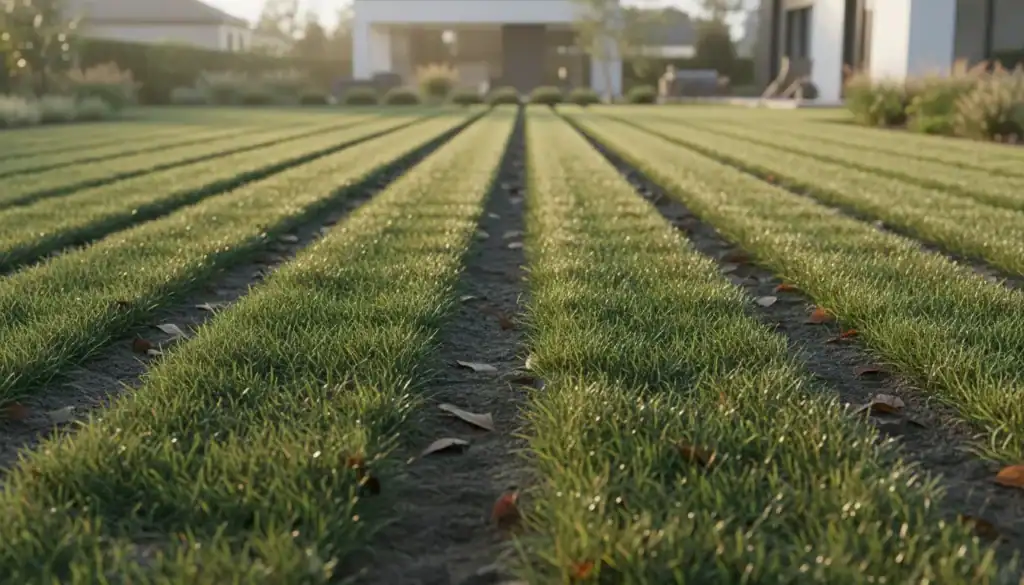
Most lawns need mowing every 7-10 days during active growing seasons, but the exact frequency depends on your grass type, weather conditions, and desired lawn height. Fast-growing grasses like Bermuda may need cutting twice weekly in peak season, while slow-growing fescue might only need weekly attention.
Key Takeaways
- Follow the one-third rule: never cut more than one-third of the grass blade length in a single mowing
- Cool-season grasses need mowing every 5-7 days in spring and fall, every 10-14 days in summer
- Warm-season grasses require cutting every 3-7 days during peak growth (late spring through early fall)
- Adjust frequency based on growth rate, mow when grass reaches 25-30% above your target height
- Wet weather and fertilizer applications can double your normal mowing frequency
What Determines How Often You Should Mow?
Your mowing frequency depends on four main factors: grass growth rate, target height, weather conditions, and lawn health goals. Here’s the thing, grass doesn’t grow at a steady rate. It surges during optimal temperature and moisture conditions, then slows during stress periods.
The golden rule is the one-third principle: never remove more than one-third of the grass blade in a single cut. If your target height is 3 inches, mow when the grass reaches 4-4.5 inches. This maintains root health and prevents shock that turns your lawn brown.
Weather drives everything. During cool, wet springs, you might mow twice weekly. In hot, dry summers, you could stretch to every two weeks. We’ve found that tracking weekly growth patterns for your specific lawn gives you the best mowing schedule.

How Often Should You Mow Cool-Season Grasses?
Cool-season grasses like tall fescue, Kentucky bluegrass, and perennial ryegrass grow most actively when temperatures stay between 60-75°F. This creates two peak growing seasons with different mowing needs.
Spring (March-May): Mow every 5-7 days. Cool temperatures and spring rains create rapid growth. You’ll likely need to mow twice weekly during the fastest growth periods in April and early May.
Summer (June-August): Reduce to every 10-14 days. Heat stress slows growth dramatically. Raise your cutting height by half an inch to protect roots and conserve moisture.
Fall (September-November): Return to every 5-7 days. Cooler temperatures trigger another growth surge, especially after the first significant rainfall following summer drought.
| Season | Temperature Range | Mowing Frequency | Cutting Height |
|---|---|---|---|
| Spring | 50-75°F | Every 5-7 days | 2.5-3 inches |
| Summer | 75-85°F+ | Every 10-14 days | 3-4 inches |
| Fall | 50-70°F | Every 5-7 days | 2.5-3 inches |
| Winter | Below 50°F | Minimal/none | Last cut at 2 inches |
How Often Should You Mow Warm-Season Grasses?
Warm-season varieties like Bermuda, Zoysia, St. Augustine, and Centipede thrive in 80-95°F temperatures and need more frequent cutting during their active season.
Bermuda grass grows fastest and may need cutting every 3-4 days during peak season (June-August). This aggressive grower can add an inch of height in just a few days under ideal conditions. Honestly, Bermuda can feel like a part-time job during summer.
Zoysia and St. Augustine grow more moderately, requiring cuts every 7-10 days during peak season. These grasses maintain better appearance with consistent weekly mowing.
Centipede grass grows slowest among warm-season types, often needing only bi-weekly mowing even during active growth periods.
From our experience, warm-season lawns in the transition zone (zones 6-7) need the most attention to mowing frequency because temperature swings create unpredictable growth spurts.

Should You Adjust Frequency Based on Weather?
Weather conditions can double or halve your normal mowing frequency within the same month. Rain and temperature create the biggest impacts on grass growth rates.
After heavy rain: Expect growth rates to increase by 50-100% for the following week. Plan an extra mowing session if you receive more than 2 inches of rain in a week. Your neighbors might think you’re obsessive, but your lawn will look better than theirs.
During drought: Extend your normal schedule by 3-5 days. Stressed grass grows slowly and benefits from less frequent disturbance. Never mow drought-stressed grass shorter than 3 inches.
Temperature spikes: Cool-season grasses slow dramatically when temperatures exceed 85°F for consecutive days. Warm-season grasses accelerate growth when temperatures hit their sweet spot of 85-95°F.
According to the University of Georgia Extension, homeowners who adjust mowing frequency based on weekly weather patterns maintain healthier lawns than those following rigid schedules.
How Does Fertilizer Affect Mowing Frequency?
Fertilizer applications temporarily increase mowing frequency by 30-50% for 2-3 weeks following application. Plan accordingly when you fertilize, or prepare to hate your weekend schedule.
Nitrogen-heavy fertilizers create the biggest impact. Quick-release nitrogen can double grass growth rates within 5-7 days. Slow-release formulations extend the growth period but create more predictable increases.
Spring fertilizer timing: If you fertilize in early April, expect to mow twice weekly through early May. Many homeowners underestimate this surge and end up scalping their lawn when they finally cut it.
Fall fertilization on cool-season grasses creates similar growth spurts when combined with cooler temperatures and fall moisture.
Get a Free Personalised Lawn Plan
Answer 3 quick questions about your lawn and we'll build a custom care plan — tailored to your grass type, climate, and biggest challenges.
Build My Lawn Plan →
What Happens When You Mow Too Often or Too Rarely?
Mowing too frequently (more than twice weekly) wastes time and can stress grass by removing too much photosynthetic area. Daily mowing with robotic mowers is an exception, they remove tiny amounts and act more like trimming than cutting.
Mowing too rarely forces you to remove too much blade length at once, shocking the grass and creating brown tips. Grass cut after two weeks of growth often looks scalped even when cut at the proper height. We’ve seen lawns that look like they went through a bad haircut.
Signs you’re mowing too often:
- Grass appears thin or weak
- Brown spots develop in high-traffic areas
- Weeds invade despite thick grass coverage
Signs you’re mowing too rarely:
- Brown tips appear after cutting
- Clumps of grass clippings remain on the lawn
- Grass lies flat after mowing instead of standing upright
How Do You Create the Perfect Mowing Schedule?
Building an effective mowing schedule requires tracking your lawn’s growth patterns for one full season, then adjusting based on weather and seasonal changes. Yes, this means actually measuring grass height, but trust us, it’s worth the nerdy approach.
Step 1: Measure grass height weekly at the same spots using a ruler. Record measurements in a simple chart with date, height, and weather conditions.
Step 2: Calculate growth rate by subtracting last week’s height from this week’s height. Most grasses grow 0.5-2 inches per week during active periods.
Step 3: Set target heights based on grass type. Cool-season grasses: 2.5-4 inches. Warm-season grasses: 1-3 inches depending on variety.
Step 4: Schedule mowing when grass reaches 125-130% of target height. For a 3-inch target, mow at 3.75-4 inches.
Step 5: Adjust weekly based on weather forecasts. Plan extra sessions after predicted rain, skip sessions during drought stress.
In our testing, homeowners who track growth patterns and adjust schedules accordingly maintain consistently healthier lawns than those following calendar-based schedules.

Frequently Asked Questions
Can I mow my lawn every day?
Daily mowing with a standard mower stresses grass and wastes time since most grasses only grow 0.1-0.3 inches per day. Robotic mowers designed for daily use are different, they trim tiny amounts and actually benefit grass health. Stick to 2-3 times weekly maximum with conventional mowers.
Should I mow wet grass more or less often?
Never mow wet grass if possible, it creates uneven cuts, clumps clippings, and can damage your mower. Wet conditions accelerate growth, so you’ll need more frequent sessions once the grass dries. Wait at least 2-3 hours after rain or morning dew before mowing.
How often should I mow a newly seeded lawn?
Wait until new grass reaches 3-4 inches before the first cut, typically 3-4 weeks after seeding. Then mow weekly, removing only the top inch to avoid disturbing shallow roots. Young grass needs consistent, light cutting to establish properly without shock.
Does grass type really matter for mowing frequency?
Absolutely. Bermuda grass can grow 2-3 inches per week and needs cutting every 3-4 days during peak season. Centipede grass grows slowly and may only need bi-weekly cutting. Matching frequency to your specific grass type prevents both overgrowth and excessive cutting stress.
What’s the best time of day to check if I need to mow?
Check grass height in late afternoon when blades are fully upright and dry. Morning dew weighs down grass, making it appear shorter than actual height. Measure at 3-4 different spots since growth rates vary across your lawn due to sun exposure and moisture levels.