Lawn aeration creates small holes in your soil to relieve compaction, allowing air, water, and nutrients to reach grass roots more effectively. The best time to aerate depends on your grass type, cool-season grasses in early fall (September-October), warm-season grasses in late spring to early summer (May-June). Most lawns benefit from annual aeration, especially those with heavy foot traffic or clay soil.
Key Takeaways
- Core aeration removes 2-3 inch plugs every 4-6 inches for maximum soil relief
- Cool-season grasses: aerate September-October; warm-season grasses: aerate May-June
- Rent a core aerator for $75-100/day, spike aerators and liquid products don’t work effectively
- Signs you need aeration: water pools after rain, soil feels hard, grass thins in high-traffic areas
- Combine aeration with overseeding and fertilizing for best results, the holes create perfect seed beds
What Is Lawn Aeration and Why Does It Work?
Aeration is basically poking holes in your lawn to break up packed-down soil. When soil gets compacted from foot traffic, heavy equipment, or just natural settling, it creates a barrier that prevents air, water, and nutrients from reaching grass roots. The result? Shallow root systems, lousy drought tolerance, and patchy grass that looks terrible.
The best method is core aeration, which actually removes plugs of soil and thatch instead of just poking holes. These holes stay open for months, creating highways for root growth and water infiltration. According to Michigan State University Extension, properly aerated lawns show 50% better water infiltration rates compared to compacted soil.
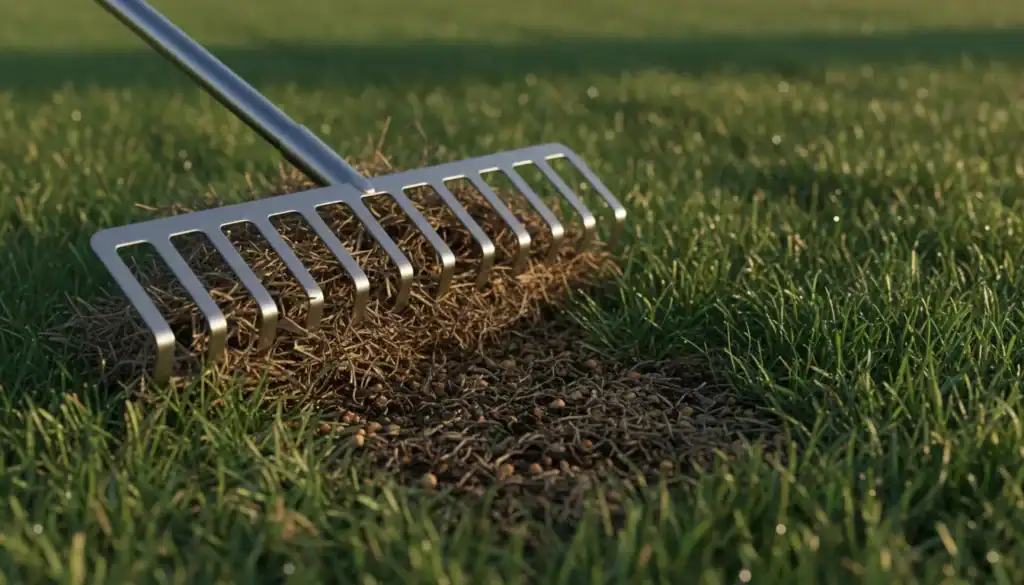
Aeration also tackles thatch buildup, that spongy layer of dead grass between the soil surface and green grass. When thatch gets thicker than half an inch, it basically suffocates your lawn by blocking water and nutrients.

When Should You Aerate Your Lawn?
Timing is everything with aeration. You want to hit your grass when it’s actively growing so it can quickly recover and fill in those holes.
Cool-Season Grasses (Fescue, Bluegrass, Ryegrass): Aerate in early fall, ideally September to early October. This gives your grass 4-6 weeks of solid growing weather before winter hits. Spring aeration works too (April-May), but honestly, you’re competing with your lawn’s busiest growing season.
Warm-Season Grasses (Bermuda, Zoysia, St. Augustine): Wait for late spring to early summer when soil temperatures consistently hit 65-70°F, typically May through June. These grasses need warm soil to bounce back from the disruption.
Never aerate during dormancy or when your lawn is stressed. Wet soil turns into a muddy disaster, and drought-stressed grass simply can’t handle the extra trauma.
How Do You Know Your Lawn Needs Aeration?
Most lawns benefit from annual aeration, but these red flags scream that your soil is compacted and needs immediate help:
- Water pooling: If water sits on your lawn after rain instead of soaking in, you’ve got compaction issues
- Hard soil: Can’t push a screwdriver 4 inches into moist soil? Time to aerate
- Thin grass in traffic areas: Those worn pathways and play areas with sparse grass are dead giveaways
- Thick thatch: Dig up a small section, if that brown spongy layer is thicker than your fingernail, you need aeration
- New construction: Heavy equipment absolutely destroys soil structure, requiring immediate attention
Clay soils are notorious for compacting and typically need annual aeration. Sandy soils get a break, every 2-3 years unless they see heavy traffic.

Core Aeration vs. Spike Aeration: Which Method Works?
Core aeration removes actual plugs of soil, creating lasting holes that stay open for months. Spike aeration just stabs holes without removing anything, and often makes compaction worse around each puncture.
| Method | How It Works | Effectiveness | Cost | Best For |
|---|---|---|---|---|
| Core Aeration | Removes 2-3 inch soil plugs | Excellent | $75-100/day rental | Compacted lawns, annual maintenance |
| Spike Aeration | Pokes holes in soil | Poor | $30-50 tool purchase | Very mild compaction only |
| Liquid Aeration | Chemical soil conditioners | Minimal | $20-40 per treatment | Marketing gimmick, avoid |
| Slice Seeding | Cuts slits while dropping seed | Good for overseeding | $100-150/day rental | Thin lawns needing overseeding |
Professional core aerators punch holes every 4-6 inches in a random pattern. The University of Georgia Extension recommends 20-40 holes per square foot for optimal results.
What Equipment Do You Need for DIY Aeration?
Skip those manual aerating tools, they’re backbreaking torture devices that barely work on anything bigger than a flower bed. Here are your realistic options:
Rental Core Aerator: A walk-behind core aerator runs $75-100 per day from most equipment rental shops. These 150-200 pound machines pull proper 2-3 inch cores effectively. You can tackle 5,000-8,000 square feet per day without killing yourself.
Tow-Behind Aerator: If you’ve got a riding mower, tow-behind units ($300-600) work great for properties over an acre. Just make sure your tractor weighs enough (400+ pounds) to actually pull cores instead of just dragging across the surface.
Professional Service: Expect $0.10-0.20 per square foot for professional aeration. A 5,000 square foot lawn typically runs $200-400, including cleanup of those soil plugs.

Step-by-Step Aeration Process
Proper aeration requires more than just running a machine across your lawn. Follow this process for professional results:
Pre-Aeration Setup (1-2 days before):
- Water your lawn if soil is dry, you want moist, not muddy conditions
- Mark sprinkler heads, shallow utilities, and decorative elements with flags
- Mow grass to 2 inches or shorter for better soil contact
Aeration Day:
- Test soil moisture by pushing a screwdriver into the ground, it should go in easily but not create mud
- Make one pass across the entire lawn in parallel lines
- Make a second pass perpendicular to the first for heavily compacted areas
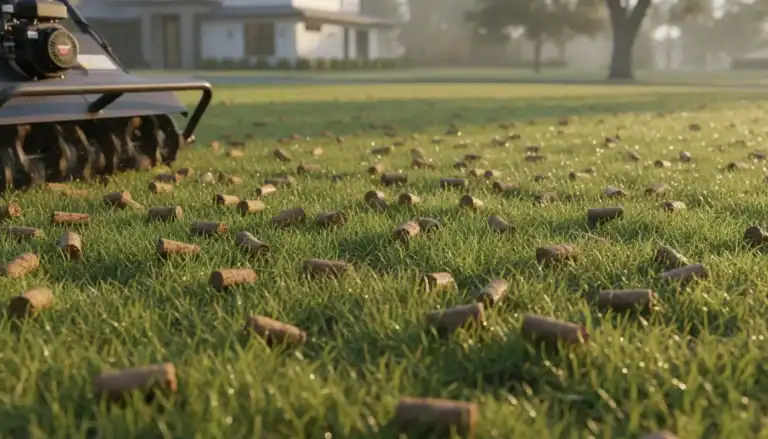
- Leave those soil plugs on the surface, they break down naturally and add organic matter back to your soil
Post-Aeration Care:
- Apply starter fertilizer within 24 hours if you’re overseeding
- Water lightly daily for 2 weeks to keep soil moist
- Keep foot traffic light for 2-3 weeks while grass recovers
What Should You Do After Aeration?
Aeration creates the perfect window for other lawn improvements. Those holes give you direct access to the root zone, making treatments 3-4 times more effective according to Purdue University research.
Get a Free Personalised Lawn Plan
Answer 3 quick questions about your lawn and we'll build a custom care plan — tailored to your grass type, climate, and biggest challenges.
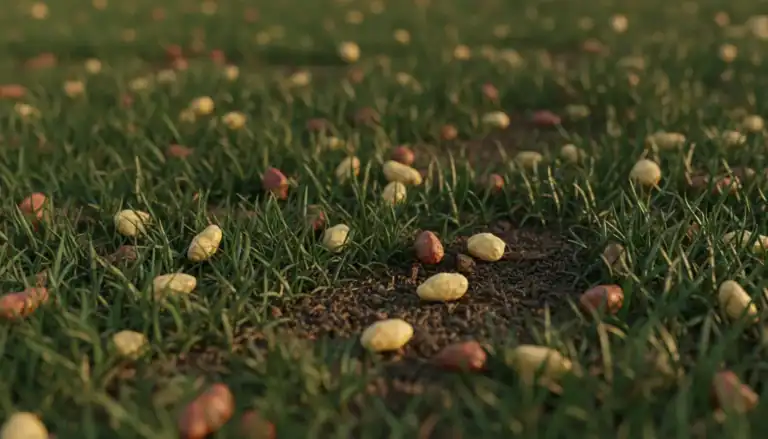
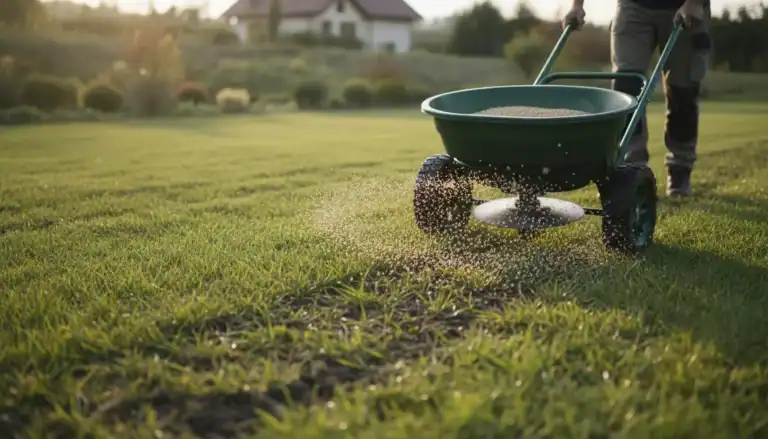
Build My Lawn Plan →Overseeding: Spread grass seed immediately after aeration. Seeds fall directly into those holes, getting ideal germination conditions with good soil contact and protection from hungry birds. Use 2-4 pounds of seed per 1,000 square feet for thick coverage.
Fertilizing: Apply starter fertilizer (high phosphorus) if you’re overseeding, or balanced fertilizer for established lawns. The nutrients reach roots directly through the aeration holes instead of sitting uselessly on the surface.
Topdressing: Spread a thin layer (quarter-inch) of compost or quality topsoil to fill aeration holes and improve soil structure long-term. This works especially well for stubborn clay soils.
From our experience, lawns that combine aeration with overseeding show 60-80% better seed germination rates compared to just broadcasting seed on unworked soil.

How Often Should You Aerate Your Lawn?
Most lawns need annual aeration, but frequency depends on your soil type and how much abuse it takes:
Annual Aeration Needed:
- Clay soils (they compact if you look at them wrong)
- High-traffic areas (sports fields, heavy foot traffic)
- Lawns with pets (all that running around packs soil tight)
- New construction sites (heavy equipment is brutal on soil)
Every 2-3 Years:
- Sandy soils with light traffic
- Mature lawns with minimal foot traffic
- Well-established lawns over 5 years old
Never aerate more than twice per year, you’ll damage root systems and weaken your grass. If your lawn still shows compaction after annual aeration, you need to fix drainage issues or find ways to reduce traffic.
Common Aeration Mistakes to Avoid
These mistakes will either damage your lawn or waste your money:
Wrong Timing: Aerating dormant grass is pointless and delays recovery. Cool-season grass aerated in summer heat can actually die from the stress.
Bone-Dry Soil: Hard, dry soil prevents proper core removal and can break equipment. Wait 24-48 hours after watering or rain for the right moisture level.
Single Pass Only: One pass typically creates 8-12 holes per square foot. Heavily compacted areas need 20-40 holes per square foot, which means multiple passes at different angles.
Cleaning Up Soil Plugs: Those cores are packed with valuable organic matter and nutrients. Let them break down naturally over 2-4 weeks instead of raking them up like yard waste.
Aerating and Forgetting: Those holes close within 2-3 months if you don’t capitalize with overseeding, fertilizing, or topdressing.

Professional vs. DIY Aeration: Cost Analysis
The break-even point for DIY aeration hits around 8,000-10,000 square feet when you factor in time and effort:
| Lawn Size | Professional Cost | DIY Cost | Time Investment | Best Choice |
|---|---|---|---|---|
| Under 5,000 sq ft | $200-400 | $80 rental + 3 hours | Half day | Professional |
| 5,000-10,000 sq ft | $400-800 | $80 rental + 4 hours | Full day | DIY if comfortable |
| Over 10,000 sq ft | $800-1,500 | $100 rental + 6+ hours | Full weekend | DIY saves money |
Professional services handle cleanup, often bundle overseeding at reduced rates, and guarantee results. DIY gives you complete control over timing and technique but requires physical effort and some equipment know-how.
We’ve found that most homeowners who try DIY aeration once keep doing it themselves, the process is straightforward and the results are immediately obvious in better water infiltration and healthier grass growth.