Lawn dethatching is the process of removing the layer of dead grass, roots, and organic debris that accumulates between your soil and grass blades. Here’s the truth: most lawns never need dethatching, only when thatch exceeds ½ inch thick should you consider this aggressive treatment. Timing matters: dethatch cool-season grasses in early fall and warm-season grasses in late spring when they’re actively growing.
Key Takeaways
- Only dethatch when thatch layer exceeds ½ inch thick (measure by cutting a small wedge from your lawn)
- Cool-season grasses: dethatch in early fall (late August to mid-September)
- Warm-season grasses: dethatch in late spring to early summer (May to June)
- Rent a power dethatcher for lawns over 2,000 square feet, manual rakes are ineffective on large areas
- Always overseed and fertilize immediately after dethatching to help your lawn recover
What Is Thatch and When Does It Become a Problem?
Thatch is a layer of living and dead organic matter, grass stems, roots, crowns, and rhizomes, that sits between your soil surface and green grass blades. A thin thatch layer (¼ inch or less) actually benefits your lawn by moderating soil temperature, retaining moisture, and cushioning foot traffic.
Problems start when thatch builds up beyond ½ inch thick. According to the University of Illinois Extension, excessive thatch creates a barrier that prevents water, air, and nutrients from reaching grass roots. Your lawn becomes drought-stressed even with regular watering, and fertilizer sits on top of the thatch instead of feeding the roots below.
Most Kentucky bluegrass and fine fescue lawns develop thatch issues because these grasses spread through underground stems (rhizomes) and above-ground runners (stolons). Bermuda grass and zoysia also thatch heavily. Tall fescue and perennial ryegrass rarely need dethatching since they grow in clumps without aggressive spreading habits.

How Do You Know If Your Lawn Needs Dethatching?
Cut a small triangular wedge from your lawn using a sharp spade, creating a 4-inch deep sample that shows the soil profile. Measure the brown, spongy layer between the soil and green grass, this is your thatch layer.
Here’s what the measurements mean:
- Less than ¼ inch: Healthy thatch layer, leave it alone
- ¼ to ½ inch: Monitor closely but no action needed yet
- More than ½ inch: Consider dethatching, especially if water runs off rather than soaking in
- Over ¾ inch: Definitely needs dethatching
Other signs your lawn might need dethatching include water pooling on the surface after irrigation, fertilizer sitting on top of grass rather than reaching soil, and grass that feels spongy underfoot like walking on a thick carpet pad.
When Should You Dethatch Your Lawn?
Timing depends entirely on your grass type because dethatching is stressful. Your grass needs time to recover before facing temperature extremes.
Cool-season grasses (Kentucky bluegrass, tall fescue, perennial ryegrass, fine fescue) should be dethatched in early fall, typically late August through mid-September. This gives them 4-6 weeks of ideal growing conditions before winter dormancy.
Warm-season grasses (Bermuda, zoysia, St. Augustine, centipede) get dethatched in late spring to early summer, May through June in most regions. Wait until soil temperatures reach 65-70°F and grass is fully green and actively growing.
Never dethatch during stress periods: mid-summer heat, drought conditions, or just before winter dormancy. From our experience, lawns dethatched at the wrong time can take a full growing season to recover.
| Grass Type | Best Dethatching Time | Soil Temperature | Growing Conditions |
|---|---|---|---|
| Kentucky Bluegrass | Late August – Mid September | 60-75°F | Cool, moist |
| Tall Fescue | Early September | 60-75°F | Cool, moist |
| Bermuda Grass | May – June | 65-70°F | Warm, actively growing |
| Zoysia | Late May – June | 65-70°F | Warm, fully green |

What Tools Do You Need for Dethatching?
Your choice depends on lawn size and thatch severity. Manual dethatching rakes work for small areas under 1,000 square feet, but they’re labor-intensive and often ineffective on thick thatch.
Power dethatcher rental: Most effective option for larger lawns. These machines use spring-loaded tines or fixed blades to pull thatch from the lawn. Expect to pay $50-80 per day rental. The Bluebird DT22 and STIHL MM 55 are reliable models most rental centers carry.
Dethatching rake attachment: If you own a power rake, dethatching attachments cost $100-200. Less aggressive than dedicated dethatchers but suitable for moderate thatch buildup.
Manual dethatching rake: Only practical for small areas or spot treatment. Look for rakes with curved, sharp tines spaced about ½ inch apart.
How to Dethatch Your Lawn Step by Step
Proper dethatching technique prevents unnecessary damage to healthy grass roots and ensures effective thatch removal.
- Mow your lawn shorter than normal, set cutting height 1 inch lower than usual to expose the thatch layer and make the dethatcher more effective.
- Water lightly if soil is dry, slightly moist soil allows tines to penetrate better without creating a muddy mess. Skip this step if you’ve had recent rainfall.
- Set dethatcher depth correctly, tines should penetrate ¼ to ½ inch into the soil surface. Too shallow misses thatch; too deep damages grass roots unnecessarily.
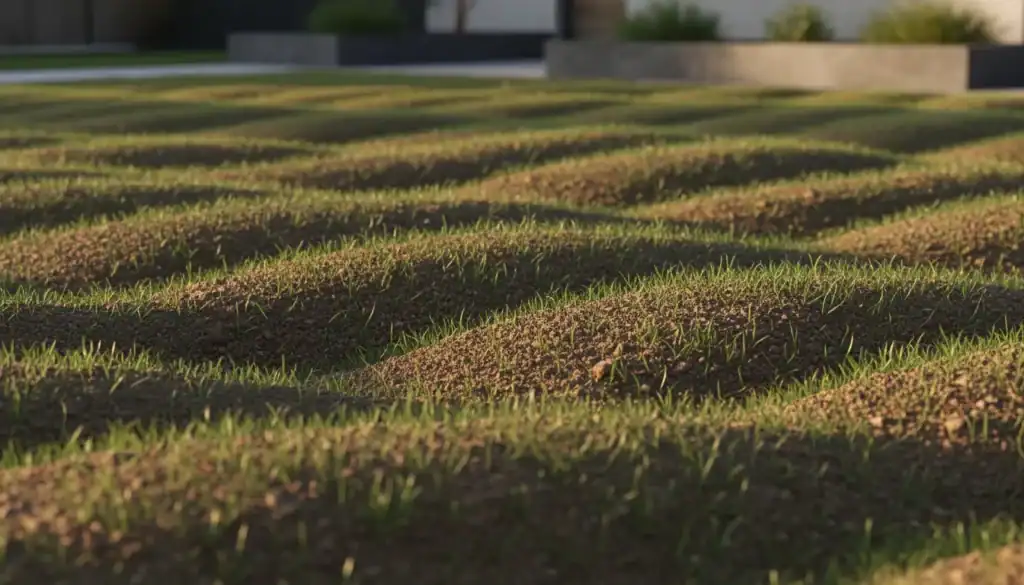
- Make your first pass in one direction, work systematically across the entire lawn, overlapping passes by 2-3 inches. Don’t worry about the debris yet.
- Make a second pass perpendicular to the first, this cross-hatch pattern ensures thorough thatch removal from all angles.
- Rake up all debris immediately, collected thatch can smother recovering grass if left on the lawn. Use a leaf rake or lawn sweeper for efficient cleanup.
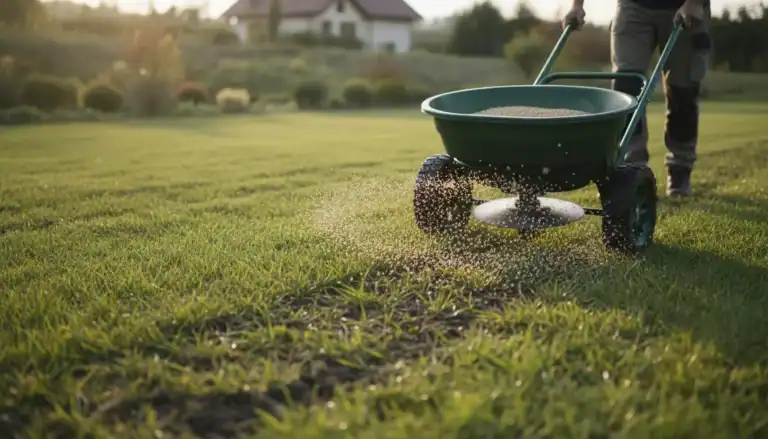
- Overseed bare spots within 24 hours, dethatching creates perfect conditions for new seed germination, but timing is critical.
- Apply starter fertilizer, use a high-phosphorus fertilizer (like 18-24-12) to encourage root development in newly seeded areas.

What Should You Do After Dethatching?
Post-dethatching care determines whether your lawn recovers quickly or struggles for months. Your lawn will look terrible immediately after dethatching, this is normal and temporary.
Get a Free Personalised Lawn Plan
Answer 3 quick questions about your lawn and we'll build a custom care plan — tailored to your grass type, climate, and biggest challenges.
Build My Lawn Plan →Overseed within 24-48 hours: Use the same grass type as your existing lawn, applying seed at half the new-lawn rate. The University of Georgia Extension recommends 2-3 pounds of tall fescue seed per 1,000 square feet for overseeding after dethatching.
Apply starter fertilizer: Choose a fertilizer with higher phosphorus content (middle number) to encourage root development. Apply at label rates, typically 1-2 pounds per 1,000 square feet.
Water consistently but lightly: Keep the top inch of soil moist for 2-3 weeks until new grass establishes. This usually means light daily watering rather than deep, infrequent irrigation.
Avoid foot traffic: Stay off the lawn for 2-3 weeks while grass recovers and new seedlings establish.
Is Dethatching Always Necessary?
Honestly, most lawns never need dethatching. According to research from multiple university extension services, proper cultural practices prevent thatch buildup better than periodic removal.
Prevention strategies that work:
- Avoid over-fertilizing with nitrogen, excess growth increases thatch production
- Water deeply but infrequently to encourage deep root growth
- Maintain proper soil pH (6.0-7.0 for most grasses) to support beneficial microorganisms that decompose thatch naturally
- Aerate compacted soils annually to improve drainage and microbial activity
- Leave grass clippings on the lawn, they don’t contribute to thatch buildup despite common myths
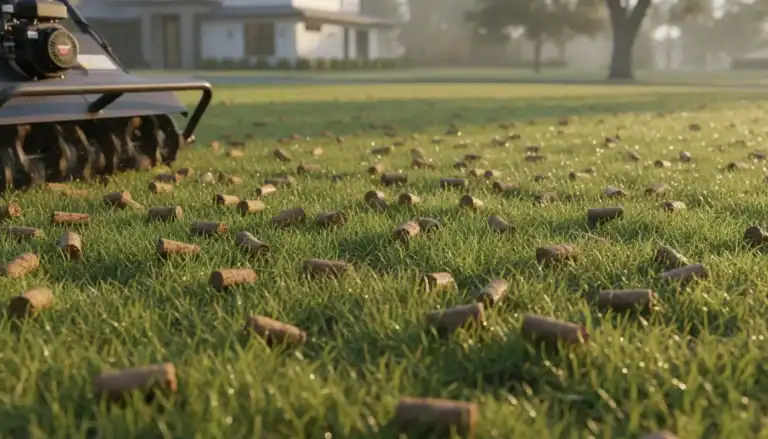
Core aeration often provides similar benefits to dethatching without the lawn damage. The process creates holes that relieve soil compaction, improve water infiltration, and stimulate natural thatch decomposition by introducing oxygen to the soil-thatch interface.

Dethatching vs. Core Aeration: Which Do You Need?
Many homeowners confuse these two treatments, but they address different problems and use different techniques.
| Treatment | Purpose | Method | Best For | Recovery Time |
|---|---|---|---|---|
| Dethatching | Remove excess thatch | Mechanical raking/combing | Thatch over ½ inch thick | 4-6 weeks |
| Core Aeration | Relieve soil compaction | Remove soil plugs | Compacted soil, water runoff | 2-3 weeks |
In our testing, core aeration solves more lawn problems than dethatching. Most lawns with water drainage issues, thin grass, or hard soil benefit more from aeration than thatch removal.
Frequently Asked Questions
How often should you dethatch your lawn?
Most lawns never need dethatching more than once every 3-5 years, if at all. Kentucky bluegrass and fine fescue may need it every 2-3 years under ideal growing conditions. If you’re dethatching annually, you likely have underlying issues like over-fertilization or poor soil drainage that need addressing first.
Can you dethatch and aerate in the same year?
Yes, but space them 4-6 weeks apart to avoid over-stressing your lawn. If both treatments are needed, aerate first in early spring, then dethatch in fall for cool-season grasses. For warm-season grasses, aerate in late spring and dethatch in early summer if necessary.
Will dethatching kill my grass?
Proper dethatching won’t kill healthy grass, but it will temporarily damage the lawn’s appearance. Expect 20-30% of grass blades to be removed during the process. With proper timing and post-treatment care, most lawns recover fully within 4-6 weeks.
Should you fertilize before or after dethatching?
Always fertilize after dethatching, not before. Pre-treatment fertilization is wasted since the nutrients can’t reach grass roots through thick thatch. Apply starter fertilizer immediately after dethatching and overseeding for best results.
Can you use a regular rake instead of a dethatching rake?
Regular leaf rakes are ineffective for dethatching because their tines are too flexible and widely spaced. You need a dedicated dethatching rake with sharp, closely-spaced metal tines, or better yet, a power dethatcher for lawns larger than 1,000 square feet.