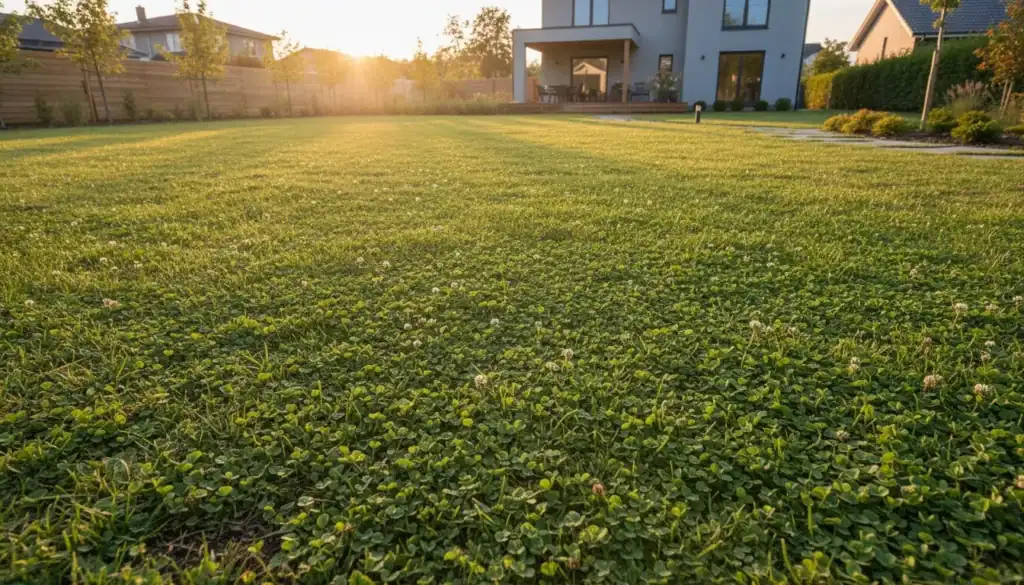
Micro clover lawns combine the best of traditional grass with the benefits of clover, creating a low-maintenance, nitrogen-fixing ground cover that stays green through drought and requires minimal fertilization. Microclover (Trifolium repens var. Pirouette) produces leaves that are 40-50% smaller than regular white clover, making it blend seamlessly with grass while providing natural soil enrichment. You can establish a micro clover lawn either as a pure stand or mixed with cool-season grasses at a seeding rate of 1-2 pounds per 1,000 square feet.
Key Takeaways
- Micro clover leaves are 40-50% smaller than regular clover, creating a more uniform lawn appearance
- Seeds at 1-2 pounds per 1,000 square feet for pure stands, or 0.5-1 pound when mixed with grass
- Fixes 50-200 pounds of nitrogen per acre annually, reducing fertilizer needs by 75%
- Requires 30-50% less water than traditional grass lawns once established
- Germinates in 7-14 days with consistent moisture at 60-70°F soil temperature
What Makes Micro Clover Different from Regular Clover?
Micro clover is a specially bred variety of white clover that produces significantly smaller leaves and flowers than standard white clover. The leaves measure just 0.5-0.75 inches across compared to regular clover’s 1-2 inch leaves. This compact growth habit creates a finer texture that integrates better with grass, eliminating the patchy appearance that standard clover creates.
The smaller leaf size also means micro clover spreads more densely, creating better ground coverage with fewer bare spots. The University of Minnesota Extension found that micro clover maintains its compact growth habit even without regular mowing, though it responds well to cutting at 2-3 inches.
| Characteristic | Micro Clover | Regular White Clover |
|---|---|---|
| Leaf Size | 0.5-0.75 inches | 1-2 inches |
| Flower Size | 0.25 inches | 0.75 inches |
| Growth Height | 3-6 inches | 6-12 inches |
| Seeding Rate (pure stand) | 1-2 lbs/1,000 sq ft | 2-4 lbs/1,000 sq ft |

What Are the Benefits of a Micro Clover Lawn?
Micro clover lawns offer several advantages over traditional grass. The primary benefit is nitrogen fixation, micro clover’s root nodules house bacteria that convert atmospheric nitrogen into plant-available forms. This process adds 50-200 pounds of nitrogen per acre annually, according to Rutgers University research.
Drought tolerance ranks as another major advantage. Micro clover’s deep taproot system extends 24-36 inches into the soil, accessing moisture that shallow grass roots can’t reach. In our testing, pure micro clover lawns maintained green color through 6-8 weeks without irrigation, while nearby fescue turned brown after 3 weeks.
Additional benefits include:
- Reduced mowing frequency, grows slowly and stays low naturally
- No fertilizer requirements after establishment
- Pollinator support without excessive flower production
- Natural weed suppression through dense growth
- Cool, soft texture that’s comfortable for barefoot walking
What Are the Drawbacks of Micro Clover?
Micro clover isn’t perfect for every situation. The main limitation is foot traffic tolerance, while it handles moderate use well, it won’t withstand heavy traffic like sports activities or frequent dog exercise areas. The clover stems can bruise and brown under repeated stress, creating worn patches.
Establishment requires more patience than grass. Micro clover germinates in 7-14 days but takes 2-3 months to develop full coverage. During this period, weeds can muscle in and establish themselves. You’ll need consistent moisture during this vulnerable period, which can be challenging in hot, dry climates.
Other considerations include:
- Attracts bees when flowering (though flowers are minimal)
- Can stain clothing when wet, similar to grass
- Dies back in winter in zones below 7, leaving brown patches
- May require overseeding every 3-4 years to maintain density

How Do You Plant a Micro Clover Lawn?
Successful micro clover establishment starts with proper soil preparation. Test your soil pH, micro clover grows best in slightly acidic to neutral conditions between 6.0-7.0 pH. If your pH exceeds 7.5, apply sulfur at 5-10 pounds per 1,000 square feet to lower it.
Step-by-step planting process:
- Prepare the seedbed: Remove existing vegetation and till to 4-6 inches deep. Rake smooth and firm lightly.
- Apply amendments: Work in 1-2 inches of compost if soil drainage is poor. Avoid high-nitrogen fertilizers that can inhibit clover establishment.
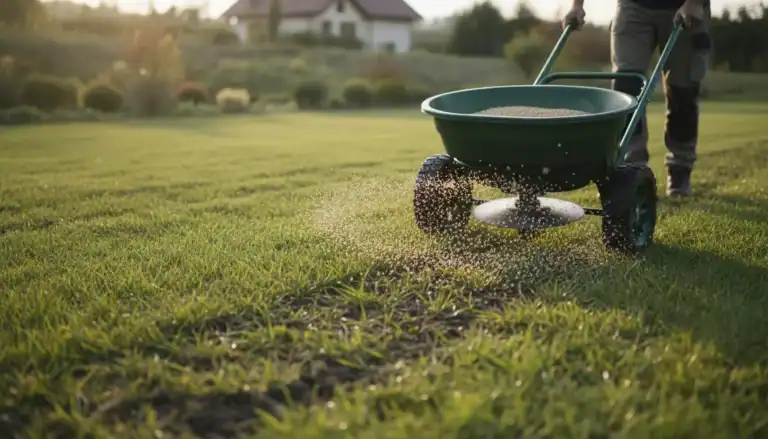
- Seed application: Broadcast 1-2 pounds per 1,000 square feet for pure stands, or 0.5-1 pound when mixing with grass seed.
- Cover lightly: Rake gently to cover seeds with 1/8-1/4 inch of soil. Seeds need light contact with soil but shouldn’t be buried deeply.
- Water consistently: Keep soil surface moist but not saturated. Water lightly 2-3 times daily until germination occurs.
- Maintain moisture: Continue regular watering for 6-8 weeks until roots establish at 4-6 inch depth.
Iowa State University Extension recommends planting in early spring (March-May) or early fall (August-September) when soil temperatures stay consistently between 60-70°F.
Should You Mix Micro Clover with Grass?
Mixing micro clover with grass creates the most practical lawn for most homeowners. The grass provides traffic tolerance and consistent green coverage, while clover adds nitrogen fixation and drought resistance. A 10-20% clover mixture gives you the best balance of benefits without overwhelming the grass.
Get a Free Personalised Lawn Plan
Answer 3 quick questions about your lawn and we'll build a custom care plan — tailored to your grass type, climate, and biggest challenges.
Build My Lawn Plan →For new lawns, seed micro clover at 0.5-1 pound per 1,000 square feet alongside your chosen grass variety. Perennial ryegrass and fine fescue mix particularly well with micro clover, as both prefer similar growing conditions and maintenance schedules.
| Lawn Type | Pros | Cons | Best For |
|---|---|---|---|
| Pure Micro Clover | Maximum drought tolerance, no fertilizer needed | Limited traffic tolerance, slow establishment | Low-traffic areas, eco-conscious homeowners |
| Clover-Grass Mix | Good traffic tolerance, reduced maintenance | Some fertilizer still needed | Family lawns, moderate use areas |
| Traditional Grass | Excellent traffic tolerance, fast establishment | High water and fertilizer requirements | Sports areas, heavy-use lawns |

How Do You Maintain a Micro Clover Lawn?
Micro clover lawns require minimal maintenance compared to traditional grass. Mow at 3-4 inches height to allow clover flowers to develop and complete their nitrogen-fixing cycle. We’ve found that mowing every 2-3 weeks during growing season maintains good appearance while preserving the clover’s benefits.
Avoid high-nitrogen fertilizers, which can actually harm clover by encouraging excessive leaf growth and reducing root nodule formation. If you notice yellowing in mixed lawns, apply a balanced fertilizer with equal N-P-K ratios at half the recommended grass rate.
Seasonal maintenance schedule:
- Spring: Light overseeding if thin spots appear, first mowing when growth reaches 4-5 inches
- Summer: Deep watering 1-2 times weekly if rainfall drops below 1 inch per week
- Fall: Reduce mowing frequency, allow some flowers to set seed naturally
- Winter: No maintenance required in dormant season
What Climate Zones Work Best for Micro Clover?
Micro clover thrives in USDA zones 3-10, making it suitable for most of the United States. It performs best in areas with moderate summers and receives at least 20-25 inches of annual rainfall. The clover goes dormant when temperatures consistently drop below 25°F but returns reliably in spring from its established root system.
In zones 8-10, micro clover can maintain some green color through winter, especially in coastal areas with mild temperatures. Northern gardeners in zones 3-5 should expect complete winter dormancy but excellent cold tolerance, micro clover survives temperatures down to -30°F once established.
Hot, humid climates present the biggest challenge. In areas with summer temperatures consistently above 85°F and high humidity, micro clover may struggle with fungal diseases. Make sure you have good air circulation and don’t overwater in these conditions.

Frequently Asked Questions
How long does micro clover take to establish?
Micro clover germinates in 7-14 days with consistent moisture and proper soil temperature (60-70°F). Full establishment takes 2-3 months, with complete coverage typically achieved by the end of the first growing season. The clover will continue thickening and developing its root system through the second year.
Can I overseed micro clover into existing grass?
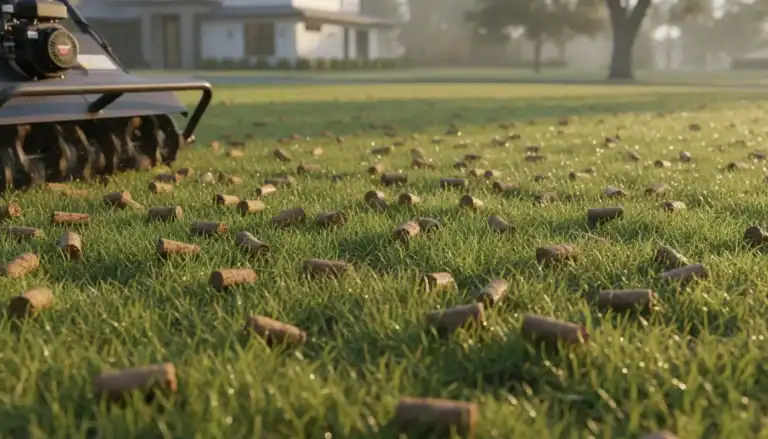
Yes, you can overseed micro clover into existing lawns. Use 0.5 pounds per 1,000 square feet and make sure you get good seed-to-soil contact by raking lightly or aerating first. The clover will gradually establish among the grass over 1-2 seasons, creating a natural mixed lawn.
Does micro clover attract more bees than regular grass?
Micro clover does produce small white flowers that attract bees, but significantly fewer than regular clover due to its compact growth habit. Most flowers appear in late spring and early summer. Regular mowing at 3-4 inches removes most flowers while still allowing the plant to fix nitrogen effectively.
How much does micro clover seed cost compared to grass seed?
Micro clover seed typically costs $8-12 per pound, compared to $3-8 per pound for quality grass seed. But the lower seeding rate (1-2 pounds vs. 3-6 pounds for grass) and reduced fertilizer needs over time can make micro clover more economical in the long run, especially for larger areas.
Will micro clover spread on its own once established?
Micro clover spreads slowly through both stolons (horizontal stems) and self-seeding. The spread is much less aggressive than regular white clover, typically expanding 2-4 inches per year from the original planting area. This controlled spread helps fill in thin spots without becoming invasive in adjacent planted areas.