Pre-emergent herbicides stop weed seeds from germinating by creating a chemical barrier in the soil that disrupts seed sprouting. They work best when applied 2-4 weeks before weed seeds typically germinate, early spring for crabgrass and late summer for cool-season weeds. Here’s the thing: these products won’t kill existing weeds but prevent new ones from establishing.
Key Takeaways
- Apply pre-emergent when soil temperature reaches 55-60°F (typically mid-March to early April for most regions)
- Most effective products contain prodiamine, pendimethalin, or dithiopyr as active ingredients
- Application rate ranges from 1-3 pounds per 1,000 square feet depending on product concentration
- Timing windows: early spring (February-April) for summer weeds, late summer (August-September) for winter weeds
- Prevents 85-95% of annual weeds when applied correctly, lasting 3-4 months per application
How Do Pre-Emergent Herbicides Work?
Pre-emergent herbicides create an invisible chemical barrier in the top inch of soil that prevents weed seeds from developing into mature plants. When a seed germinates and the root tries to grow, it absorbs the herbicide and dies before breaking through the soil surface.
The key mechanism disrupts cell division in the developing root system. According to Texas A&M Extension, these chemicals specifically target the microtubule formation process that’s essential for root growth. This is exactly why timing matters so much, the barrier must be in place before germination begins.
Most pre-emergent herbicides remain active in the soil for 8-16 weeks, depending on the active ingredient, soil temperature, and rainfall. Higher temperatures and heavy rainfall break down the chemical barrier faster, which is why you often need two applications per year for complete seasonal coverage.

When Should You Apply Pre-Emergent Herbicide?
Apply pre-emergent herbicide when soil temperatures consistently reach 55-60°F at a 2-inch depth for 3-5 consecutive days. This typically occurs 2-4 weeks before weed seeds germinate, giving the herbicide time to establish an effective barrier.
For most regions, this translates to specific calendar timing:
- Northern states (zones 3-5): Late March to early April
- Transition zones (zones 6-7): Mid to late March
- Southern states (zones 8-10): Early to mid-February
We’ve found that using a soil thermometer gives much more accurate timing than calendar dates. Take readings at 8 AM for three consecutive days, when the average hits 55°F, it’s application time.
For a second application targeting winter weeds like henbit and chickweed, apply in late August through September when soil temperatures drop back to the 70-75°F range.
What Are the Most Effective Active Ingredients?
The three most effective pre-emergent active ingredients are prodiamine, pendimethalin, and dithiopyr, each with specific strengths for different weed types and lawn conditions.
| Active Ingredient | Duration (weeks) | Best For | Application Rate | Cost per 1,000 sq ft |
|---|---|---|---|---|
| Prodiamine | 12-16 | Crabgrass, goosegrass | 0.5-1.0 lb/1,000 sq ft | $8-12 |
| Pendimethalin | 10-14 | Broadleaf weeds, grasses | 2.0-4.0 lb/1,000 sq ft | $6-10 |
| Dithiopyr | 14-18 | Crabgrass (young plants too) | 1.5-2.5 lb/1,000 sq ft | $12-18 |
Prodiamine offers the best value for most homeowners. It provides excellent crabgrass control and works well in both cool and warm-season lawns. According to University of Georgia research, prodiamine shows 92-95% effectiveness against annual grasses when properly applied.
Dithiopyr has a unique advantage, it can kill crabgrass that’s already emerged if it’s less than the 2-leaf stage, making it more forgiving if your timing is slightly off.

How Do You Calculate the Right Application Rate?
Calculate your application rate based on the active ingredient percentage and your lawn size. Most granular products require 1-3 pounds of product per 1,000 square feet, but this varies significantly based on concentration.
Here’s the step-by-step calculation process:
- Measure your lawn area (length × width for rectangular areas)
- Check the product label for the active ingredient percentage
- Find the recommended rate of active ingredient per 1,000 square feet
- Calculate: (Recommended AI rate ÷ Product AI percentage) × 1,000 = Application rate
For example, if you need 0.75 pounds of prodiamine per 1,000 square feet and your product is 0.37% prodiamine:
(0.75 ÷ 0.37) × 100 = 203 pounds of product per 1,000 square feet
Most spreader settings correspond to these calculations, but always verify with a small test area first. Calibrate your spreader by spreading product over a measured 100 square feet, then weigh what remains to confirm your rate.
What’s the Proper Application Technique?
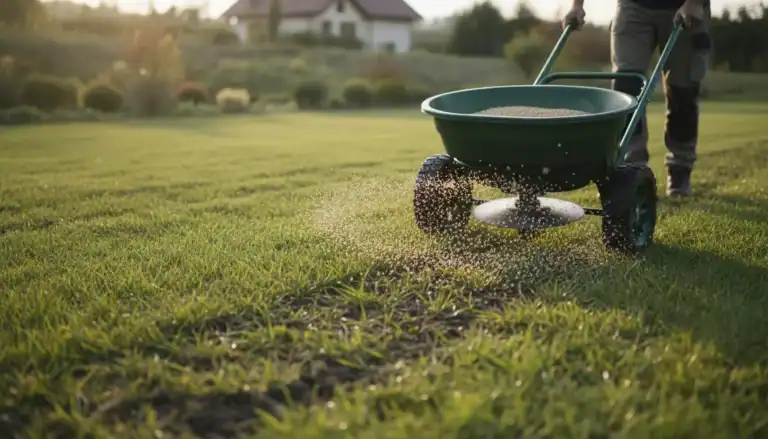
Apply pre-emergent herbicide using a broadcast spreader for even coverage, followed immediately by watering to activate the chemical barrier. Proper technique ensures maximum effectiveness and prevents streaking or missed spots.
Follow this application sequence:
- Calibrate your spreader using the manufacturer’s recommended settings
- Apply when winds are under 10 mph to prevent drift
- Walk at a consistent 3 mph pace with 20% overlap between passes
- Water immediately with 0.25-0.5 inches (20-30 minutes of irrigation)
- Avoid heavy watering that could wash the herbicide below the root zone
From our testing, the biggest mistake homeowners make is under-watering after application. The herbicide needs to dissolve into the top inch of soil to create an effective barrier. Too little water leaves it sitting on the surface; too much washes it too deep.

Which Weeds Does Pre-Emergent Control?
Pre-emergent herbicides effectively control annual weeds that reproduce by seed, including crabgrass, goosegrass, foxtail, chickweed, henbit, and annual bluegrass. They don’t affect perennial weeds that spread by roots or runners.
Get a Free Personalised Lawn Plan
Answer 3 quick questions about your lawn and we'll build a custom care plan — tailored to your grass type, climate, and biggest challenges.
Build My Lawn Plan →Here’s what you can expect to control with proper timing:
| Weed Type | Control Effectiveness | Best Active Ingredient | Application Timing |
|---|---|---|---|
| Crabgrass | 90-95% | Prodiamine, Dithiopyr | Early spring |
| Goosegrass | 85-90% | Prodiamine | Early spring |
| Annual bluegrass | 80-85% | Prodiamine | Late summer |
| Chickweed | 85-90% | Pendimethalin | Late summer |
| Henbit | 90-95% | Pendimethalin | Late summer |
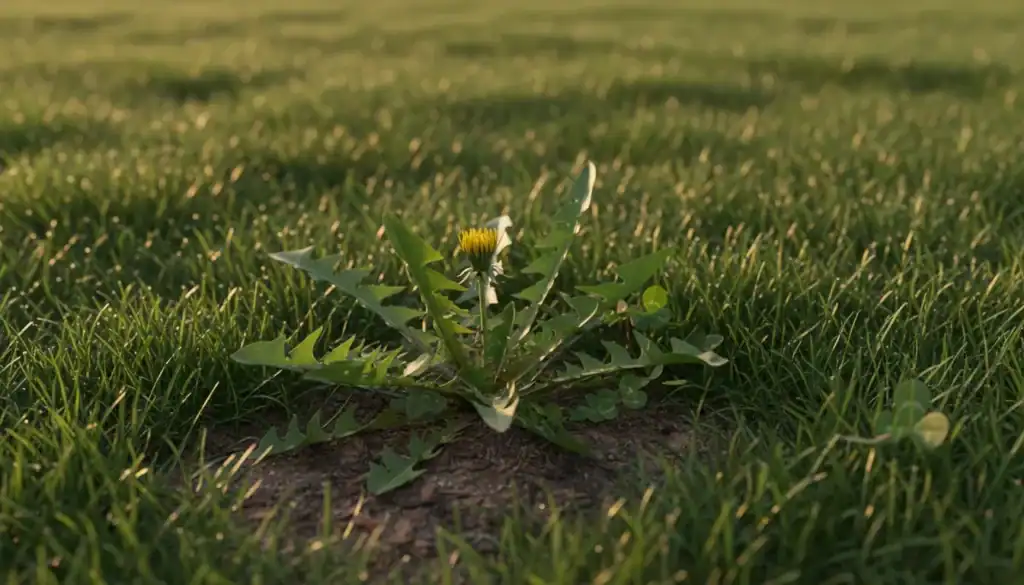
Pre-emergent won’t control established perennial weeds like dandelions, clover, or plantain. These require post-emergent herbicides or manual removal since they don’t reproduce primarily by seed.
Can You Overseed After Applying Pre-Emergent?
Standard pre-emergent herbicides prevent all seeds from germinating, including grass seed, for 8-16 weeks after application. If you plan to overseed, you need to time applications carefully or use specialized products.
Your options for overseeding include:
- Wait 12-16 weeks: Allow the herbicide to break down before seeding
- Seed first, then apply: Establish grass for 6-8 weeks before pre-emergent
- Use mesotrione-based products: These allow certain grass types to germinate
- Spot-treat only: Apply pre-emergent to weed-prone areas, seed elsewhere
According to Penn State Extension research, mesotrione-based pre-emergents allow tall fescue, perennial ryegrass, and fine fescue to germinate while still controlling crabgrass. However, they don’t work with Bermuda grass or zoysia grass seed.
In our experience, the seed-first approach works best for fall overseeding. Plant in early September, let the grass establish through October, then apply pre-emergent in late February for next year’s weed control.

What Are Common Application Mistakes?
The most common pre-emergent mistakes are incorrect timing, uneven application, and inadequate watering. These errors can reduce effectiveness from 95% to under 50%, essentially wasting your time and money.
Here are the critical mistakes to avoid:
- Calendar-based timing: Using fixed dates instead of soil temperature
- Skipping calibration: Guessing spreader settings leads to under or over-application
- Dry application: Not watering within 24 hours prevents barrier formation
- Single annual application: Most products only last 12-14 weeks maximum
- Wrong weather conditions: Applying before heavy rain washes herbicide away
We’ve seen homeowners apply pre-emergent in January when soil is frozen, then wonder why crabgrass still emerges. The herbicide can’t create a barrier in frozen soil, and most breaks down before germination season arrives.
Similarly, applying during a rainy week often results in the product washing into storm drains instead of forming a soil barrier. Check the forecast and ensure you have 24-48 hours of dry weather after application.
Frequently Asked Questions
How long does pre-emergent herbicide last in soil?
Most pre-emergent herbicides remain active for 12-16 weeks, depending on the active ingredient, soil temperature, and rainfall. Prodiamine typically lasts the longest at 14-16 weeks, while pendimethalin breaks down faster at 10-12 weeks. Higher temperatures and heavy rainfall reduce the duration.
Is it too late to apply pre-emergent if crabgrass has already sprouted?
Standard pre-emergent herbicides won’t work once crabgrass has emerged. However, dithiopyr-based products can kill crabgrass that’s in the 1-2 leaf stage, making them effective slightly later in the season. For established crabgrass, you need a post-emergent herbicide.
Can pre-emergent herbicide damage existing grass?
Pre-emergent herbicides are safe for established grass when applied at labeled rates. They only affect germinating seeds, not mature plants with established root systems. However, over-application can stress grass, and some products may temporarily slow growth of newly seeded areas.
Do you need two applications per year?
Most regions benefit from two applications annually, early spring for summer weeds like crabgrass and late summer for winter weeds like chickweed. The spring application typically provides the most value, but areas with heavy weed pressure often need both for complete control.
What happens if it rains heavily after applying pre-emergent?
Light to moderate rain (0.25-0.5 inches) actually helps activate pre-emergent herbicides. However, heavy rainfall (over 1 inch within 48 hours) can wash the product away before it forms an effective barrier. If this happens, you may need to reapply at a reduced rate.