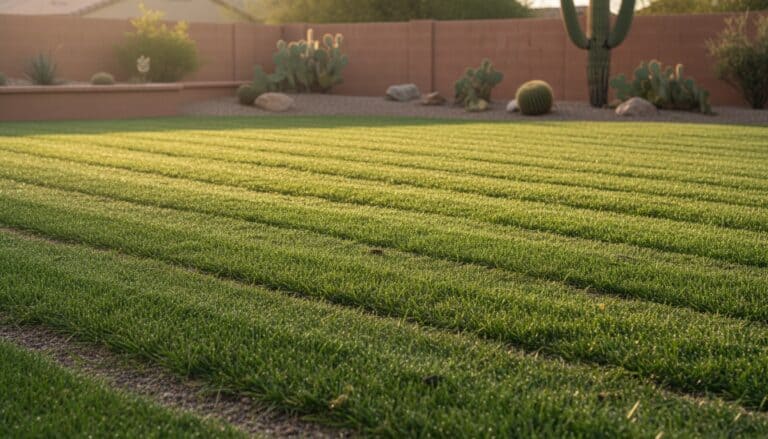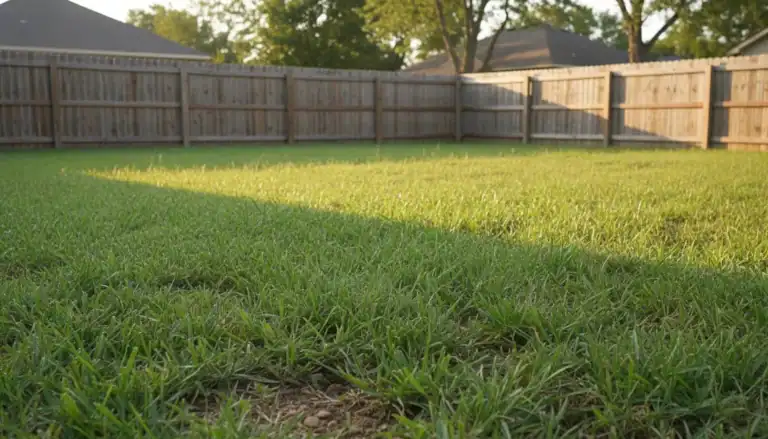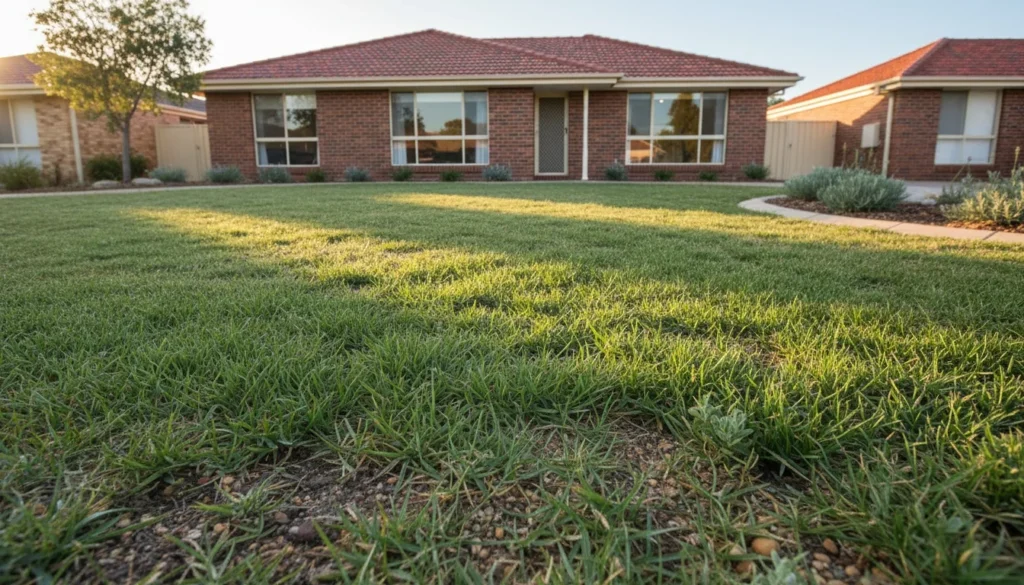
Texas lawns require warm-season grasses like Bermuda, St. Augustine, and Zoysia that thrive in heat and humidity. Your lawn care calendar runs from March through November, with peak growing season from April to September. Success depends on choosing the right grass for your specific region, what works in Houston won’t necessarily work in Dallas or Austin.
The Lone Star State’s diverse climate zones create unique challenges. East Texas receives 40+ inches of annual rainfall, while West Texas gets less than 12 inches. Your soil ranges from clay in Dallas-Fort Worth to sand along the Gulf Coast, each requiring different management strategies.
Key Takeaways
- Plant warm-season grasses between April 15 and August 31 for best establishment
- Water deeply but infrequently, 1 inch per week including rainfall
- Mow Bermuda at 1-2 inches, St. Augustine at 2.5-4 inches, Zoysia at 1-3 inches
- Apply pre-emergent herbicide by March 1 to prevent summer weeds
- Fertilize 3-4 times per year with nitrogen rates of 2-4 pounds per 1,000 square feet annually
- Overseed with ryegrass in October for winter color in North Texas only
What grass types grow best in Texas?
Bermuda grass dominates Texas lawns because it handles heat, drought, and foot traffic better than any other option. St. Augustine runs second, especially in shaded areas where Bermuda struggles. Zoysia works well but establishes slowly and costs more upfront.
Your choice depends on your specific location and conditions. Bermuda thrives statewide but goes dormant and brown in winter. St. Augustine stays greener longer but suffers in extreme heat and drought. Zoysia offers the best year-round appearance but takes 2-3 years to fully establish.
| Grass Type | Heat Tolerance | Drought Tolerance | Shade Tolerance | Traffic Tolerance | Winter Color |
|---|---|---|---|---|---|
| Bermuda | Excellent | Excellent | Poor | Excellent | Brown |
| St. Augustine | Very Good | Good | Good | Fair | Light Brown |
| Zoysia | Very Good | Very Good | Fair | Good | Tan |
| Buffalo | Good | Excellent | Fair | Poor | Tan |
Buffalo grass offers native drought tolerance but creates a lower-quality lawn. It works best in West Texas where water restrictions are common. Centipede grass grows in East Texas’s acidic soils but requires consistent moisture.

When should you plant grass in Texas?
Plant warm-season grasses between April 15 and August 31 when soil temperatures consistently reach 65°F or higher. The sweet spot is late April through early June when you get maximum growing time before winter dormancy.
Seeding works best from April 15 to June 15. After June, switch to sodding or plugging because seeds struggle in extreme summer heat. Avoid planting after September 1, new grass won’t establish enough root system before winter.
Soil temperature matters more than air temperature. Use a soil thermometer to check 4 inches deep at 8 AM for three consecutive days. Once it hits 65°F consistently, you’re good to plant.
| Planting Method | Best Timing | Soil Temp Required | Establishment Time |
|---|---|---|---|
| Seed | April 15 – June 15 | 65°F+ | 6-8 weeks |
| Sod | April 15 – August 31 | 60°F+ | 2-3 weeks |
| Plugs | April 1 – August 15 | 60°F+ | 8-12 weeks |
| Sprigs | April 1 – July 31 | 65°F+ | 6-10 weeks |
How much water do Texas lawns need?
Texas lawns need 1 to 1.5 inches of water per week during the growing season, including rainfall. Water deeply but infrequently, twice per week maximum. Light daily watering creates shallow roots that can’t handle heat stress.
In our testing across North Texas, lawns receiving two deep waterings per week outperformed those watered daily, even with the same total amount. The deep-watered lawns stayed green during August heat while daily-watered lawns struggled.
Adjust for your region’s rainfall patterns. East Texas averages 44 inches annually, so you’ll water less. West Texas gets 12 inches, requiring consistent irrigation. Check rain totals weekly and reduce watering accordingly.
Water between 4 AM and 8 AM to minimize evaporation and disease pressure. Avoid evening watering, wet grass overnight promotes fungal problems in Texas humidity.

What’s the proper mowing height for Texas grass?
Mow Bermuda grass at 1 to 2 inches, St. Augustine at 2.5 to 4 inches, and Zoysia at 1 to 3 inches. Higher cutting heights help grass survive Texas heat and drought by providing more leaf surface for photosynthesis and shading the soil.
Never remove more than one-third of the grass blade in a single cutting. In peak growing season (May through September), this often means mowing twice per week. Sharp blades are critical, dull mowers shred grass tips, creating brown, ragged edges that invite disease.
Adjust height seasonally. In spring, start at the lower end of your grass’s range to encourage lateral growth. Raise the height during summer stress periods, then lower again in fall for winter preparation.
| Grass Type | Optimal Height | Spring Height | Summer Height | Fall Height |
|---|---|---|---|---|
| Bermuda | 1-2 inches | 1 inch | 1.5-2 inches | 1 inch |
| St. Augustine | 2.5-4 inches | 2.5 inches | 3.5-4 inches | 3 inches |
| Zoysia | 1-3 inches | 1.5 inches | 2.5-3 inches | 2 inches |
| Buffalo | 2-4 inches | 2 inches | 3-4 inches | 2.5 inches |
Leave clippings on the lawn unless they form thick clumps. Decomposing clippings return nitrogen and organic matter to the soil. Bag only when clippings are excessive or diseased.
When should you fertilize Texas lawns?
Fertilize Texas lawns four times per year: late March/early April for spring green-up, late May for peak growth, mid-July for summer stress recovery, and early September for fall root development. This schedule matches warm-season grass growth patterns and maximizes nutrient uptake.
Use 0.5 to 1 pound of nitrogen per 1,000 square feet per application, totaling 2-4 pounds annually. Sandy soils need the higher rate because nutrients leach away faster. Clay soils hold nutrients longer, so use the lower rate to avoid excessive growth and thatch buildup.
According to Texas A&M Extension, soil testing every 3-4 years prevents over-fertilization and identifies deficiencies. Most Texas soils are alkaline (pH 7.5-8.5), often lacking iron and causing yellowing in St. Augustine and other acid-loving grasses.
| Application | Timing | N-P-K Ratio | Rate (per 1,000 sq ft) | Purpose |
|---|---|---|---|---|
| Spring | Late March | 3-1-2 or 4-1-2 | 1 lb N | Green-up and growth |
| Early Summer | Late May | 3-1-2 | 1 lb N | Peak season growth |
| Mid Summer | Mid July | 3-1-2 | 0.5 lb N | Heat stress recovery |
| Fall | Early September | 1-2-2 or 1-3-2 | 0.5-1 lb N | Root development |
Skip fertilization during drought stress unless you can provide adequate irrigation. Fertilized grass requires more water, and pushing growth during water restrictions creates more problems than benefits.

How do you control weeds in Texas lawns?
Get your pre-emergent herbicide down by March 1 to prevent summer annuals like crabgrass, doveweed, and spurge. The key date is when soil temperature reaches 55°F for three consecutive days at 4-inch depth, typically late February in South Texas, early March in North Texas.
Use products containing prodiamine, dithiopyr, or pendimethalin. We’ve found prodiamine provides the longest control (4-6 months) while pendimethalin breaks down faster but costs less. Apply when no rain is forecast for 24 hours but watering is possible within 7 days.
For existing weeds, timing beats product choice every time. Treat cool-season weeds like henbit and chickweed in November through February when they’re actively growing. Summer weeds respond best to treatment in late spring before they mature and set seed.
| Weed Category | Treatment Timing | Effective Herbicides | Application Notes |
|---|---|---|---|
| Summer Annuals | Pre-emerge: March 1 | Prodiamine, Dithiopyr | Water in within 7 days |
| Winter Annuals | Pre-emerge: September 15 | Pendimethalin, Prodiamine | Apply before first frost |
| Broadleaf Weeds | Post-emerge: Nov-Feb | 2,4-D, Dicamba, MCPP | Temperature 50-80°F |
| Grassy Weeds | Post-emerge: April-May | Quinclorac, MSMA (limited) | Young, actively growing |
Dense, healthy grass prevents most weed problems. Focus on proper fertilization, watering, and mowing height rather than relying solely on herbicides. Thin areas invite weeds, overseed with your primary grass species to maintain thick coverage.
What are the biggest lawn diseases in Texas?
Brown patch and large patch are Texas’s most destructive lawn diseases, especially on St. Augustine grass. Both fungi thrive in warm, humid conditions with poor air circulation. Symptoms appear as circular brown patches that expand rapidly during spring and fall when temperatures are moderate and humidity is high.
Gray leaf spot hits St. Augustine hard during summer stress periods. You’ll see small, oval lesions on grass blades that eventually kill entire leaves. The disease spreads quickly in overfertilized, overwatered lawns during hot, humid weather.
From our experience, most disease problems stem from cultural practices rather than unavoidable environmental conditions. Overwatering, evening irrigation, excessive nitrogen, and poor soil drainage create perfect disease conditions.
Get a Free Personalised Lawn Plan
Answer 3 quick questions about your lawn and we'll build a custom care plan — tailored to your grass type, climate, and biggest challenges.
Build My Lawn Plan →| Disease | Affected Grasses | Peak Season | Primary Causes | Prevention |
|---|---|---|---|---|
| Brown Patch | St. Augustine, Bermuda | Spring, Fall | High humidity, poor drainage | Morning watering, good airflow |
| Large Patch | Zoysia, St. Augustine | Fall, Winter, Spring | Cool, wet conditions | Reduce nitrogen, improve drainage |
| Gray Leaf Spot | St. Augustine | Summer | High nitrogen, heat stress | Balanced fertility, deep watering |
| Summer Patch | Zoysia | Mid-summer | Compacted soil, heat stress | Core aeration, proper watering |
Fungicide applications work best as prevention rather than cure. Apply in early spring before symptoms appear, following label rates carefully. Propiconazole and azoxystrobin provide broad-spectrum control for most Texas lawn diseases.

How do you handle Texas soil problems?
Most Texas soils are alkaline clay with poor drainage and compaction issues. The clay holds water too long after rain but becomes rock-hard during drought. Organic matter is typically low (less than 2%), limiting nutrient availability and beneficial soil biology.
Core aeration in late spring (April-May) relieves compaction when grass is actively growing and can recover quickly. Make 2-3 passes with a core aerator, leaving plugs on the surface to decompose. Heavy clay soils benefit from annual aeration while sandy soils need it less frequently.
Top-dress with compost annually at 1/4 to 1/2 inch depth. Work it into aeration holes for maximum benefit. Quality compost improves drainage in clay soils and water retention in sandy soils while feeding beneficial microorganisms.
| Soil Type | Common Issues | Amendments Needed | Frequency |
|---|---|---|---|
| Heavy Clay | Poor drainage, compaction | Compost, coarse sand | Annual aeration |
| Sandy | Poor water/nutrient retention | Compost, organic matter | Biennial aeration |
| Caliche | Impermeable hardpan layer | Mechanical breaking, drainage | One-time correction |
| Rocky | Shallow topsoil | Soil addition, terracing | Initial establishment |
Address pH issues with soil testing every 3-4 years. Most Texas soils test 7.5-8.5 pH, causing iron deficiency in acid-loving grasses. Apply iron sulfate or chelated iron in spring when symptoms appear, yellowing between leaf veins while veins stay green.
When should you overseed Texas lawns?
Overseed only in North Texas (Dallas-Fort Worth and northward) where winter temperatures regularly drop below 32°F. South of Interstate 35, warm-season grasses stay semi-active all winter, and cool-season overseed competes rather than complementing.
Plant annual ryegrass between October 1 and November 15 when soil temperatures drop to 70°F or below. Earlier seeding struggles with heat stress while later seeding doesn’t establish before cold weather.
Use 5-10 pounds of annual ryegrass seed per 1,000 square feet. Higher rates create dense stands that crowd out your permanent grass in spring. Rake lightly after seeding to ensure soil contact, then water lightly and frequently until germination (7-14 days).
Expect the ryegrass to die back naturally when temperatures consistently reach 80°F in April or May. Don’t try to keep it alive longer, it will weaken your permanent grass as it transitions from dormancy to active growth.

What’s the annual Texas lawn care calendar?
Your lawn care year starts in March with pre-emergent herbicide application and ends in November with final mowing before dormancy. Peak activity occurs from April through September when warm-season grasses grow actively.
January and February are maintenance months for equipment servicing and planning. This is when you sharpen mower blades, service irrigation systems, and order supplies for the coming season.
| Month | Primary Tasks | Secondary Tasks |
|---|---|---|
| January | Equipment maintenance | Plan renovations, soil test |
| February | Equipment maintenance | Order seed/sod, calibrate spreader |
| March | Pre-emergent herbicide, first mow | Irrigation system check |
| April | First fertilization, planting | Aeration, overseeding bare spots |
| May | Regular mowing, watering schedule | Post-emergent herbicide |
| June | Second fertilization, peak watering | Grub prevention, disease watch |
| July | Maintain watering, raise mowing height | Mid-summer fertilization (optional) |
| August | Monitor for heat stress, spot water | Late summer planting (sod only) |
| September | Fall fertilization, pre-emergent #2 | Aeration, overseeding prep |
| October | Overseed (North Texas only) | Broadleaf weed control |
| November | Final mowing, leaf removal | Winterization, equipment storage |
| December | Equipment storage, planning | Winter weed control |
Adjust timing based on your specific location. South Texas starts earlier and extends later than North Texas. Central Texas falls between the two extremes, usually running 2-3 weeks ahead of North Texas schedules.
How do you handle drought and water restrictions?
Texas lawns survive drought better than most people think, but preparation makes the difference. Deep, infrequent watering throughout the growing season develops extensive root systems that access moisture from lower soil layers during stress periods.
When restrictions kick in, prioritize newly established areas and high-value zones near the house. Let mature Bermuda grass go dormant, it will recover when conditions improve. St. Augustine and Zoysia need minimal water to survive but won’t look perfect.
Raise mowing heights by 25-50% during drought stress. Taller grass shades soil and reduces moisture loss while providing more leaf surface for limited photosynthesis. Stop fertilizing completely, stressed grass can’t process nutrients and excess nitrogen increases water requirements.
We’ve found that lawns receiving 0.25 inches of water weekly during severe drought maintain better root systems than those getting no water at all. This minimal amount keeps roots alive without promoting excessive top growth.
Frequently Asked Questions
What’s the best grass for North Texas clay soil?
Bermuda grass handles North Texas clay soil better than any other option. It tolerates the poor drainage and compaction that plague clay soils while establishing quickly from seed or sod. St. Augustine works as a second choice but requires better drainage and struggles during extreme drought periods common in North Texas.
Can you plant grass seed in Texas during summer?
Avoid seeding after June 15 in Texas. Summer heat and drought stress prevent proper germination and establishment. If you must plant during summer, use sod or plugs instead of seed, and plan on intensive watering for 4-6 weeks. The best planting window is April 15 through June 15 when temperatures support growth but aren’t excessively hot.
How often should you water Texas lawns during summer?
Water Texas lawns twice per week maximum during summer, providing 1-1.5 inches total including rainfall. Deep, infrequent watering develops drought-resistant root systems better than daily light watering. Water between 4-8 AM to minimize evaporation and reduce disease pressure from overnight moisture on grass blades.
When does grass go dormant in Texas?
Warm-season grasses in Texas typically enter dormancy between mid-November and mid-December when soil temperatures drop below 50°F for extended periods. Bermuda grass goes dormant first, followed by Zoysia, then St. Augustine. Dormancy lasts until soil temperatures consistently reach 65°F in spring, usually March in South Texas and April in North Texas.
Should you bag grass clippings in Texas?
Leave grass clippings on Texas lawns unless they form thick clumps that block sunlight. Decomposing clippings return 25% of your lawn’s nitrogen needs while adding organic matter to the soil. Bag only when clippings are excessive from infrequent mowing, diseased, or contain weed seeds you don’t want to spread.