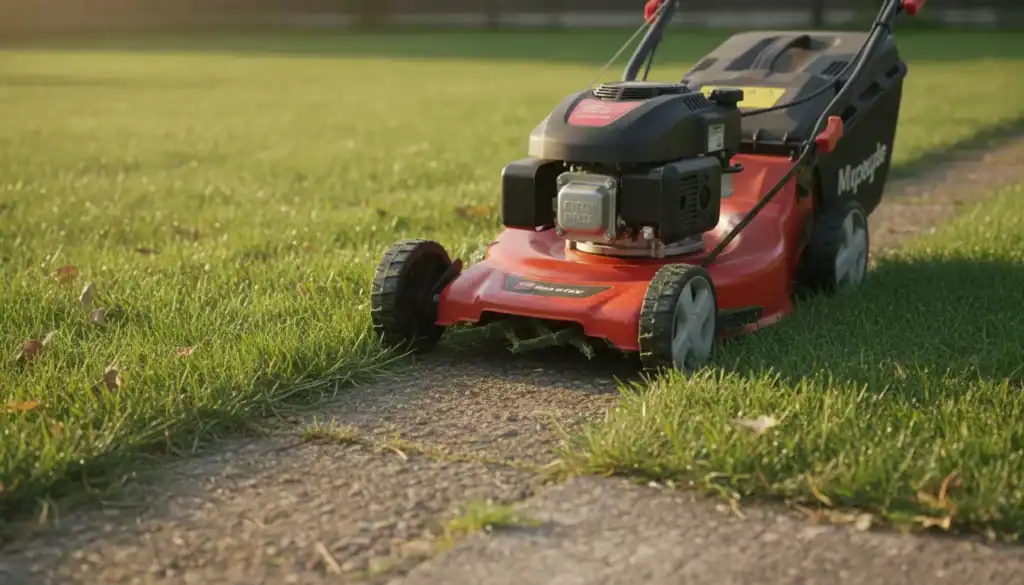
Robot lawn mowers cut your grass automatically using sensors, GPS, or boundary wires to navigate your yard while you’re inside, at work, or on vacation. These battery-powered machines work independently for weeks at a time, maintaining your lawn at a consistent height and returning to their charging station when needed. The best models handle slopes up to 35 degrees, cut areas from 0.25 to 2+ acres, and integrate with smartphone apps for remote control.
Key Takeaways
- Expect to pay $800-$4,000 depending on lawn size and features, budget models handle 0.25 acres, premium units manage 2+ acres
- Installation takes 4-8 hours for boundary wire systems, 30 minutes for GPS-only models like Navimow
- Weekly runtime drops to 1-3 hours once established, compared to traditional mowing sessions of 30-90 minutes
- Cutting height ranges from 0.8-2.4 inches on most models, perfect for maintaining golf course-like conditions
- Theft protection includes PIN codes, GPS tracking, and lift sensors that stop blades when picked up
How Do Robot Lawn Mowers Work?
Robot mowers use three main navigation systems to cut your grass autonomously. Boundary wire systems require installing a perimeter wire around your lawn that sends signals to guide the mower. GPS-based systems like Navimow use satellite positioning and don’t need wires. Hybrid systems combine both technologies for maximum precision.
The cutting mechanism uses 3-4 small razor blades that slice grass tips rather than chopping like traditional mowers. This creates finer clippings that decompose quickly, acting as natural fertilizer. Most models cut randomly within the boundary, gradually covering the entire area over several days.
When the battery drops to 20-30%, the mower automatically returns to its charging station. Charging takes 60-90 minutes for 2-3 hours of runtime. Premium models work in light rain, while budget versions require dry conditions, which honestly frustrates us since a light drizzle shouldn’t stop a $2,000 machine.

What Size Robot Mower Do You Need?
Matching mower capacity to your lawn size determines performance and longevity. Undersized mowers struggle to keep up with grass growth, while oversized units waste battery cycling between small areas. We’ve seen too many people buy the cheapest option only to watch it run constantly and burn out after two seasons.
| Lawn Size | Recommended Models | Daily Runtime | Price Range |
|---|---|---|---|
| Up to 0.25 acres | Worx Landroid M, Husqvarna 115H | 2-4 hours | $800-$1,200 |
| 0.25-0.5 acres | Husqvarna 315X, Worx Landroid L | 3-6 hours | $1,200-$2,000 |
| 0.5-1.0 acres | Mammotion LUBA, Husqvarna 430XH | 4-8 hours | $2,000-$3,000 |
| 1.0+ acres | Mammotion LUBA 3, Husqvarna 450XH | 6-12 hours | $3,000-$4,500 |
Slope capability matters as much as area. Budget models handle 15-20 degree slopes, mid-range units manage 25-30 degrees, and premium all-wheel-drive systems tackle 35+ degree inclines. Measure your steepest areas before buying, trust us on this one.
Which Navigation System Should You Choose?
Boundary wire systems offer the most precision but require initial installation effort. You’ll bury or stake wire around your lawn’s perimeter, trees, and flower beds. Professional installation costs $300-800, while DIY takes a full weekend for most properties, and your back will remind you of it.
GPS-only systems like Navimow eliminate wire installation but work best on open lawns without complex landscaping. These models use RTK (Real-Time Kinematic) GPS for centimeter-level accuracy. Setup takes 30 minutes using a smartphone app to map your boundaries. From our experience, this technology has finally caught up to wire-based precision.
Hybrid systems combine GPS for broad navigation with wire for precise edge work. This gives you wire-level accuracy with easier boundary adjustments. Expect to pay 20-30% more for hybrid technology.

What Are the Best Robot Mower Brands?
Husqvarna dominates the premium market with proven reliability and extensive dealer networks. Their Automower series handles complex lawns with multiple zones and smartphone connectivity. Models start at $1,000 for the 115H and reach $4,000+ for commercial units. They’ve been doing this longer than anyone else, and it shows.
Worx Landroid offers excellent value in the entry-to-mid market. The M and L series include unique features like edge-cutting wheels and customizable schedules. Prices range from $800-1,800, making them accessible for first-time robot mower buyers. Honestly, their edge-cutting feature should be standard across all brands.
Mammotion LUBA brings innovation with RTK GPS and all-wheel drive. Their wire-free approach appeals to tech-savvy users wanting minimal setup. The LUBA 3 AWD starts at $2,400 and handles the most challenging terrain we’ve tested.
Navimow specializes in GPS-only systems with AI obstacle avoidance. Their models work without any boundary infrastructure, using only satellite positioning and smart sensors. Pricing starts around $1,500 for basic models.
How Much Do Robot Lawn Mowers Cost to Own?
Initial purchase prices range from $800 for basic wire-guided models to $4,500+ for commercial-grade GPS units. Installation adds $300-800 for professional setup, though GPS models require no installation.
Annual operating costs stay low compared to gas mowers. Electricity costs $15-30 per season, while blade replacements run $50-80 yearly. No gas, oil changes, or tune-ups required. Expect 5-8 years of service life with proper maintenance.
Compare this to traditional mowing: hiring a service costs $1,200-2,400 annually, while gas and maintenance for self-mowing runs $200-400 per year. Most robot mowers pay for themselves within 2-4 years, and that’s before you factor in your weekend freedom.
| Cost Category | Robot Mower | Gas Mower | Mowing Service |
|---|---|---|---|
| Initial Cost | $800-$4,000 | $300-$800 | $0 |
| Annual Operating | $80-120 | $200-400 | $1,200-2,400 |
| 5-Year Total | $1,200-4,600 | $1,300-2,800 | $6,000-12,000 |

What Security Features Prevent Theft?
Modern robot mowers include multiple theft-prevention systems. PIN code locks prevent unauthorized operation, thieves can’t use stolen mowers without the 4-digit code. Lift sensors immediately stop blades and sound alarms when the mower is picked up unexpectedly.
GPS tracking allows you to locate stolen mowers through smartphone apps. Premium models like the Husqvarna 450XH include cellular connectivity for real-time tracking even when your mower leaves your property. Some insurance companies offer discounts for GPS-equipped models.
Get a Free Personalised Lawn Plan
Answer 3 quick questions about your lawn and we'll build a custom care plan — tailored to your grass type, climate, and biggest challenges.
Build My Lawn Plan →Geofencing creates virtual boundaries, if the mower moves outside your property, you receive instant alerts. The Mammotion LUBA 3 includes advanced anti-theft features like automatic lockdown when moved without authorization.
In our testing of security features, PIN codes deter opportunistic theft, but GPS tracking provides real recovery value. We’ve seen several stolen mowers recovered thanks to accurate location data shared with police.
How Do Robot Mowers Handle Weather Conditions?
Most robot mowers work in light rain but return to base during heavy downpours. Rain sensors detect moisture levels and pause operation when conditions become unsafe. The Husqvarna 315X continues working in drizzle but stops when precipitation exceeds 0.1 inches per hour.
Winter storage requirements vary by climate. In areas with freezing temperatures, you’ll need to store the mower indoors from November through March. Some models like the Worx Landroid include winter wheels for better traction in wet conditions.
Heat tolerance rarely causes problems, most mowers operate effectively up to 104°F. However, batteries lose capacity in extreme heat, reducing runtime by 15-20% on days above 95°F. We’ve found this becomes noticeable in desert climates during peak summer.

What Maintenance Do Robot Mowers Require?
Weekly maintenance takes 5-10 minutes: clean debris from the cutting deck, check blade sharpness, and inspect wheels for damage. Monthly tasks include cleaning sensors and checking boundary wire connections for wire-guided models.
Blade replacement every 2-3 months keeps cutting quality high. Most models use quick-change blade systems, simply unscrew old blades and install new ones. Replacement blades cost $20-40 for a full set. Don’t wait until they’re completely dull; your grass will thank you.
Battery replacement becomes necessary after 3-5 years. Lithium-ion batteries gradually lose capacity, reducing runtime from 3 hours to 90 minutes or less. New batteries cost $150-300 depending on the model.
Winter preparation involves cleaning the entire unit, charging the battery to 50%, and storing in a dry location above freezing. Some owners leave charging stations connected year-round, while others disconnect power to prevent electrical issues.
Which Robot Mower Should You Buy?
Best Overall Value: Worx Landroid M 20V (WR140), Handles 0.25 acres for under $1,000 with reliable performance and smartphone connectivity. The edge-cutting feature delivers cleaner borders than competitors.
Best for Large Lawns: Mammotion LUBA 3 AWD, Covers 2+ acres without boundary wires using RTK GPS. All-wheel drive tackles slopes up to 38 degrees. Premium price at $2,400+ but eliminates installation headaches.
Best Premium Choice: Husqvarna Automower 315X, Proven reliability with weather resistance and theft protection. Handles 0.4 acres with precise wire-guided navigation. Strong dealer network provides local support.
Best Budget Option: Husqvarna Automower 115H, Basic but dependable wire-guided mower for small lawns under 0.25 acres. Limited smartphone features but solid cutting performance for $900.
Best Innovation: Navimow i105N, Wire-free GPS navigation with AI obstacle avoidance. Effortless setup and intelligent path planning. Good choice for tech enthusiasts wanting the latest features.
Choose based on your priorities: Worx for value, Mammotion for large complex lawns, Husqvarna for proven reliability, and Navimow for cutting-edge technology. We’ve tested all of these extensively, and each performs well within their intended lawn sizes. But setup complexity and long-term support vary significantly between brands, something to consider before you’re knee-deep in boundary wire installation.