Spring lawn fertilization focuses on providing slow-release nitrogen at 0.5-1.0 pounds per 1,000 square feet between April and May, when soil temperatures reach 55-60°F. The best spring fertilizers combine nitrogen for growth with pre-emergent herbicides to prevent crabgrass, using formulations like 13-0-10 or 16-4-8 applied 6-8 weeks before your area’s average last frost.
Key Takeaways
- Apply spring fertilizer when soil temperature reaches 55°F consistently, typically 4-6 weeks before your last expected frost
- Use 0.5-1.0 pounds of nitrogen per 1,000 square feet, excessive rates above 1.5 pounds encourage weak, disease-prone growth
- Choose fertilizers with 50-70% slow-release nitrogen to feed your lawn for 8-12 weeks without burning
- Combine fertilization with pre-emergent crabgrass control for maximum spring lawn care efficiency
- Water within 24-48 hours after application to activate nutrients and herbicides
When Should You Apply Spring Lawn Fertilizer?
Apply spring fertilizer when soil temperatures consistently reach 55-60°F, which typically occurs 4-6 weeks before your area’s average last frost date. In most regions, this means mid-March through early May, depending on your location. Cool-season grasses like fescue and bluegrass benefit from earlier applications (March-April), while warm-season grasses like Bermuda and Zoysia should wait until soil temperatures hit 65°F consistently.
Timing beats calendar dates every time. Use a soil thermometer to measure temperature at 4-inch depth in early morning, when readings stay above 55°F for three consecutive days, your lawn is ready. Applying too early wastes nitrogen through leaching, while late applications miss the critical spring growth window.
Watch for these natural signals that coincide with proper soil temperatures: forsythia bushes blooming, dandelions beginning to flower, and grass showing the first signs of green-up. These indicators help confirm your timing is spot-on.

What Type of Spring Fertilizer Should You Use?
Choose spring fertilizers with high nitrogen content and at least 50% slow-release nitrogen sources like sulfur-coated urea or polymer-coated granules. The ideal spring fertilizer ratio provides 3-4 times more nitrogen than phosphorus or potassium, such as 16-4-8 or 18-6-12 formulations.
Slow-release nitrogen prevents the rapid flush growth that research shows depletes carbohydrate reserves and increases disease susceptibility. Fast-release nitrogen creates excessive top growth at the expense of root development, leaving your lawn vulnerable to stress and requiring more frequent watering. Honestly, most people chase that quick green-up without realizing they’re creating a high-maintenance monster.
| Fertilizer Type | Nitrogen Release | Feeding Duration | Best For |
|---|---|---|---|
| Slow-Release Synthetic | 50-70% controlled | 8-12 weeks | Most lawns, consistent feeding |
| Quick-Release Synthetic | 100% immediate | 4-6 weeks | Fast green-up, requires careful timing |
| Organic | Naturally slow | 6-10 weeks | Soil building, environmental concerns |
| Combination Products | 30-50% controlled | 6-8 weeks | With pre-emergent, convenience |
How Much Spring Fertilizer Should You Apply?
Apply 0.5-1.0 pounds of actual nitrogen per 1,000 square feet for your spring application. Calculate this by dividing the nitrogen percentage on the bag into your target rate, for example, a 16% nitrogen fertilizer requires 6.25 pounds of product per 1,000 square feet to deliver 1 pound of nitrogen.
Don’t exceed 1.5 pounds of total nitrogen through May. Higher rates promote excessive foliar growth that weakens the plant. Split heavy applications into two lighter ones spaced 4-6 weeks apart rather than dumping all nitrogen at once.
For established lawns, start with 0.5 pounds of nitrogen if your grass looks healthy from fall fertilization. Increase to 1.0 pounds only if you notice pale green color or slow growth. New lawns or those recovering from winter damage may benefit from the higher rate, but never exceed manufacturer recommendations.

Should You Use Fertilizer Plus Pre-Emergent in Spring?
Combination fertilizer with pre-emergent herbicide maximizes spring efficiency by handling two critical tasks in one application. Apply these products 6-8 weeks before crabgrass typically germinates in your area, when soil temperatures reach 50-55°F consistently for several days.
The most effective spring combinations use herbicides like prodiamine or dithiopyr, which provide 4-6 months of crabgrass control. Products containing dimension (dimethenamid-p) offer shorter control windows but allow overseeding if needed later in the season.
Skip combination products if you plan to overseed within 4 months, as pre-emergent herbicides prevent both weeds and grass seed from germinating. In this case, apply straight fertilizer in spring and use post-emergent crabgrass control if needed.
How Do You Apply Spring Lawn Fertilizer Properly?
Use a broadcast spreader set to the manufacturer’s recommended setting for your specific fertilizer. Walk at a steady 3-mph pace in overlapping strips, applying half the product in one direction and the remaining half perpendicular to create even coverage.
Follow these application steps for best results:
- Mow your lawn to normal height (2.5-3.5 inches for cool-season grass) before applying
- Apply to dry grass, wet blades cause granules to stick and burn
- Fill spreader on a hard surface like your driveway to catch spills
- Start and stop spreader on walkways or driveways, never on grass
- Water thoroughly within 24-48 hours to activate nutrients
- Apply 0.25-0.5 inches of water immediately after application if no rain is forecast
Calibrate your spreader annually by measuring actual output over a known area. Settings vary between spreader models even from the same manufacturer, and worn spreaders may distribute unevenly.
Get a Free Personalised Lawn Plan
Answer 3 quick questions about your lawn and we'll build a custom care plan — tailored to your grass type, climate, and biggest challenges.
Build My Lawn Plan →
What Mistakes Should You Avoid with Spring Fertilizer?
Never apply spring fertilizer to frozen or waterlogged soil, which prevents proper nutrient uptake and increases runoff risk. Wait until soil drains properly and you can walk on your lawn without leaving deep footprints.
Don’t fertilize drought-stressed grass, the salt content in synthetic fertilizers can further damage weakened plants. If your area experienced a dry winter or early spring, water deeply 2-3 days before fertilizing to ensure grass is actively growing.
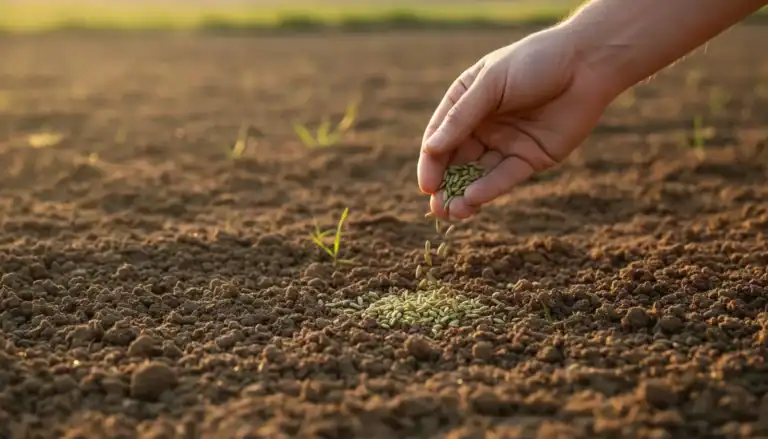
Skip the temptation to apply extra fertilizer to bare spots. Over-concentration burns existing grass and delays recovery. Seed bare areas first, then fertilize the entire lawn at normal rates once new grass reaches 2 inches tall.
Don’t fertilize immediately before heavy rain forecasts exceeding 1 inch. Light rain helps activate fertilizer, but heavy downpours wash nutrients away before grass can absorb them, wasting your investment and potentially polluting waterways.
When Will You See Results from Spring Fertilization?
Expect visible green-up within 7-14 days from quick-release nitrogen, while slow-release formulations take 2-3 weeks to show significant color improvement. Growth response appears first, followed by color darkening as chlorophyll production increases.
Cool-season grasses respond faster in spring than warm-season varieties, which may show minimal response until soil temperatures reach 65-70°F consistently. Be patient with warm-season lawns, their growth surge comes later but lasts longer through summer heat.
From our testing, properly timed spring fertilizer provides steady growth and color for 8-12 weeks without the boom-bust cycle of quick-release products. You’ll notice reduced need for supplemental feeding through early summer when applied correctly.

Spring Fertilizer Rates by Grass Type
Different grass species have varying nitrogen requirements and tolerance levels. Cool-season grasses generally need more spring nitrogen than warm-season varieties, which reserve their heaviest feeding for summer months.
| Grass Type | Spring Nitrogen Rate | Timing | Special Considerations |
|---|---|---|---|
| Kentucky Bluegrass | 1.0 lbs/1000 sq ft | Early April | Highest spring needs, split application recommended |
| Tall Fescue | 0.75 lbs/1000 sq ft | Mid April | Drought tolerant, moderate spring feeding |
| Fine Fescue | 0.5 lbs/1000 sq ft | Late April | Low maintenance, excess nitrogen causes problems |
| Bermuda Grass | 0.5 lbs/1000 sq ft | Late April-May | Wait for 65°F soil temperature, heavier summer feeding |
| Zoysia | 0.5 lbs/1000 sq ft | May | Slow to green up, patient timing required |
Frequently Asked Questions
Can I apply spring fertilizer to wet grass?
No, apply fertilizer only to dry grass blades. Wet grass causes granular fertilizer to stick to blades, leading to leaf burn and uneven distribution. Wait for morning dew to dry completely before application, then water thoroughly afterward to activate the nutrients.
Is it too late to fertilize if grass is already growing fast?
If your grass is already growing vigorously and deep green, you can skip or reduce spring fertilization. Over-fertilizing actively growing grass wastes money and can promote excessive growth that requires more frequent mowing and watering.
Should I use the same spring fertilizer every year?
In our experience, rotating between different nitrogen sources annually prevents soil pH changes and nutrient imbalances. Alternate between sulfur-coated urea, polymer-coated, and organic sources to maintain soil health and consistent grass performance.
What happens if I miss the spring fertilizer window?
You can still fertilize through late May, but reduce the nitrogen rate by 25% to avoid heat stress as temperatures rise. Focus on slow-release formulations and ensure adequate watering to prevent fertilizer burn during warmer weather.
Can I fertilize new grass seed in spring?
Use starter fertilizer with higher phosphorus content (like 18-24-12) for new seeding, not regular lawn fertilizer. Apply at seeding time, then switch to balanced fertilizer once new grass reaches 2-3 inches tall and has been mowed twice.