Pacific Northwest Lawn Care: A Complete Seasonal Guide
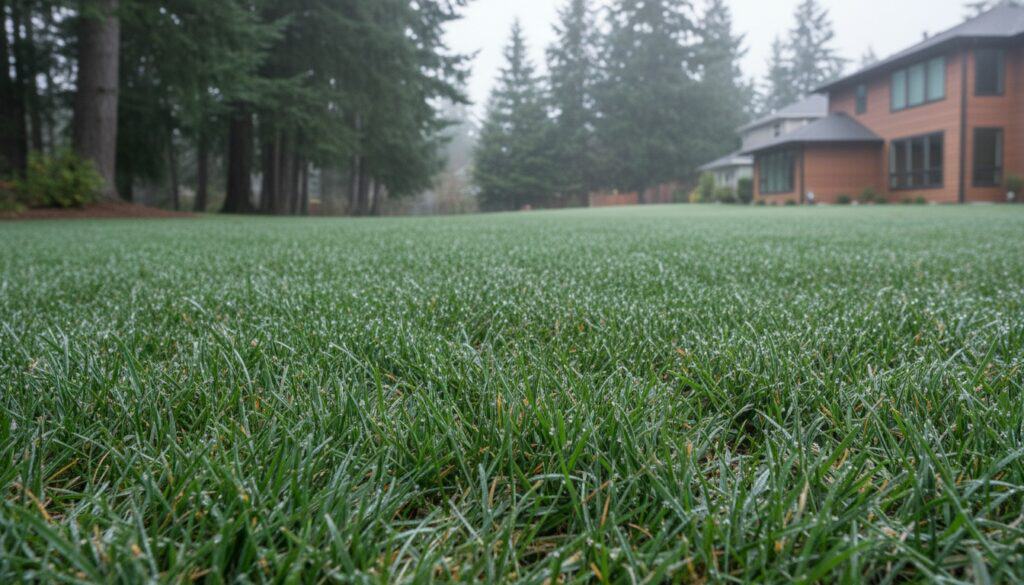
Most lawn care advice assumes you live somewhere with hot summers and freezing winters. If you’re in the Pacific Northwest, that advice will wreck your grass. Pacific Northwest lawn care follows a different calendar than the rest of the country because mild, wet winters and dry summers flip the typical growing season on its head. Cool-season grasses dominate here, thriving in spring and fall while struggling through July and August drought stress. This guide covers the specific timing, products, and techniques that actually work from Seattle to Portland.
Key Takeaways
- Cool-season grasses (perennial ryegrass, fine fescue, Kentucky bluegrass) are the only viable options west of the Cascades
- Fall is your most important season. Fertilize, overseed, and aerate between September 15 and October 31
- Apply pre-emergent herbicide in mid-February to early March, earlier than national guides recommend
- Moss treatment requires iron sulfate or ferrous ammonium sulfate, not just raking
- Summer dormancy is normal. Don’t fight it with excessive watering
If you’ve tried following national lawn care calendars and gotten patchy results, you’re not alone. The PNW’s maritime climate creates conditions that baffle advice written for the Midwest or Southeast. This guide gives you the exact timing for each task, month by month, plus specific solutions for the moss, crane fly larvae, and compaction issues that plague PNW lawns.
Why does Pacific Northwest lawn care differ from other regions?
The Pacific Northwest west of the Cascade Range gets 37 to 50 inches of rain annually, but almost all of it falls between October and May. Summers are dry. July and August often see less than 1 inch of rain combined in Seattle and Portland.
This creates a backwards growing season compared to most of the country. Your grass grows fastest in March through May and again in September through November. It goes semi-dormant in summer heat and stays green but slow-growing through mild winters.
According to Oregon State University Extension, soil temperatures in western Oregon and Washington rarely drop below 40°F for extended periods, meaning grass roots stay somewhat active year-round. But air temperatures seldom exceed 85°F for more than a few days, so warm-season grasses like Bermuda can’t survive here.
| Climate Factor | Pacific Northwest | National Average | Impact on Lawn Care |
|---|---|---|---|
| Annual rainfall | 37-50 inches | 30 inches | Promotes moss, reduces summer watering needs |
| Summer rain (June-Aug) | 2-4 inches total | 9-12 inches | Lawns go dormant without irrigation |
| Winter low temps | 35-42°F avg | 20-30°F | Grass stays green, moss thrives |
| Peak growth months | April-May, Sep-Oct | May-August | Fall is the critical maintenance window |
Want a personalized lawn care schedule for your specific location? Join the Lawn Pilot waitlist for customized reminders based on your zip code and grass type.
What grass types grow best in the Pacific Northwest?
Cool-season grasses are your only realistic option west of the Cascades. The most successful PNW lawns use a blend of perennial ryegrass, fine fescue, and Kentucky bluegrass in varying proportions depending on sun exposure and traffic.
Perennial ryegrass germinates in 5 to 10 days, the fastest of any common lawn grass. It tolerates the wet winters well and establishes quickly in fall overseeding. It’s the workhorse of PNW lawns.
Fine fescue (creeping red fescue, chewings fescue, hard fescue) handles shade better than any other cool-season grass. If you have trees, you need fescue in your mix. It also tolerates lower fertility and less water than ryegrass.
Kentucky bluegrass spreads by rhizomes, filling in bare spots over time. It’s slower to establish (14 to 21 days germination) but creates a denser turf once mature. It needs more sun and water than fescue.
Washington State University Extension recommends a blend of 50% perennial ryegrass, 30% fine fescue, and 20% Kentucky bluegrass for most home lawns with mixed sun and shade.
| Grass Type | Germination Time | Shade Tolerance | Traffic Tolerance | Best Use |
|---|---|---|---|---|
| Perennial ryegrass | 5-10 days | Moderate | High | High-traffic areas, quick repairs |
| Fine fescue | 10-14 days | Excellent | Low | Shaded areas, low-maintenance lawns |
| Kentucky bluegrass | 14-21 days | Low | High | Full sun, self-repairing lawns |
| Tall fescue | 7-12 days | Moderate | High | Eastern WA/OR, drought-prone areas |
One thing I see homeowners get wrong constantly: buying warm-season grass seed because it was on sale. Bermuda, Zoysia, St. Augustine, and centipede grass will die in a PNW winter. Every time. Don’t waste your money.
Pacific Northwest lawn care calendar by season
Here’s the month-by-month breakdown of what to do and when. Times are based on western Washington and Oregon. If you’re east of the Cascades or in a colder microclimate, shift everything 2 to 3 weeks later in spring and earlier in fall.
Spring (March through May)
March: Apply pre-emergent herbicide between March 1 and March 15 in most years. You want it down before soil temperatures hit 55°F consistently. Crabgrass germinates at 55°F soil temp, and by the time you see it, prevention is too late. Dithiopyr or prodiamine products work well.
Also in March: apply your first fertilizer of the year. Use a balanced fertilizer with slow-release nitrogen at 0.5 to 0.75 lb nitrogen per 1,000 square feet. Organic options like Milorganite work fine but release slowly in cool soil.
April: Begin mowing when grass reaches 3 to 3.5 inches. Set your mower to 2.5 inches. The PNW’s wet spring makes the one-third rule more important than ever. Cutting more than one-third of the blade stresses grass and invites disease in humid conditions.
If you didn’t treat moss over winter, spot-treat with ferrous sulfate now before temperatures warm.
May: Growth peaks this month. You may need to mow twice a week. Apply a second fertilizer application around May 15 at the same rate. Watch for crane fly larvae damage (brown patches that pull up easily). Beneficial nematodes applied now can control them.
Summer (June through August)
June: Growth slows as rainfall drops. Reduce mowing to once a week or less. Raise mowing height to 3 to 3.5 inches to shade soil and reduce water needs.
July-August: This is survival mode. Your lawn will go dormant and turn brown if you don’t irrigate. That’s fine. Healthy cool-season grass survives 4 to 6 weeks of summer dormancy without permanent damage.
If you choose to irrigate, apply 1 to 1.5 inches per week in deep, infrequent waterings. Early morning is best. Avoid evening watering, which promotes fungal disease in our humid nights.
Skip fertilizer entirely from June through August. Feeding dormant or stressed grass wastes money and can burn roots.
Fall (September through November)
Fall is when PNW lawns either recover or decline. This 8-week window determines how your lawn looks next year.
September: Core aeration time. Rent a core aerator and make two passes over your lawn. Leave the plugs on the surface to break down. Aeration relieves compaction from summer foot traffic and improves water penetration for winter rains.
Apply fall fertilizer after aerating. This is your most important fertilizer application of the year. Use 1 lb nitrogen per 1,000 square feet. The grass is actively growing now and will store nutrients in roots for winter.
October: Overseed thin areas between October 1 and October 15. Soil temperatures are still warm enough (55-65°F) for germination, and fall rains keep seed moist. Spread seed at 3 to 4 lb per 1,000 square feet for overseeding, 6 to 8 lb for bare spots.
Apply a second fall fertilizer around October 15 at 0.75 to 1 lb nitrogen per 1,000 square feet.
November: Final mowing before winter. Lower height to 2 inches on your last cut to reduce snow mold risk and discourage vole damage. Clean up fallen leaves. A layer of wet leaves will smother grass and promote disease.
Winter (December through February)
December-January: Stay off frozen grass. Walking on frost-covered lawns damages blade cells and leaves brown footprints for weeks. Otherwise, no action needed.
February: Apply moss killer (iron sulfate at 4-6 oz per 1,000 square feet or ferrous ammonium sulfate product) on a dry day. The moss is actively growing now and absorbs the iron quickly. Wait 2 to 3 weeks, then rake out dead moss before overseeding those areas in fall.
Get a Free Personalised Lawn Plan
Answer 3 quick questions about your lawn and we'll build a custom care plan — tailored to your grass type, climate, and biggest challenges.
Build My Lawn Plan →| Month | Primary Tasks | Products Needed | Critical Timing |
|---|---|---|---|
| February | Moss treatment | Iron sulfate or FAS product | Before spring growth |
| March | Pre-emergent, first fertilizer | Dithiopyr/prodiamine, balanced fertilizer | Before 55°F soil temp |
| April | Begin mowing, spot moss treatment | Mower, ferrous sulfate | When grass hits 3 inches |
| May | Second fertilizer, crane fly treatment | Balanced fertilizer, beneficial nematodes | Mid-month |
| June-Aug | Mow high, irrigate or allow dormancy | Water (optional) | 1-1.5 in/week if irrigating |
| September | Core aerate, fall fertilizer | Aerator rental, high-N fertilizer | Early to mid-month |
| October | Overseed, second fall fertilizer | Grass seed blend, fertilizer | Oct 1-15 for seeding |
| November | Final mow, leaf cleanup | Rake or mower with bag | Before first hard frost |
Over 2,400 homeowners in the Pacific Northwest already use Lawn Pilot to track their lawn care timing. Get on the waitlist for personalized seasonal alerts.
How do you control moss in Pacific Northwest lawns?
Moss is the signature PNW lawn problem. The combination of wet winters, acidic soil, and shade creates perfect moss conditions. You’ll never eliminate moss permanently in this climate, but you can control it.
First, understand that moss doesn’t “kill” grass. Moss moves in where grass is already weak. Treating the moss without fixing the underlying problems just creates a cycle of treatment and regrowth.
The underlying problems are usually some combination of:
- Shade (too much tree cover for grass to compete)
- Compaction (foot traffic, clay soil)
- Low soil pH (below 6.0)
- Poor drainage (standing water after rain)
- Low fertility (thin, weak grass)
Iron-based treatments are the most effective moss killers. Iron sulfate (ferrous sulfate) at 4 to 6 ounces per 1,000 square feet turns moss black within days. Apply in February or early March on a dry day. Avoid getting it on concrete, which will stain orange.
Commercial products like Moss Out or Lilly Miller Moss Killer contain ferrous ammonium sulfate, which is less staining than pure iron sulfate.
Lime addresses soil pH but won’t kill existing moss. If your soil tests below 6.0 pH (common in PNW), apply dolomitic lime at 40 to 50 lb per 1,000 square feet in fall. It takes 6 to 12 months to raise pH, so this is a long-term fix.
Rake out dead moss 2 to 3 weeks after iron treatment. Then overseed immediately if it’s fall, or wait until September if it’s spring. The bare spots will grow new moss if you don’t establish grass quickly.
For heavily shaded areas where grass consistently loses to moss, consider replacing grass with shade-tolerant groundcovers or accepting moss as the lawn. Some PNW gardeners maintain intentional moss lawns that stay green year-round with zero mowing.
When should you overseed in the Pacific Northwest?
Fall overseeding between September 15 and October 15 gives the best results. Soil is warm (55-65°F), days are shorter so seedlings don’t dry out, and fall rains provide consistent moisture.
Spring overseeding is possible but riskier. Germinating seeds face competition from crabgrass and annual weeds. If you missed the fall window, overseed in mid-April to early May and skip pre-emergent herbicide on those areas.
Overseeding rates:
- Light overseeding (thickening existing lawn): 3 to 4 lb seed per 1,000 square feet
- Heavy overseeding (significant thin spots): 5 to 6 lb per 1,000 square feet
- Bare soil renovation: 6 to 8 lb per 1,000 square feet
Preparation matters more than seed rate. For best germination:
- Mow existing grass to 1.5 to 2 inches
- Core aerate or dethatch if thatch exceeds 0.5 inch
- Spread seed with a broadcast spreader in two passes (half rate each direction)
- Top-dress with 0.25 inch compost or screened soil
- Water lightly twice daily until germination (5-14 days)
- Reduce to once daily for 2 weeks after germination
- Resume normal deep watering once new grass reaches 2 inches
A lawn in Olympia went from 60% coverage to full density in one fall season using this method with a ryegrass-fescue blend. The key was consistent light watering through the dry weeks of September.
Pacific Northwest Lawn Care FAQ
Why does my Pacific Northwest lawn turn brown in summer?
Cool-season grasses go semi-dormant when daytime temperatures consistently exceed 75°F and rainfall drops below 1 inch per week. This is normal survival behavior, not death. The grass crowns stay alive and green up again when fall rains return. If you want to keep grass green through summer, irrigate 1 to 1.5 inches per week.
When is the best time to fertilize lawns in the Pacific Northwest?
Apply fertilizer four times per year: early March, mid-May, early September (most important), and mid-October. Skip summer fertilizing entirely. Fall applications matter most because grass actively stores nutrients for winter and spring growth.
Can I grow Bermuda grass or other warm-season grasses in the Pacific Northwest?
No. Warm-season grasses require sustained summer heat (above 85°F) that the PNW doesn’t provide. They also can’t survive PNW winter temperatures, even in the mildest areas. Stick with perennial ryegrass, fine fescue, Kentucky bluegrass, or blends of these cool-season varieties.
How do I prevent crane fly damage to my Pacific Northwest lawn?
European crane fly larvae (leatherjackets) feed on grass roots from October through May. Apply beneficial nematodes (Steinernema feltiae) in September or March when soil temperatures are between 45°F and 65°F. Healthy, well-fertilized lawns tolerate some larvae feeding without visible damage.
What’s the best mowing height for Pacific Northwest lawns?
Maintain 2.5 to 3 inches during spring and fall active growth periods. Raise to 3.5 inches in summer to shade soil and reduce water stress. Lower to 2 inches on your final fall mowing to reduce snow mold and vole habitat.
Get Your Pacific Northwest Lawn Care Schedule
Join the Lawn Pilot waitlist and receive customized lawn care reminders based on your location, grass type, and local weather conditions. No more guessing about timing.
Get Your Plan