Level a bumpy lawn by topdressing with a sand-topsoil-compost mixture, applying it in thin ½-inch layers over multiple seasons rather than attempting to fix everything at once. Honestly, most people try to dump everything on at once and end up killing their grass. For minor dips under 1 inch, topdressing works perfectly, while depressions deeper than 2 inches require excavation and soil addition before reseeding.
Key Takeaways
- Apply topdressing mix in ½-inch layers maximum, thicker applications will smother grass
- Use a 40% sand, 40% topsoil, 20% compost mixture for best drainage and growth
- Level during active growing season: late spring for cool-season grass, early summer for warm-season
- Expect 2-3 applications over 6-12 months for significant leveling results
- Rent a landscape rake ($25-40/day) for efficient spreading over large areas
When Should You Level Your Lawn?
Time your lawn leveling during peak growing season when grass can quickly recover from the stress. For cool-season grasses like fescue and bluegrass, level from late April through early June. Warm-season grasses including Bermuda and Zoysia respond best to leveling from late May through July when soil temperatures reach 65-70°F consistently.
Skip leveling during dormant periods, drought stress, or within 4 weeks of overseeding. The University of Minnesota Extension recommends waiting until grass is actively growing and can push through the topdressing material within 2-3 weeks.

What Tools and Materials Do You Need?
Gather these essential tools before starting your leveling project:
- Landscape rake: 36-inch aluminum rake works best for spreading, rent for $25-40/day
- Push broom or drag mat: For working mix into grass canopy
- Garden hose: To identify low spots when filled with water
- Wheelbarrow or spreader: For material transport
- Shovel: Square point for precise placement
For topdressing material, order a custom blend of 40% coarse sand, 40% quality topsoil, and 20% compost. Skip pure sand, which creates drainage problems, or pure topsoil, which compacts easily. Plan on 1 cubic yard covering approximately 1,000 square feet at ½-inch depth.
How Do You Identify Problem Areas?
Walk your lawn after heavy rain to spot water pooling, these areas need filling. For subtle undulations, drag a garden hose across the lawn in a grid pattern. Low spots will be obvious where the hose doesn’t touch ground.
Use spray paint to mark areas requiring attention, categorizing them by severity:
| Depression Depth | Treatment Method | Timeline |
|---|---|---|
| Less than ½ inch | Single topdressing application | 4-6 weeks recovery |
| ½ to 1 inch | Two applications, 6 weeks apart | 3-4 months total |
| 1-2 inches | Three applications over growing season | 6-8 months total |
| Over 2 inches | Excavate, add soil, reseed | Full growing season |

What’s the Step-by-Step Topdressing Process?
Here’s the proven sequence for professional results:
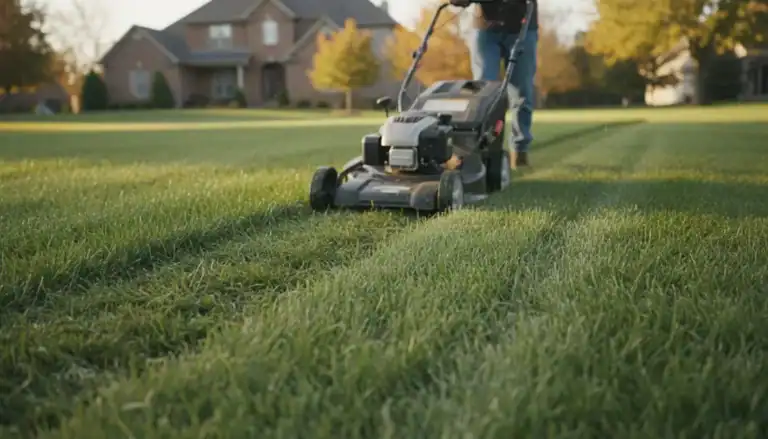
- Mow grass to 1 inch height, shorter than normal to allow topdressing contact with soil surface
- Apply starter fertilizer at half the recommended rate to encourage rapid grass recovery
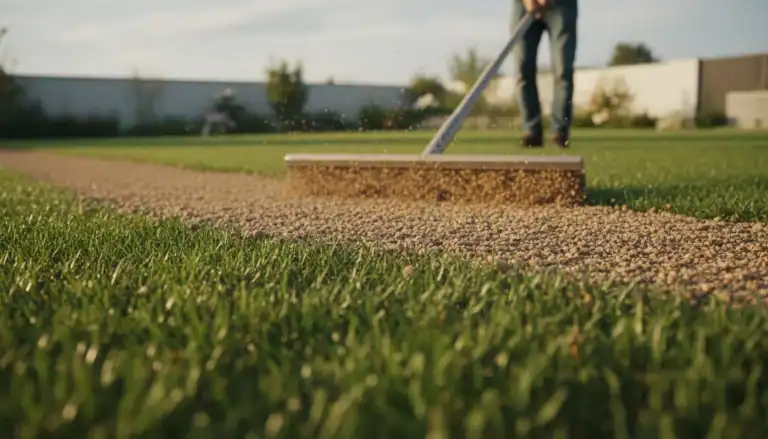
- Spread topdressing mix using landscape rake, maintaining ½-inch maximum thickness
- Work material into grass with push broom or drag mat, ensuring 50% of grass blades remain visible
- Water lightly to settle material, skip heavy watering that creates runoff
- Monitor grass emergence over 2-3 weeks, adding thin additional layer if needed
From our experience, working in 500-square-foot sections prevents the mix from drying out while you spread it. Cover material piles with tarps on windy days to prevent spreading where you don’t want it.
How Do You Handle Different Grass Types?
Grass variety affects your leveling approach significantly. Dense grasses like Bermuda and Zoysia tolerate topdressing better than thin grasses like tall fescue.
Cool-season grasses (fescue, bluegrass, ryegrass) grow more slowly, requiring conservative ¼-inch applications with 8-10 week intervals between treatments. These grasses struggle to penetrate thick topdressing layers.
Get a Free Personalised Lawn Plan
Answer 3 quick questions about your lawn and we'll build a custom care plan — tailored to your grass type, climate, and biggest challenges.
Build My Lawn Plan →Warm-season grasses (Bermuda, Zoysia, St. Augustine) handle more aggressive leveling with ½-inch applications every 6 weeks during peak growing season. Their aggressive growth habit helps them punch through topdressing quickly.

What About Severe Depressions and High Spots?
Areas deeper than 2 inches require excavation rather than topdressing. Cut out grass in 12-inch squares around the depression, remove to 6 inches deep, and backfill with quality topsoil mixed with 25% compost. Tamp lightly every 2 inches during filling to prevent settling.
For high spots, scalp grass short and use a mattock to remove excess soil. Grade smooth and overseed immediately. According to the Penn State Extension, removing more than 3 inches of soil typically requires soil testing to ensure proper pH and nutrient levels.
Steep slopes over 15% grade need terracing or retaining walls rather than simple leveling. Contact a landscape contractor for slopes exceeding 20% grade.
How Do You Maintain Results Long-Term?
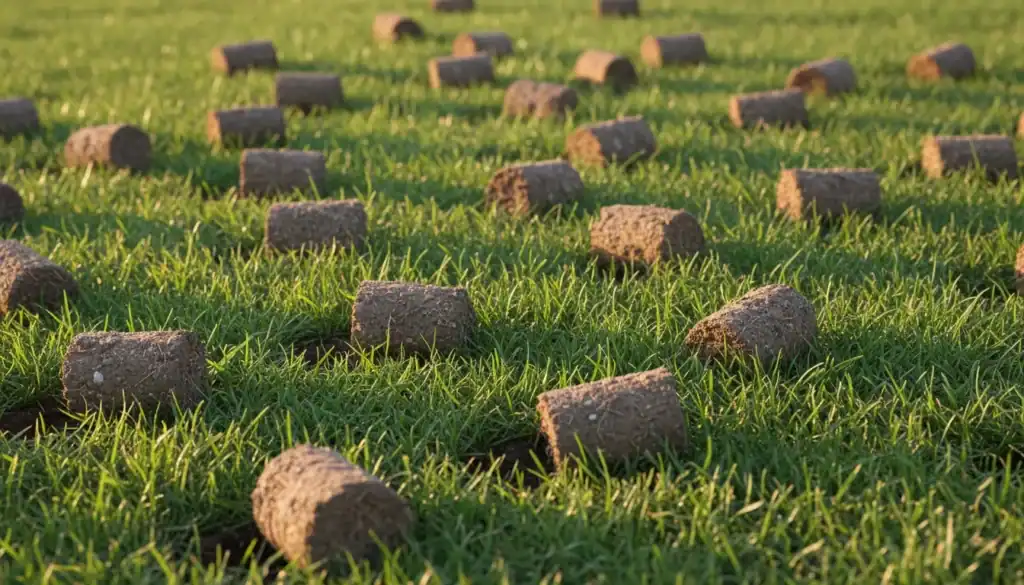
Prevent future settling with proper lawn maintenance practices. Core aerate annually in spring or fall to prevent soil compaction that leads to uneven settling. Apply ¼-inch topdressing every other year as maintenance, focusing on high-traffic areas that compact first.
Address drainage issues causing recurring low spots. Install French drains or redirect downspouts away from problem areas. Standing water after rain indicates drainage problems that topdressing alone won’t solve.
In our testing, lawns maintained with regular overseeding and fertilization hold their level better than neglected lawns. Thick grass prevents soil erosion that creates new low spots.

Frequently Asked Questions
Can I use just sand to level my lawn?
Skip pure sand for leveling, it creates drainage problems and compacts over time. Sand doesn’t provide nutrients grass needs and can create a barrier preventing water and fertilizer from reaching roots. Always mix sand with topsoil and compost in the 40-40-20 ratio for best results.
How much does it cost to level a lawn professionally?
Professional lawn leveling costs $0.50-$2.00 per square foot depending on severity and location. A typical 5,000 square foot lawn with moderate leveling needs runs $1,200-$3,500. DIY leveling costs $0.15-$0.40 per square foot for materials only, making it significantly more affordable for homeowners willing to do the work.
Will leveling damage my sprinkler system?
Mark all sprinkler heads and underground lines before starting leveling work. Topdressing shouldn’t damage properly installed systems, but stay away from heavy equipment over irrigation lines. Hand-spread material around sprinkler heads and adjust head height if topdressing raises soil level more than ½ inch.
When will I see results from lawn leveling?
Grass typically emerges through topdressing within 2-3 weeks during growing season. Full aesthetic results take 6-8 weeks as grass fills in completely. Multiple applications over 6-12 months provide the best long-term leveling results rather than expecting immediate perfection.
Should I overseed after leveling?
Overseed only if grass doesn’t recover within 4 weeks or if you’ve excavated areas deeper than 2 inches. Most healthy grass pushes through proper topdressing without additional seeding. Wait to assess grass recovery before spending money on seed that may not be necessary.