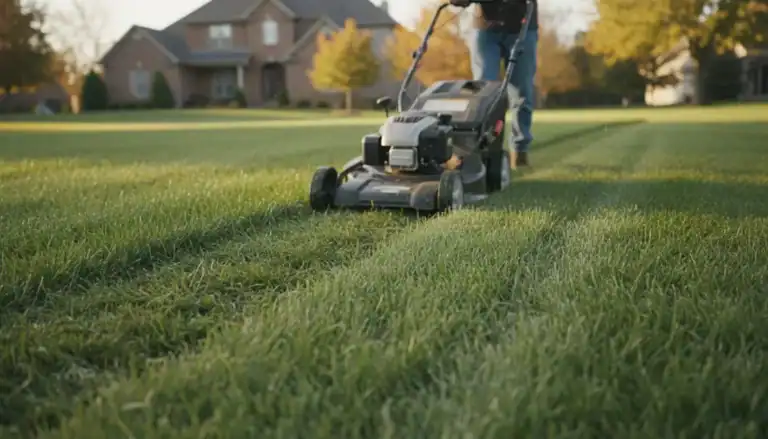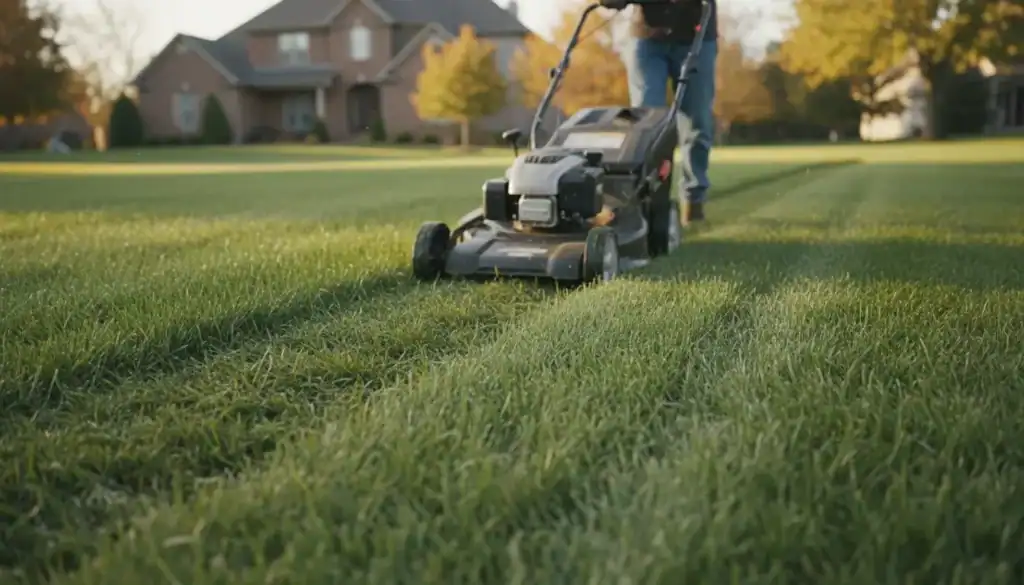
Lawn striping creates that professional, ballpark appearance by bending grass blades in alternating directions to reflect light differently. The technique works by pushing grass down in one direction as you mow, creating darker areas where blades lay away from you and lighter areas where they bend toward you. Honestly, you can achieve basic striping with any mower just by changing direction with each pass, no fancy equipment required.
Key Takeaways
- Mow at your grass’s maximum recommended height (3-4 inches for most cool-season grasses) for the most dramatic stripes
- Basic striping requires only changing mowing direction with each pass, no special equipment needed
- A lawn roller or striping kit intensifies the effect by 40-60% compared to mowing alone
- Best results come from mowing when grass is dry and soil is slightly moist
- Cool-season grasses like Kentucky bluegrass and perennial ryegrass stripe better than warm-season varieties
What Creates the Striping Effect?
Lawn stripes are purely an optical illusion created by light reflection off bent grass blades. When grass bends toward you, the blade tips catch more light and appear lighter. When grass bends away from you, you see more of the darker blade sides and soil shadows. The mower deck naturally pushes grass in its travel direction, but the effect intensifies dramatically when you add weight or a roller behind the mower.
According to turfgrass research from the University of Minnesota Extension, the striping effect depends on three factors: grass height, blade flexibility, and the angle of bend. Taller grass (3-4 inches) creates more dramatic stripes than short grass (2 inches or less) because longer blades bend farther and cast deeper shadows.

Which Grass Types Stripe Best?
Cool-season grasses dominate the striping game because their blade structure and growth habits create better contrast. From our experience, some grass types just weren’t meant for the striped life:
| Grass Type | Striping Quality | Optimal Height | Notes |
|---|---|---|---|
| Kentucky Bluegrass | Excellent | 3-4 inches | Gold standard for striping |
| Perennial Ryegrass | Excellent | 3-3.5 inches | Quick recovery from bending |
| Fine Fescue | Very Good | 3-4 inches | Soft blades bend easily |
| Tall Fescue | Good | 3-4 inches | Stiffer blades, less dramatic |
| Bermuda Grass | Fair | 1.5-2.5 inches | Short, stiff growth limits effect |
| Zoysia | Good | 2-3 inches | Dense growth helps with contrast |
How Do You Create Basic Stripes Without Special Equipment?
You can create visible stripes with any walk-behind or riding mower by following this simple pattern:
- Mow the perimeter: Cut a border around your entire lawn to create clean edges for your stripe pattern
- Choose your direction: Start at one end of your longest lawn dimension, this creates the most dramatic visual impact
- Make your first pass: Mow in a straight line from one end to the other
- Turn and reverse: At the end of each row, turn around and mow back in the opposite direction
- Overlap slightly: Keep a 2-3 inch overlap between passes to avoid missed strips
- Maintain straight lines: Pick a landmark (tree, house corner, fence post) at the far end to aim toward
From our testing, even basic direction changes create noticeable stripes in healthy cool-season grass maintained at 3+ inches. The key is consistency, each pass must bend the grass in the exact opposite direction of the previous pass. Don’t overthink it.

What Equipment Enhances Lawn Striping?
While direction changes alone create stripes, additional weight significantly improves the effect. Professional groundskeepers use several methods:
Lawn Rollers: A 36-48 inch water-filled roller attached behind your mower increases stripe visibility by 40-60%. Fill it halfway (about 150-200 pounds) to avoid soil compaction. The Brinly PRC-24BH is a solid mid-range option that fits most riding mowers.
Striping Kits: Manufacturer-specific attachments like the John Deere MCS Striping System use weighted rollers or brush assemblies designed for specific mower models. These typically cost $200-400 but integrate seamlessly.
DIY Weighted Drag: You can make an effective striping tool by filling a 4-inch PVC pipe with sand, capping the ends, and dragging it behind your mower with a chain. Total cost: under $40.
When Should You Stripe Your Lawn?
Timing affects stripe quality more than most homeowners realize. The best striping conditions are:
Grass condition: Dry grass surfaces with slightly moist soil underneath. Wet grass clumps and doesn’t bend cleanly, while overly dry soil creates dust clouds that obscure the pattern.
Growth stage: Stripe 2-4 days after the grass reaches your target height. Freshly cut grass (same day) doesn’t have enough blade length to bend effectively.
Weather: Overcast days with 60-75°F temperatures are ideal. Hot, sunny conditions stress grass and make it brittle. Early morning (8-10 AM) or late afternoon (4-6 PM) work best.
Season: Spring and early fall produce the most dramatic stripes when cool-season grasses are actively growing. Mid-summer stripes often fade within 24-48 hours due to heat stress.

How Do You Create Advanced Striping Patterns?
Once you master basic back-and-forth stripes, try these professional patterns:
Checkerboard: Create your initial stripes, then mow perpendicular passes over the same area. This requires two complete mowing sessions but creates the classic diamond pattern seen on baseball fields.
Diagonal Stripes: Instead of mowing parallel to property lines, angle your passes at 30-45 degrees. This works especially well on rectangular lawns and creates unique visual interest.
Get a Free Personalised Lawn Plan
Answer 3 quick questions about your lawn and we'll build a custom care plan — tailored to your grass type, climate, and biggest challenges.
Build My Lawn Plan →Curves and Waves: Use a string line or garden hose as a guide to create gentle curves. Keep curves shallow (no more than 15-degree angles) to maintain mower stability.
Professional groundskeepers at University of Georgia recommend changing your striping pattern every 2-3 weeks to prevent wear patterns and encourage upright grass growth.
What Maintenance Do Striped Lawns Require?
Striped lawns need slightly more attention than standard cutting patterns. The constant directional bending can stress grass if overdone.
Rotation schedule: Change your stripe direction every 2-3 mowings. If you normally run north-south stripes, switch to east-west or diagonal patterns to prevent permanent lean.
Recovery time: Allow 24-48 hours between heavy striping sessions. Grass blades need time to return to vertical growth before the next aggressive bend.
Fertilization: Striped lawns benefit from extra nitrogen to maintain blade strength and recovery speed. Apply 1 pound of nitrogen per 1,000 square feet every 6-8 weeks during growing season.
Watering: Deep, infrequent watering (1-1.5 inches per week) helps grass recover from bending stress better than frequent light watering.

How Long Do Lawn Stripes Last?
Stripe longevity depends on grass type, weather, and traffic. Under ideal conditions:
- Cool-season grasses: 5-7 days in spring/fall, 2-3 days in summer
- Warm-season grasses: 3-4 days maximum due to rapid vertical growth
- High-traffic areas: 1-2 days before foot traffic disrupts the pattern
- Windy conditions: Wind speeds above 15 mph can eliminate stripes within hours
We’ve found that homeowners typically need to re-stripe every 4-5 days to maintain the crisp appearance seen on professional sports fields. Most settle into a weekly routine that coincides with regular mowing. Let’s be honest, that’s probably more realistic for most of us anyway.
Frequently Asked Questions
Can you stripe a lawn with a push mower?
Yes, push mowers create stripes through direction changes alone, though the effect is subtler than riding mowers. The key is maintaining consistent overlap and straight lines. Adding a small roller attachment designed for walk-behind mowers significantly improves results.
Why don’t my lawn stripes show up?
Common causes include cutting too short (under 2.5 inches), mowing wet grass, or having warm-season grass that doesn’t stripe well. Try raising your cutting height to the maximum recommended for your grass type and ensure the grass is dry but the soil is slightly moist.
Do lawn stripes damage the grass?
Occasional striping doesn’t harm healthy grass, but constant bending in the same direction can create permanent lean and weak spots. Rotate your stripe direction every 2-3 mowings and avoid striping stressed or newly seeded areas.
What’s the best time of day to stripe a lawn?
Early morning (8-10 AM) or late afternoon (4-6 PM) when grass is dry but soil retains some moisture. Avoid midday striping in summer when heat stress can damage bent grass blades.
How much does professional lawn striping equipment cost?
Basic lawn rollers start around $150-200, while manufacturer-specific striping kits range from $200-400. DIY options using PVC pipe and sand cost under $40 and work nearly as well for homeowner applications.