The best time to fertilize your lawn depends on your grass type: cool-season grasses need feeding in early spring (April-May) and fall (September-November), while warm-season grasses should be fertilized from late spring through early fall (May-September). Cool-season grasses like fescue and bluegrass grow most actively in cooler weather, while warm-season varieties like Bermuda and Zoysia thrive in summer heat.
Related: fertilizer only works on a properly watered lawn. See the best time to water your lawn.
Here’s the thing, timing matters way more than the fertilizer itself. Apply at the wrong time and you’ll waste money while potentially torching your lawn. Feed cool-season grasses when soil temperatures reach 55-65°F in spring, and again when they drop to this range in fall. Warm-season grasses need fertilizer when soil temperatures consistently stay above 65°F.
Key Takeaways
- Cool-season grasses: First application when soil hits 55°F (typically April), second application in fall when temperatures drop to 55-65°F
- Warm-season grasses: Start feeding when soil reaches 65°F consistently (May in most areas), continue through September
- Never fertilize dormant grass, it wastes fertilizer and can cause root burn
- Fall fertilization for cool-season grasses builds winter hardiness and promotes spring green-up
- Most lawns need 3-4 fertilizer applications per year, spaced 6-8 weeks apart during active growing seasons
- Soil temperature matters more than air temperature, use a soil thermometer for accurate timing
How to Determine Your Grass Type
Before scheduling fertilizer applications, you need to identify whether you have cool-season or warm-season grass. Cool-season grasses include tall fescue, Kentucky bluegrass, perennial ryegrass, and fine fescue. These grasses grow actively in spring and fall when temperatures range from 60-75°F.
Warm-season grasses include Bermuda, Zoysia, St. Augustine, Centipede, and Buffalo grass. They thrive in summer heat above 80°F and go dormant when temperatures drop below 50°F consistently.
Geography provides a good starting point: if you live north of the transition zone (roughly the Mason-Dixon line), you likely have cool-season grass. Southern regions typically grow warm-season varieties. The transition zone, parts of Kentucky, Tennessee, North Carolina, and similar latitudes, can support both types.

When to Fertilize Cool-Season Grasses
Cool-season grasses need their heaviest feeding in fall, with a lighter spring application. Apply the first fertilizer application in early spring when soil temperatures reach 55°F and grass begins active growth. This typically occurs in April for most northern regions.
The second and most important application happens in fall, 6-8 weeks before your first expected hard frost. For most areas, this means September through early October. Fall fertilization helps grass store nutrients for winter survival and promotes early spring green-up.
| Region | Spring Application | Fall Application | Optional Summer Feed |
|---|---|---|---|
| Northern States | Mid-April to early May | Early to mid-September | Skip (causes stress) |
| Transition Zone | Early April | Late September to early October | Light application in June if needed |
| High Altitude Areas | Late May | Late August to early September | Skip |
In our testing, we’ve found that cool-season lawns receiving 75% of their annual nitrogen in fall and 25% in spring show better color, density, and disease resistance than lawns fed primarily in spring and summer.
When to Fertilize Warm-Season Grasses
Warm-season grasses need feeding during their active growing period from late spring through early fall. Start fertilizing when soil temperatures consistently stay above 65°F, typically mid-May in most southern regions.
Apply fertilizer every 6-8 weeks during the growing season, with the final application 6-8 weeks before your average first frost date. This prevents late-season growth that could make grass more susceptible to winter damage.
Most warm-season grasses benefit from 3-4 applications per year: late spring (May), early summer (June-July), and late summer (August-early September). Skip fertilizing during peak summer stress periods when temperatures exceed 95°F consistently.

What Soil Temperature Tells You
Soil temperature drives grass growth more than air temperature. Grass roots need warmth to absorb nutrients effectively, making soil temperature the most reliable fertilizer timing indicator.
Check soil temperature 2-3 inches deep in early morning for the most accurate reading. Cool-season grasses start growing when soil hits 50°F but respond best to fertilizer at 55-65°F. Warm-season grasses need soil temperatures above 65°F for effective nutrient uptake.
You can find soil temperature data from your local extension office or use a soil thermometer. Many areas publish soil temperature maps online during growing season.
Monthly Fertilizer Schedule by Grass Type
Here’s a month-by-month fertilizer schedule for the continental United States, adjusted by grass type and region:
| Month | Cool-Season Grass | Warm-Season Grass | Notes |
|---|---|---|---|
| March | Wait (too early) | Wait (still dormant) | Check soil temperature first |
| April | First application (northern areas) | Wait | When soil reaches 55°F |
| May | First application (transition zone) | First application | Warm-season grass breaking dormancy |
| June | Light application if needed | Second application | Peak growing season for warm-season |
| July | Skip (heat stress) | Third application (if not stressed) | Monitor for drought stress |
| August | Skip | Final application | Prepare for fall transition |
| September | Major application | Stop feeding (prepare for dormancy) | Most important feed for cool-season |
| October | Final application (late areas) | Stop | 6 weeks before hard frost |

How Weather Affects Fertilizer Timing
Weather conditions can shift optimal fertilizer timing by several weeks. Drought stress, excessive heat, or unusually cold springs all impact when your grass can effectively use nutrients.
Never fertilize drought-stressed grass, it cannot absorb nutrients properly and fertilizer salts can burn roots. Wait until you’ve had at least 1 inch of rainfall or can irrigate thoroughly before and after application.
Extended cold snaps can delay spring fertilization by 2-3 weeks. If soil temperatures drop back below 50°F after warming up, wait for consistent warming before fertilizing.
Similarly, early heat waves can push cool-season grasses into semi-dormancy, making summer fertilization counterproductive. When daily highs exceed 85°F consistently, cool-season grasses slow growth and shouldn’t receive nitrogen.
Regional Variations Across the United States
Fertilizer timing varies significantly across climate zones. Northern states with short growing seasons need concentrated feeding in spring and fall, while southern areas can spread applications across longer active periods.
Pacific Northwest lawns often need earlier spring feeding due to mild winters and extended growing seasons. Desert Southwest areas require careful timing around extreme summer heat, many warm-season grasses there benefit from winter feeding when temperatures moderate.
Get a Free Personalised Lawn Plan
Answer 3 quick questions about your lawn and we'll build a custom care plan — tailored to your grass type, climate, and biggest challenges.
Build My Lawn Plan →Coastal areas with moderated temperatures can extend feeding seasons in both directions. Florida lawns might receive fertilizer as early as March and as late as November, while Minnesota lawns have a much narrower window from April to September.

Signs Your Timing Is Off
Several symptoms indicate poor fertilizer timing. Fertilizing too early in spring often promotes excessive leaf growth at the expense of root development, leaving grass vulnerable to summer stress. You’ll see rapid green-up followed by quick brown-out during the first heat wave.
Late fall fertilization on warm-season grasses prevents proper dormancy preparation. The grass stays green longer than it should, then suffers severe winter damage. Properly timed fertilization should help warm-season grasses gradually slow growth and develop cold tolerance.
Fertilizing during stress periods, drought, disease pressure, or extreme temperatures, often worsens problems instead of helping. Stressed grass cannot process nutrients normally, and excess fertilizer can compound existing issues.
Coordinating Fertilizer with Other Lawn Care
Fertilizer timing should coordinate with your entire lawn care program. Apply pre-emergent herbicides 2-4 weeks before fertilizing in spring, this prevents weeds from using your fertilizer nutrients.
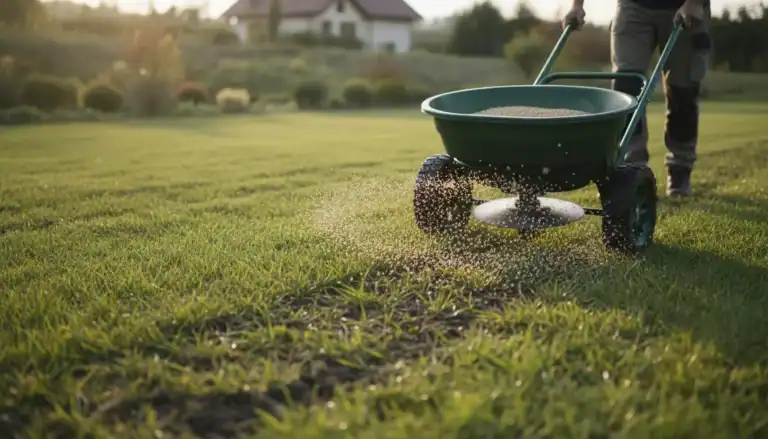
Schedule fertilization 2-3 days before expected rainfall when possible, or plan to irrigate within 24 hours after application. This activates granular fertilizers and prevents potential leaf burn.
Avoid fertilizing immediately after seeding, wait until new grass is established (typically 6-8 weeks) before first fertilizer application. The exception is starter fertilizer specifically formulated for new seedlings.

Adjusting Timing for Different Fertilizer Types
Quick-release fertilizers need precise timing since nutrients become available immediately. Apply these only during active growth periods when grass can quickly absorb nutrients.
Slow-release fertilizers provide more timing flexibility since nutrients release gradually over 8-12 weeks. You can apply these slightly earlier in spring or later in fall compared to quick-release products.
Organic fertilizers need soil microbial activity to release nutrients, requiring warmer soil temperatures (65°F minimum) for effectiveness. This typically delays organic fertilizer applications by 2-3 weeks compared to synthetic options.
Common Timing Mistakes to Avoid
The biggest timing mistake is fertilizing calendar dates instead of grass growth stages. Your lawn doesn’t know it’s April 15th, it responds to soil temperature and moisture conditions that vary year to year.
Another common error is “feeding the weeds” with early spring applications before grass begins growing. Dormant grass cannot compete with weeds for nutrients, essentially providing a head start for unwanted plants.
From our experience, homeowners often over-fertilize in summer, thinking brown spots indicate nutrient deficiency. Summer browning in cool-season grass is usually drought or heat stress, not nutrient deficiency. Adding fertilizer during stress periods typically worsens the problem.
Frequently Asked Questions
Can I fertilize my lawn too early in spring?
Yes, fertilizing too early wastes money and can harm your lawn. Wait until soil temperatures reach 55°F for cool-season grass or 65°F for warm-season grass. Fertilizing dormant grass feeds weeds instead of your lawn and can cause root burn when the grass cannot absorb nutrients properly.
How do I know when soil temperature is right for fertilizing?
Use a soil thermometer to check temperature 2-3 inches deep in early morning for several consecutive days. Many extension offices also publish soil temperature maps online. Cool-season grasses need 55-65°F soil temperature, while warm-season grasses need consistently above 65°F for optimal nutrient uptake.
Should I fertilize before or after rain?
Apply fertilizer 2-3 days before expected light rain (0.25-0.5 inches) for best results. This activates granular fertilizers without washing them away. Avoid fertilizing before heavy rain (over 1 inch) which can cause runoff and nutrient loss. If no rain is forecast, irrigate lightly within 24 hours after application.
Is fall fertilizing really more important than spring for cool-season grass?
Absolutely. Fall fertilization is crucial for cool-season grasses. Fall feeding helps grass store nutrients for winter survival, promotes root growth, and ensures early spring green-up. Apply 75% of annual nitrogen in fall and only 25% in spring for best results. We’ve found fall-fed lawns show better color, density, and disease resistance.
When should I stop fertilizing warm-season grass before winter?
Stop fertilizing warm-season grass 6-8 weeks before your average first frost date, typically August to early September in most areas. Late fertilization prevents proper dormancy preparation and makes grass more susceptible to winter damage. The grass should gradually slow growth and develop cold tolerance before dormancy.