The best time to water your lawn is between 6:00 and 10:00 AM when temperatures are cool, winds are calm, and evaporation rates are minimal. This timing allows grass blades to dry before evening, prevents fungal diseases, and maximizes water absorption efficiency. Watering during midday heat wastes up to 50% of water to evaporation, while late evening watering keeps grass wet overnight and promotes disease.
Here’s the thing: most people get watering timing completely wrong. They either blast their sprinklers at noon when half the water evaporates before hitting the ground, or they water at night thinking they’re being smart about conservation. Both approaches will cost you money and stress your grass.
Key Takeaways
- Early morning (6:00-10:00 AM) provides optimal conditions with 85-90% water absorption efficiency
- Midday watering loses 40-50% of water to evaporation and can stress grass roots
- Evening watering after 6:00 PM increases fungal disease risk by 300% due to prolonged moisture
- Morning watering reduces irrigation needs by 20-30% compared to other times
- Cool-season grasses need 1-1.5 inches per week, warm-season grasses need 0.75-1 inch
- Soil temperature should be between 60-75°F for optimal water uptake
Why Morning Is the Golden Hour for Lawn Watering
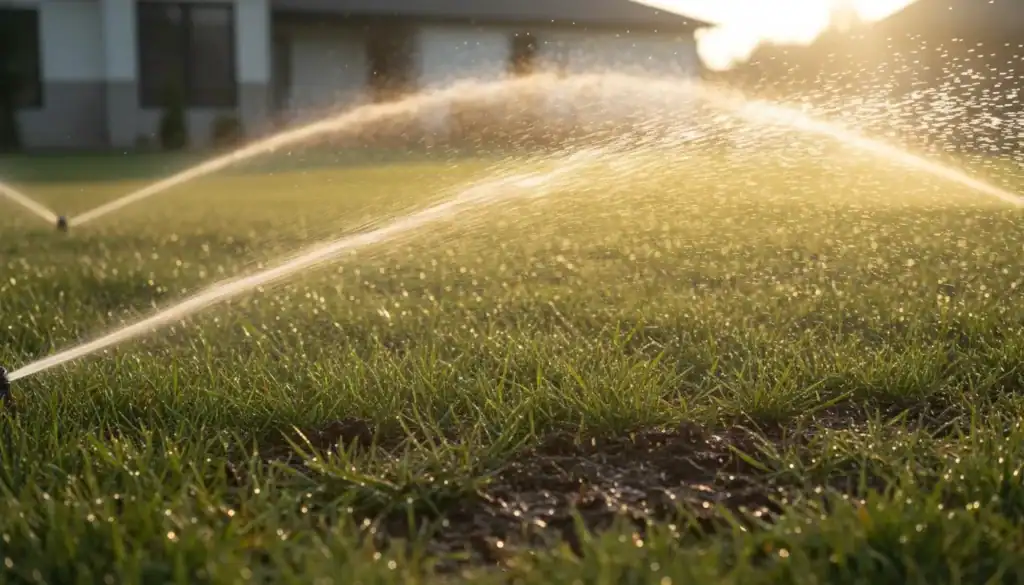
Morning watering between 6:00 and 10:00 AM creates ideal conditions for your grass to absorb water efficiently. During these hours, air temperatures typically range from 60-75°F, humidity levels are higher, and wind speeds are minimal, usually under 5 mph according to National Weather Service data.
The cooler morning temperatures mean less water evaporates before reaching grass roots. University of California research shows that morning watering achieves 85-90% water absorption efficiency, compared to just 50-60% during midday hours. That’s real money saved over a growing season.
Morning watering also allows grass blades to dry completely before evening dew forms. Wet grass staying moist for more than 8-10 hours creates perfect conditions for fungal diseases like brown patch, dollar spot, and pythium blight. Trust us, treating lawn disease is way more expensive than adjusting your timer.

What Happens When You Water at Different Times?
Each time period presents distinct advantages and disadvantages for lawn irrigation. Here’s how watering performance varies throughout the day:
| Time Period | Water Efficiency | Disease Risk | Pros | Cons |
|---|---|---|---|---|
| Early Morning (6-10 AM) | 85-90% | Low | Optimal absorption, grass dries quickly | Requires early schedule |
| Late Morning (10 AM-12 PM) | 70-75% | Low-Medium | Still good efficiency | Some evaporation loss |
| Midday (12-4 PM) | 50-60% | Medium | Convenient timing | High evaporation, potential leaf burn |
| Late Afternoon (4-6 PM) | 65-70% | Medium | Temperatures cooling | Limited drying time |
| Evening (6-10 PM) | 75-80% | High | Low evaporation | Prolonged moisture, disease risk |
| Night (10 PM-6 AM) | 80-85% | Very High | Minimal evaporation | Grass stays wet 8+ hours |
How Much Water Does Your Grass Actually Need?
Most lawns need 1 to 1.5 inches of water per week, including rainfall. Cool-season grasses like tall fescue, Kentucky bluegrass, and perennial ryegrass typically require the full 1.5 inches, while warm-season varieties like Bermuda, Zoysia, and St. Augustine can thrive on 0.75 to 1 inch weekly.
Here’s how to actually measure what your sprinklers are putting out: place several straight-sided containers around your watering zone and run the system for 15 minutes. Measure the water depth and multiply by 4 to get your hourly output rate. Most rotary sprinklers deliver 0.5-1.5 inches per hour, while spray heads put out 1.5-3 inches per hour.
From our testing with various irrigation systems, we’ve found that breaking weekly water needs into 2-3 deep watering sessions produces stronger root systems than daily light watering. Deep watering encourages roots to grow 6-8 inches deep, creating drought-resistant turf that can actually handle some neglect.

Get a Custom Watering Schedule
The right time and amount depend on your grass type, soil and climate. Answer 3 quick questions and get a free watering schedule built for your exact lawn, in about 30 seconds.
Build My Watering Schedule →What About Watering During Heat Waves?
During extreme heat when temperatures exceed 90°F for multiple days, your watering strategy needs adjustment. The 6:00-10:00 AM window becomes even more critical, but you may need to add a second light watering session.
If afternoon temperatures reach 95°F or higher, consider a brief 10-15 minute “syringe” watering between 2:00-4:00 PM. This cooling irrigation helps prevent heat stress without providing enough water to cause problems. The key is using just enough water to cool the grass blades, about 0.1-0.2 inches.
University of Georgia research shows that this supplemental cooling can reduce turf stress by 40% during heat waves while using minimal additional water. However, never substitute afternoon syringing for proper morning deep watering. Think of it as emergency first aid, not regular care.
Does Soil Type Change When You Should Water?
Your soil composition significantly affects water timing and frequency requirements. Clay soils absorb water slowly but retain moisture longer, while sandy soils drain quickly but need more frequent watering.
Clay Soils: Water less frequently but for longer periods. Apply 0.5-0.75 inches per session to prevent runoff. The slow infiltration rate means you might need to run sprinklers for 45-60 minutes in the early morning window. Patience is key here.
Sandy Soils: Water more frequently with shorter durations. Apply 0.25-0.5 inches per session, potentially requiring watering every 2-3 days instead of twice weekly. Sandy soils can handle 15-30 minute watering sessions without runoff.
Loamy Soils: The ideal middle ground. Water 2-3 times weekly with 0.5-0.75 inches per session. Most sprinkler systems can deliver this in 20-40 minutes during the optimal morning timeframe.

How Does Grass Type Affect Watering Time?
Different grass species have varying tolerance for moisture timing and duration. Cool-season grasses are honestly more finicky about timing, while warm-season varieties show greater flexibility.
Cool-Season Grasses: Kentucky bluegrass, tall fescue, and perennial ryegrass perform best with early morning watering. These grasses are particularly susceptible to fungal diseases when watered in evening hours. They also struggle more with heat stress if watered during midday.
Warm-Season Grasses: Bermuda grass, Zoysia, and St. Augustine can tolerate slightly more flexible timing but still perform best with morning irrigation. Bermuda grass, being particularly drought-tolerant, can handle longer intervals between watering sessions without throwing a tantrum.
According to Texas A&M University research, St. Augustine grass shows 25% better disease resistance when watered before 8:00 AM compared to evening watering, while Bermuda grass maintains this advantage with morning watering up to 10:00 AM.
What Weather Conditions Should Stop You From Watering?
Several weather conditions make irrigation timing less effective or potentially harmful to your lawn. Understanding these conditions helps you optimize your watering schedule.
Wind Speed: Avoid watering when winds exceed 10 mph. High winds cause uneven water distribution and increase evaporation rates by up to 70%. Most weather apps provide hourly wind forecasts to help you plan.
Humidity Levels: Relative humidity below 30% increases evaporation significantly, even during morning hours. When humidity is very low, consider watering slightly earlier, around 5:00-6:00 AM, to take advantage of higher overnight humidity levels.
Temperature Extremes: Don’t water when air temperatures drop below 40°F, as water may freeze on grass blades. Similarly, avoid watering when temperatures exceed 85°F unless it’s an emergency cooling measure.
Incoming Rain: Check weather forecasts before watering. If significant rainfall (0.5+ inches) is predicted within 24 hours, skip your scheduled irrigation to prevent overwatering. Your grass doesn’t need a swimming pool.

How Do You Set Up Automatic Timers for Optimal Watering?
Modern irrigation controllers offer multiple programming options to maximize watering efficiency. Smart controllers with weather sensing capabilities provide the best results by adjusting schedules based on local conditions.
Basic Timer Setup: Program your controller for 6:00 AM start times, allowing 30-45 minutes per zone for most grass types. Stagger zones by 15-30 minutes to maintain adequate water pressure throughout your system.
Smart Controller Features: Weather-based controllers like Rain Bird, Hunter, or Rachio models automatically skip watering when soil moisture is adequate or rain is forecast. These systems can reduce water usage by 20-40% while maintaining healthier turf.
In our experience with various smart controllers, the investment pays for itself within 2-3 years through water savings and reduced disease treatment costs. The convenience of remote monitoring and adjustment makes maintaining optimal timing much easier than constantly adjusting manual timers.
What Are the Most Common Watering Time Mistakes?
Even experienced homeowners make timing errors that reduce lawn health and waste water. Here are the most frequent mistakes we see:
Watering Too Late in Evening: Starting irrigation after 7:00 PM leaves grass wet overnight. This extended moisture period increases fungal disease incidence by 300% according to Penn State research. We’ve seen beautiful lawns destroyed by this single mistake.
Multiple Short Sessions: Running sprinklers for 5-10 minutes daily doesn’t allow water to penetrate beyond the top 2 inches of soil. This creates shallow root systems that can’t access deeper moisture reserves during dry periods. Your grass becomes a prima donna that needs constant attention.
Get a Free Personalised Lawn Plan
Answer 3 quick questions about your lawn and we'll build a custom care plan — tailored to your grass type, climate, and biggest challenges.
Build My Lawn Plan →Ignoring Seasonal Adjustments: Using the same watering schedule year-round wastes water and stresses grass. Spring and fall typically require 30-50% less irrigation than peak summer months.
Watering During Peak Heat: Midday irrigation when temperatures exceed 85°F wastes significant water to evaporation and can actually stress grass by rapid temperature changes on wet blades.

Signs of Overwatering vs Underwatering
Before you adjust your watering time, make sure you are solving the right problem. Overwatered and underwatered lawns can look surprisingly similar at a glance, but the details give it away.
| Symptom | Overwatering | Underwatering |
|---|---|---|
| Color | Yellowing, pale green | Dull blue-grey, then straw brown |
| Feel underfoot | Spongy, squishy soil | Footprints stay visible for minutes |
| Blades | Limp and soft | Folded or curled lengthwise |
| Soil test | Screwdriver slides in with no resistance, smells sour | Screwdriver hard to push in past 2 to 3 inches |
| Other signs | Mushrooms, fungus patches, runoff on paths | Gaps between blades, thinning turf |
An overwatered lawn needs a longer gap between sessions, not less water per session. Keep the deep-and-infrequent principle and stretch the interval. An underwatered lawn usually needs a longer session rather than more frequent sprinkling, so water still reaches the full root zone. For a full frequency breakdown, see our guide on how often to water your lawn.
How Does Seasonal Timing Change Throughout the Year?
Optimal watering times shift slightly with seasonal changes in temperature, humidity, and daylight hours. Adjusting your schedule seasonally improves efficiency and grass health.
Spring (March-May): Start watering around 7:00 AM as temperatures are still cool. Grass is actively growing and needs consistent moisture, but overwatering can promote fungal issues in cool, wet conditions.
Summer (June-August): Begin watering by 6:00 AM to beat rising temperatures. This is when the early morning window becomes most critical for water conservation and heat stress prevention.
Fall (September-November): You can extend morning watering until 9:00 AM as temperatures moderate. Reduce frequency but maintain deep watering to help grass store energy for winter.
Winter (December-February): Most regions require minimal or no supplemental watering. In warmer climates, water only during the warmest part of morning (8:00-10:00 AM) to prevent freezing.
Does Watering Time Affect Fertilizer Applications?
Irrigation timing becomes even more critical when you’ve recently applied fertilizers or other lawn treatments. Proper timing helps maximize nutrient uptake while preventing runoff and waste.
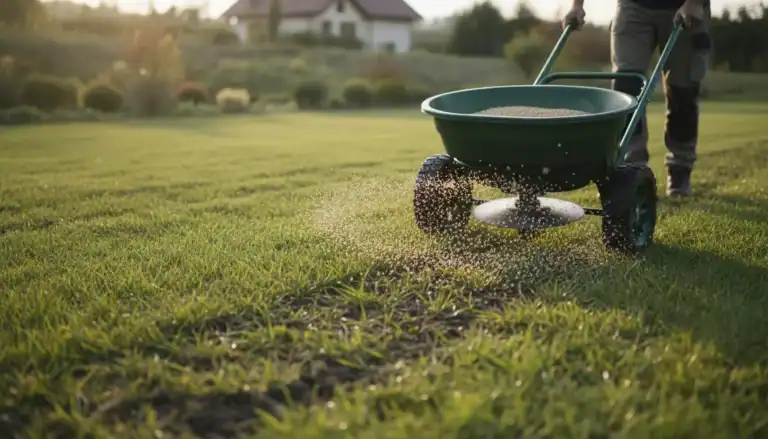
After Granular Fertilizer: Water immediately after application to dissolve granules and move nutrients to the root zone. Use light irrigation (0.25-0.5 inches) during the early morning window to prevent runoff on slopes.
After Liquid Treatments: Wait 2-4 hours before watering to allow absorption through grass blades. If you apply liquid fertilizer in early morning, delay watering until afternoon or the next morning.
Pre-Emergent Herbicides: These require immediate watering activation, ideally within 24 hours of application. Morning watering ensures the herbicide barrier forms properly without excessive runoff.
We’ve found that early morning watering after fertilizer applications provides adequate time for nutrient dissolution while minimizing loss to evaporation or runoff. University extension services consistently back this approach.
How Watering Time Changes by Region
The 6 to 10 AM rule holds everywhere in the US, but the margin for error and the seasonal pattern change a lot by region.
Hot, humid South
In Florida, the Gulf states and the humid Southeast, disease pressure is the main constraint. Evening watering is riskier here than anywhere else because warm, humid nights are ideal for fungal outbreaks on St. Augustine and centipede lawns. Finish watering by 9 AM and stick to morning without exception in summer. See our Florida lawn care guide and Texas lawn care guide for state-level schedules.
Arid Southwest
In Arizona, Nevada, New Mexico and inland California, evaporation is the enemy. Midday watering can waste more than half of what you apply. Water as early as 4 to 6 AM, before wind picks up, and consider fewer, deeper sessions than the label rate suggests. Local water restrictions often dictate days, so use your allowed days at the earliest permitted hour. Our Southwest desert lawn care guide covers restriction-friendly schedules.
Pacific Northwest
West of the Cascades, natural rainfall handles most of the year and irrigation is really a July to September activity. When you do water, mornings are still best, but the bigger mistake here is watering at all when the soil is already moist. Check the top 2 inches first. More in the Pacific Northwest lawn care guide.
Midwest and Northeast
Cool-season lawns here need the morning window most during humid July and August stretches, when night watering invites brown patch in tall fescue and Kentucky bluegrass. In spring and fall, rainfall usually covers the 1 to 1.5 inch weekly need, so watering is a summer discipline rather than a year-round one.
Frequently Asked Questions
Is it bad to water grass in the middle of the day?
Watering during midday (12-4 PM) wastes 40-50% of water to evaporation and can stress grass through rapid temperature changes. While not harmful in emergency situations, it’s inefficient and expensive. The water droplets don’t cause leaf burn as commonly believed, but the timing reduces absorption and wastes water.
How long should sprinklers run in each zone?
Most zones need 20-45 minutes to deliver 0.5-1 inch of water, depending on your sprinkler type and soil conditions. Rotary sprinklers typically need 30-60 minutes, while spray heads require 15-30 minutes. Test with containers to determine your system’s output rate and adjust accordingly.
Can I water my lawn at night to save water?
While nighttime watering reduces evaporation, it keeps grass blades wet for 8+ hours, increasing fungal disease risk by up to 300%. The water savings don’t offset the potential costs of treating brown patch, dollar spot, and other moisture-related diseases. Stick to early morning for the best balance of efficiency and plant health.
What time should I stop watering in the evening?
Stop watering by 6:00 PM to allow grass blades to dry before dew forms around 8-10 PM. If you must water in evening, finish by 4:00 PM during hot weather or 5:00 PM during cooler periods. Later watering increases disease risk significantly, especially in humid climates.
Does the best watering time change with different grass types?
All grass types benefit from early morning watering (6-10 AM), but cool-season grasses like fescue and bluegrass are more sensitive to timing than warm-season varieties like Bermuda and Zoysia. Cool-season grasses show greater disease susceptibility with evening watering, while warm-season grasses can tolerate slightly more flexible timing but still perform best in morning.