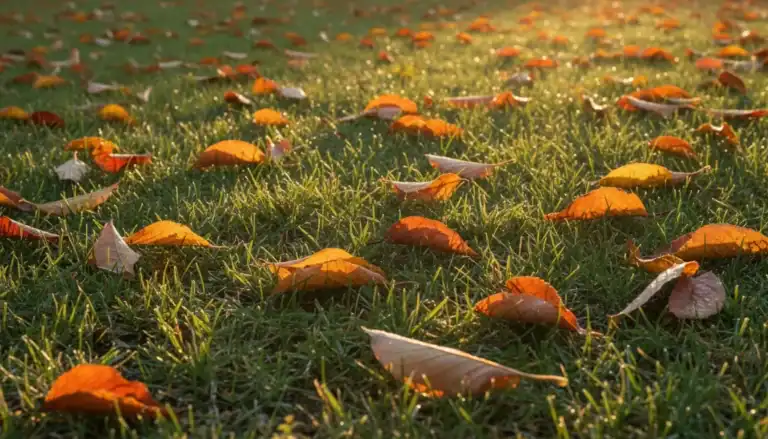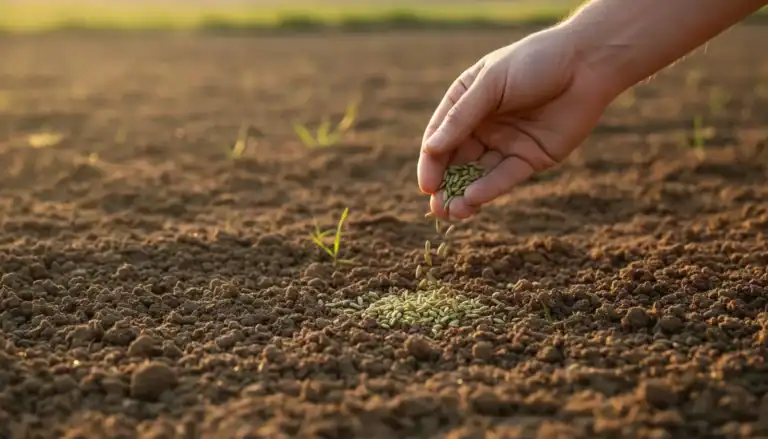
Winter lawn fertilizer helps cool-season grasses survive harsh winter conditions and promotes early spring green-up by providing essential nutrients during dormancy. Apply winter fertilizer between late October and mid-November when grass has stopped active growth but roots remain active, using a high-potassium, low-nitrogen formula.
Key Takeaways
- Apply winter fertilizer when soil temperature drops to 40-50°F, typically late October to mid-November
- Use fertilizers with 15-25% potassium content and minimal nitrogen (under 10%)
- Cool-season grasses benefit most from winter feeding; warm-season grasses should not be fertilized in winter
- Apply at half the rate of summer fertilizer, typically 0.5-1 pound of nitrogen per 1,000 square feet
- Water lightly after application if no rain is expected within 48 hours
Should You Fertilize Your Lawn in Winter?
Cool-season grasses like tall fescue, Kentucky bluegrass, and perennial ryegrass absolutely benefit from winter fertilization. Warm-season grasses like Bermuda and Zoysia? Skip it entirely. Cool-season grasses stay semi-active during winter, their roots keep working even when the top growth stops.
According to Michigan State University Extension, winter fertilization helps cool-season grasses build carbohydrate reserves, improve cold tolerance, and achieve faster spring recovery. The practice works because these grasses enter dormancy gradually and maintain some metabolic activity throughout winter.
Warm-season grasses enter true dormancy and cannot process fertilizer during winter. Applying fertilizer to dormant warm-season grass wastes money and can promote winter diseases.

When Should You Apply Winter Lawn Fertilizer?
Apply winter fertilizer when soil temperature consistently measures 40-50°F, which typically occurs between late October and mid-November in most northern regions. The grass should have stopped visible growth but soil should remain unfrozen.
Honestly, forget the calendar dates, monitor your local weather patterns instead. In the upper Midwest, this window often falls in early to mid-November, while southern regions with cool-season grasses may not reach these conditions until December.
From our experience, waiting too late reduces effectiveness dramatically. Frozen soil prevents nutrient absorption, making the application worthless. Apply before the first hard freeze but after daytime temperatures consistently stay below 60°F.
What Type of Winter Fertilizer Should You Use?
Winter fertilizers should contain high potassium (15-25% of the formula) with minimal nitrogen (under 10%) and moderate phosphorus levels. Potassium strengthens cell walls, improves cold tolerance, and helps prevent winter diseases like snow mold.
Look for fertilizer ratios like 5-10-20, 8-8-25, or similar formulations where the third number (potassium) is highest. Avoid high-nitrogen fertilizers in winter, excess nitrogen promotes soft growth that gets hammered by cold damage.
| Fertilizer Type | N-P-K Ratio | Best For | Application Rate (per 1,000 sq ft) |
|---|---|---|---|
| Winterizer Blend | 5-10-20 | General winter prep | 3-4 pounds |
| High-Potassium Organic | 4-6-12 | Organic lawns | 5-6 pounds |
| Slow-Release Synthetic | 8-8-25 | Extended feeding | 2-3 pounds |
| Iron-Enhanced Winter | 6-2-18 + Iron | Color retention | 3-4 pounds |

How Much Winter Fertilizer Should You Apply?
Apply winter fertilizer at half the rate of your typical summer feeding, generally 0.5 to 1 pound of actual nitrogen per 1,000 square feet. This translates to 2-4 pounds of fertilizer per 1,000 square feet, depending on the nitrogen percentage in your chosen product.
Calculate your application rate by dividing the desired nitrogen amount by the first number in the fertilizer ratio. For example, to apply 0.5 pounds of nitrogen using a 5-10-20 fertilizer, you’d need 10 pounds of product per 1,000 square feet (0.5 ÷ 0.05 = 10).
Over-application in winter is particularly problematic. Excess nutrients can’t be used by semi-dormant grass and end up leaching into groundwater during spring snowmelt, not exactly what we’re going for.
How Do You Apply Winter Lawn Fertilizer?
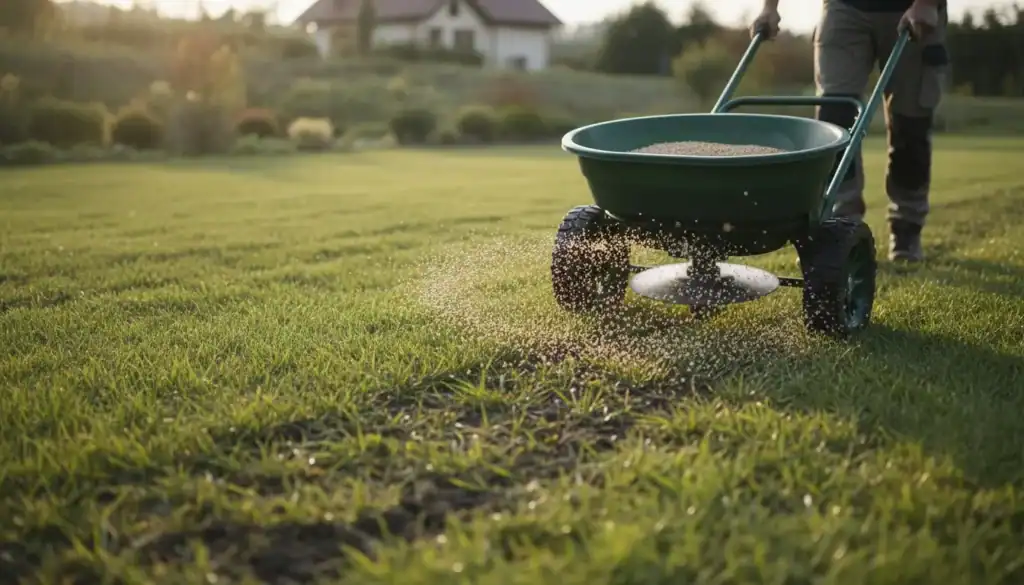
Apply winter fertilizer using a broadcast spreader on a calm day when grass is dry but soil has adequate moisture. Follow these steps for proper application:
- Calibrate your spreader according to the fertilizer manufacturer’s recommendations for your specific product
- Apply when air temperature is above 32°F and no rain is forecast for 24 hours
- Walk at a steady pace, overlapping passes by 3-4 inches to ensure even coverage
- Apply in a crisscross pattern, half the fertilizer in one direction, half perpendicular
- Water lightly with 0.25 inches if no rain occurs within 48 hours
- Clean spreader thoroughly after use to prevent corrosion
In our testing, drop spreaders provide more precise application than broadcast spreaders for winter feeding. This is especially important given the reduced application rates, no room for error when you’re going light.

What Are the Benefits of Winter Lawn Fertilization?
Winter fertilization provides several measurable benefits for cool-season grasses, according to research from Penn State Extension and other land-grant universities.
Faster Spring Green-Up: Winter-fertilized lawns green up 2-3 weeks earlier than unfertilized grass, with noticeably improved color density in early spring.
Get a Free Personalised Lawn Plan
Answer 3 quick questions about your lawn and we'll build a custom care plan — tailored to your grass type, climate, and biggest challenges.
Build My Lawn Plan →Disease Resistance: Adequate potassium levels help prevent snow mold, pink snow mold, and other winter diseases that attack stressed grass.
Root Development: Continued root growth during winter months creates a stronger root system for spring recovery and summer stress tolerance.
Carbohydrate Storage: Winter nutrients help grass store energy reserves needed for vigorous spring growth before photosynthesis fully resumes.
Common Winter Fertilizer Mistakes to Avoid
We’ve seen these mistakes cost homeowners money and damage their lawns. Don’t be one of them.
Applying Too Late: Fertilizing after soil freezes wastes product and provides zero benefit. Soil temperatures below 40°F severely limit nutrient uptake.
Using High-Nitrogen Formulas: Excess nitrogen promotes late-season growth that’s vulnerable to cold damage and increases disease susceptibility.
Over-Application: Applying summer rates in winter can burn grass and contribute to groundwater contamination during spring runoff.
Fertilizing Warm-Season Grass: Bermuda, Zoysia, and other warm-season grasses cannot use winter fertilizer and may suffer increased disease pressure.
Ignoring Weather Conditions: Applying before heavy rain or snow washes nutrients away before absorption occurs.

Frequently Asked Questions
Can you fertilize your lawn in December?
You can fertilize cool-season grasses in December if soil temperatures remain above 40°F and the ground isn’t frozen. However, effectiveness decreases as temperatures drop, so earlier application in November typically provides better results.
Should I water after applying winter fertilizer?
Water lightly with 0.25 inches if no rain is expected within 48 hours of application. This helps dissolve granular fertilizer and moves nutrients into the root zone, but avoid overwatering which can cause runoff.
What happens if I fertilize my lawn too late in winter?
Late winter fertilization after soil freezes provides no benefit since dormant grass cannot absorb nutrients. The fertilizer will likely wash away during spring snowmelt, wasting money and potentially contaminating waterways.
Do I need special winter fertilizer or can I use regular fertilizer?
Regular balanced fertilizer works fine for winter application, you don’t need expensive “winterizer” products. Look for any fertilizer with moderate nitrogen (5-10%) and higher potassium content (15-25%), then apply at half your normal summer rate.
How long does winter fertilizer take to work?
Winter fertilizer works slowly since grass metabolism is reduced in cold weather. You won’t see immediate visual results, but benefits become apparent in spring with faster green-up and improved overall lawn health compared to unfertilized areas.