Artificial grass gives you a maintenance-free lawn that stays green year-round without watering, mowing, or fertilizing. Modern synthetic turf looks surprisingly realistic and can last 15-25 years with proper installation, honestly, it’s a smart move for homeowners dealing with water restrictions, terrible soil, or just tired of babying natural grass every weekend.
Quality artificial turf runs $5-15 per square foot, with professional installation adding another $3-8 per square foot. Yes, the upfront cost stings, but it pays for itself within 5-10 years when you add up all those eliminated water bills, lawn care services, and equipment purchases.
Key Takeaways
- Artificial grass costs $8-23 per square foot installed but eliminates ongoing maintenance expenses
- Premium polyethylene turf with 1.5-2 inch pile height provides the most realistic appearance
- Proper base preparation with 3-4 inches of crushed rock is critical for long-term durability
- Professional installation includes drainage, infill, and proper seaming for best results
- Quality synthetic turf lasts 15-25 years with minimal maintenance requirements
- Water savings alone can offset installation costs within 3-7 years in drought-prone areas
What Types of Artificial Grass Are Available?
Artificial grass comes in three main fiber types, each with different strengths. Polyethylene offers the softest feel and most realistic appearance, perfect for residential lawns and play areas. Polypropylene costs less but feels stiffer and works better for low-traffic decorative spots. Nylon provides maximum durability for high-traffic commercial use but lacks the natural feel most homeowners want.
Pile height ranges from 0.75 inches for putting greens to 2.5 inches for luxury residential lawns. The sweet spot for most homeowners? 1.5-2 inches. This gives you realistic appearance without excessive maintenance headaches. Shorter pile drains better and needs less infill, while taller grass looks more lush but can mat down where people walk frequently.
| Fiber Type | Cost per sq ft | Durability | Feel | Best Use |
|---|---|---|---|---|
| Polyethylene | $3-8 | 15-20 years | Soft, natural | Residential lawns |
| Polypropylene | $2-5 | 10-15 years | Stiff | Decorative areas |
| Nylon | $4-10 | 20-25 years | Very stiff | Commercial/sports |

How Much Does Artificial Grass Cost?
Artificial grass material runs $2-12 per square foot, with installation adding another $3-8 per square foot. For a typical 1,000 square foot lawn, you’re looking at $8,000-15,000 installed. Premium products with realistic appearance and superior drainage cost more upfront but provide better long-term value, trust us on this one.
Additional costs include base preparation ($1-3 per square foot), edging materials ($3-8 per linear foot), and infill ($0.50-1 per square foot). Complex installations with multiple elevation changes or intricate landscaping features will bump up those labor costs significantly.
Cost Breakdown by Project Size
| Lawn Size | Material Cost | Installation Cost | Total Range |
|---|---|---|---|
| 500 sq ft | $1,500-4,000 | $2,000-3,500 | $3,500-7,500 |
| 1,000 sq ft | $3,000-8,000 | $4,000-7,000 | $7,000-15,000 |
| 2,000 sq ft | $6,000-16,000 | $7,000-12,000 | $13,000-28,000 |
What Are the Benefits of Artificial Grass?
Water savings represent the biggest long-term benefit, especially in drought-prone regions. The average lawn guzzles 1-2 inches of water weekly during growing season, that’s 15,000-30,000 gallons annually for a 1,000 square foot area. At $0.004-0.01 per gallon, water savings alone can reach $300-800 yearly.
Maintenance elimination saves both time and money. No more weekly mowing, seasonal fertilizing, pest control, or overseeding nightmares. From our experience, homeowners typically spend $1,200-2,500 annually on professional lawn care or equivalent time doing it themselves. Artificial grass requires only occasional rinsing and debris removal.
Year-round green appearance provides consistent curb appeal regardless of weather conditions. Natural grass goes dormant, develops ugly brown patches, or suffers from disease, while synthetic turf maintains perfect color and density through all seasons.

How Do You Install Artificial Grass?
Proper installation starts with thorough site preparation. Remove existing grass and weeds, then excavate 3-4 inches deep to accommodate the base layer. Poor base preparation causes most artificial grass failures, we’re talking uneven surfaces, drainage problems, and premature wear.
Install landscape fabric as a weed barrier, then add 3-4 inches of crushed rock base material compacted in 1-inch lifts. The base should slope away from structures at 1-2% grade for proper drainage. Use a plate compactor to achieve 95% compaction density, don’t skip this step.
Installation Steps
- Site preparation: Remove existing vegetation and excavate 3-4 inches deep
- Base installation: Install landscape fabric and 3-4 inches of compacted crushed rock
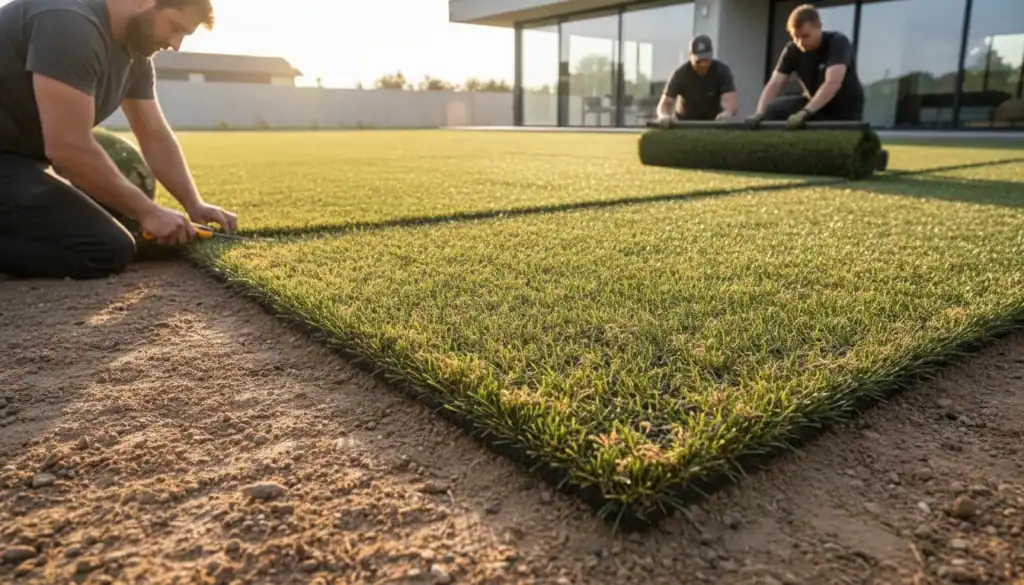
- Turf layout: Roll out artificial grass and allow to acclimate for 2-4 hours
- Cutting and fitting: Trim edges and create seams using joining tape and adhesive
- Securing: Install perimeter nails every 6-8 inches along edges
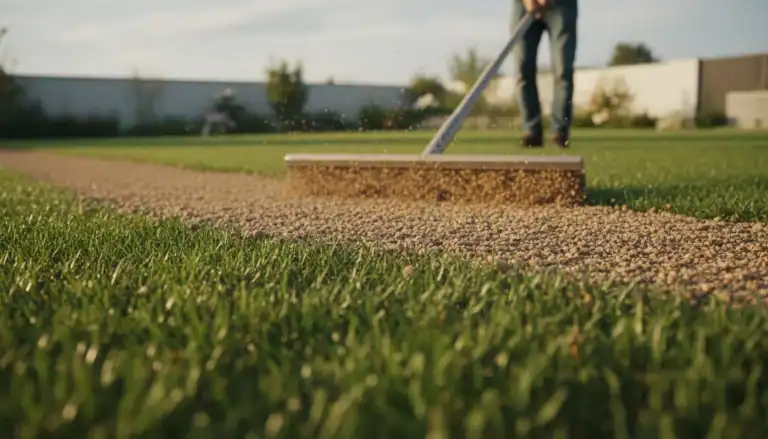
- Infill application: Spread sand or rubber infill evenly across surface
- Brushing: Use power broom to lift fibers and distribute infill
What Should You Look for When Buying Artificial Grass?
Face weight indicates turf density and durability. Look for products with 50-80 ounce face weight for residential use. Higher face weights provide better resilience and longer lifespan but cost significantly more. Avoid products under 40 ounces, they look sparse and wear out quickly.
Backing material affects drainage and installation ease. Polyurethane backing provides superior drainage and flexibility compared to latex backing, though it costs 20-30% more. Primary and secondary backing layers add strength and dimensional stability.
UV stabilization protects against color fading and fiber degradation. Quality manufacturers provide 8-15 year UV warranties. Cheaper products without proper UV protection fade to brown or gray within 3-5 years, especially in sunny climates. We’ve tested this firsthand, don’t learn the hard way.
| Quality Factor | Budget Grade | Mid-Grade | Premium Grade |
|---|---|---|---|
| Face Weight | 35-45 oz | 50-65 oz | 70-90 oz |
| Pile Height | 1-1.25″ | 1.5-1.75″ | 1.75-2.5″ |
| UV Warranty | 5-8 years | 8-12 years | 12-15 years |
| Drainage Rate | 20-30 in/hr | 30-50 in/hr | 50+ in/hr |

How Long Does Artificial Grass Last?
Quality artificial grass lasts 15-25 years with proper installation and maintenance. Premium polyethylene products with heavy face weights and superior backing systems reach the upper end of this range, while budget options may show significant wear after 8-12 years.
Climate affects lifespan significantly. Intense UV exposure in desert climates reduces fiber life by 20-30% compared to temperate regions. Heavy foot traffic, pet use, and poor drainage also accelerate wear. In our testing, products with 8+ year UV warranties consistently outperform cheaper alternatives in long-term durability.
What Maintenance Does Artificial Grass Require?
Artificial grass needs minimal maintenance compared to natural lawns. Monthly rinsing removes dust and debris, while periodic brushing with a stiff broom keeps fibers upright. Pet areas require more frequent cleaning with enzyme-based cleaners to prevent odor buildup.
Leaf blowing or raking removes organic debris that can stain turf or create breeding grounds for insects. Avoid using metal tools that can damage fibers. Power washing works for deep cleaning but use low pressure (under 2,000 PSI) to prevent fiber damage.
Infill material may need replenishment every 3-5 years in high-traffic areas. Signs include matted fibers, reduced cushioning, and visible backing material. Adding 0.5-1 pounds of infill per square foot restores performance and appearance.

Is Artificial Grass Safe for Children and Pets?
Modern artificial grass meets strict safety standards for playground use and contains no harmful chemicals. Lead-free manufacturing eliminates the heavy metal concerns associated with older synthetic turf products. Most quality manufacturers provide safety certifications from independent testing laboratories.
Heat buildup presents the main safety concern. Dark-colored artificial grass can reach 150-180°F in direct sunlight, potentially causing burns on bare feet. Light-colored products and proper irrigation help reduce surface temperatures. Shade structures or strategic tree placement also minimize heat issues.
Get a Free Personalised Lawn Plan
Answer 3 quick questions about your lawn and we'll build a custom care plan — tailored to your grass type, climate, and biggest challenges.
Build My Lawn Plan →Pet waste cleanup is actually easier on artificial grass than natural lawns. Solid waste removes completely, while urine drains through backing material. Antimicrobial infill prevents bacterial growth and odor formation. Regular rinsing with enzyme cleaners maintains hygienic conditions.
How Does Artificial Grass Compare to Natural Grass?
Water usage represents the biggest difference. Natural grass requires 1-1.5 inches of water weekly during growing season, while artificial grass needs only occasional rinsing for cleaning. This translates to 15,000-25,000 gallons annually for a typical lawn versus near-zero water consumption.
Upfront costs favor natural grass, with sod installation costing $1-3 per square foot versus $8-23 for artificial grass. However, ongoing maintenance costs reverse this advantage within 5-10 years. Natural grass demands fertilizer, pest control, equipment, and either professional services or significant time investment.
| Factor | Natural Grass | Artificial Grass |
|---|---|---|
| Initial Cost (1,000 sq ft) | $1,000-3,000 | $7,000-15,000 |
| Annual Water Cost | $200-600 | $0-50 |
| Annual Maintenance | $800-2,000 | $50-200 |
| Lifespan | Ongoing | 15-25 years |

What Are Common Artificial Grass Problems?
Poor drainage causes the most serious artificial grass problems. Inadequate base preparation or incorrect slope leads to standing water, mold growth, and premature backing deterioration. Proper installation with 3-4 inches of compacted base material and 1-2% grade prevents most drainage issues.
Seam separation occurs when joining tape fails or installation techniques are poor. Visible seams look terrible and allow weed growth. Professional installers use industrial-strength adhesive and specialized seaming techniques that DIY installations often lack.
Matting and crushing happen in high-traffic areas where infill compacts and fibers lose resilience. Regular brushing and infill replenishment maintain fiber position and cushioning. Choosing appropriate pile height and face weight for intended use prevents premature matting.
Should You DIY or Hire Professionals?
DIY installation saves $3-8 per square foot in labor costs but requires specialized tools and techniques. Proper base preparation demands a plate compactor, laser level, and experience with grading and compaction. Seaming multiple pieces requires precision cutting and industrial adhesives.
Professional installation includes warranties on both materials and workmanship. Installers carry specialized equipment for base preparation, drainage, and seaming that most homeowners don’t own. The cost difference often justifies professional installation for projects over 500 square feet.
Consider DIY for simple rectangular areas under 300 square feet with minimal drainage requirements. Complex landscapes with multiple elevation changes, curves, or drainage challenges benefit from professional expertise. Poor installation voids manufacturer warranties and creates expensive problems later.
Where Can You Buy Artificial Grass?
Home improvement stores like Home Depot and Lowe’s carry basic artificial grass options suitable for small decorative projects. Their selection typically includes budget to mid-grade products with limited variety in pile height and color options. Professional contractor pricing isn’t available through retail channels.
Specialized artificial turf dealers offer premium products with extensive customization options. These suppliers work directly with manufacturers and provide technical support for installation. Expect 20-40% higher prices but superior product selection and expertise.
Online retailers provide convenient comparison shopping and competitive pricing. However, you can’t evaluate texture, color, and quality before purchase. Shipping costs for heavy turf rolls can add $1-3 per square foot to the total price.
Frequently Asked Questions
How much does it cost to install 1000 sq ft of artificial grass?
Installing 1,000 square feet of artificial grass costs $7,000-15,000 including materials and professional installation. Material costs range from $3,000-8,000 while installation adds $4,000-7,000. Premium products with realistic appearance and superior drainage cost more but provide better long-term value.
Does artificial grass get hot in summer?
Artificial grass can reach 150-180°F in direct sunlight during hot weather, making it uncomfortable for bare feet. Light-colored products stay cooler than dark green options. Installing shade structures, choosing lighter colors, or using cooling infill materials help reduce surface temperatures.
How long does artificial grass last before needing replacement?
Quality artificial grass lasts 15-25 years with proper installation and maintenance. Premium polyethylene products with UV warranties of 10+ years consistently outperform budget options. Climate, foot traffic, and maintenance practices significantly affect lifespan.
Can you install artificial grass over concrete?
Yes, artificial grass can be installed over concrete with proper preparation. The concrete must be clean, level, and have adequate drainage. Add a shock-absorbing pad for comfort and use specialized adhesives designed for concrete applications rather than traditional installation methods.
What maintenance does artificial grass require?
Artificial grass requires minimal maintenance: monthly rinsing to remove dust, periodic brushing to keep fibers upright, and prompt cleanup of pet waste. Leaf removal prevents staining and insect problems. Infill may need replenishment every 3-5 years in high-traffic areas.