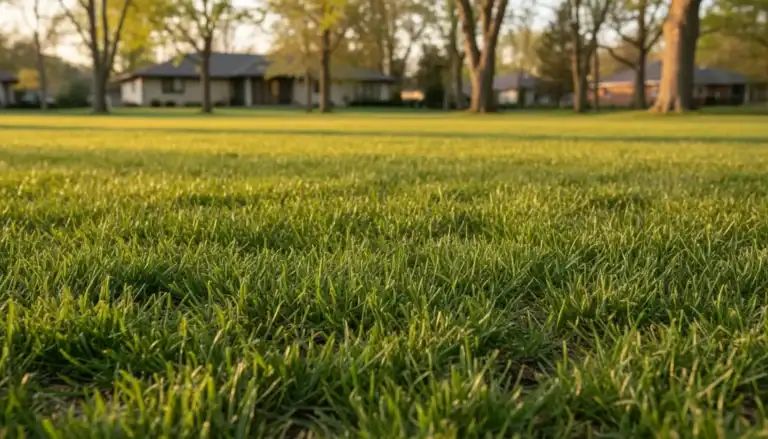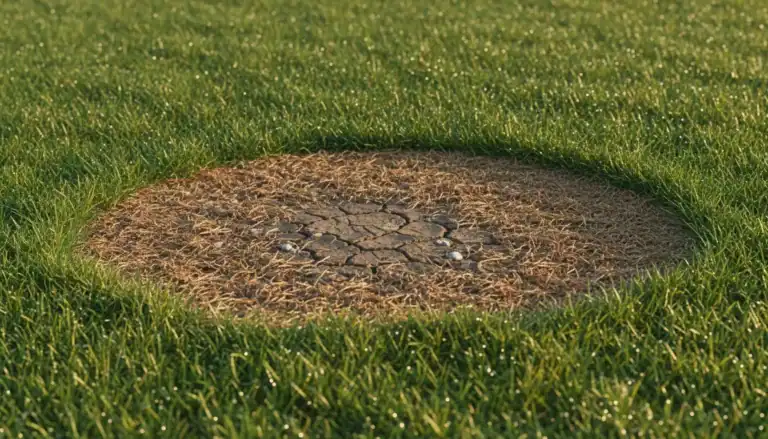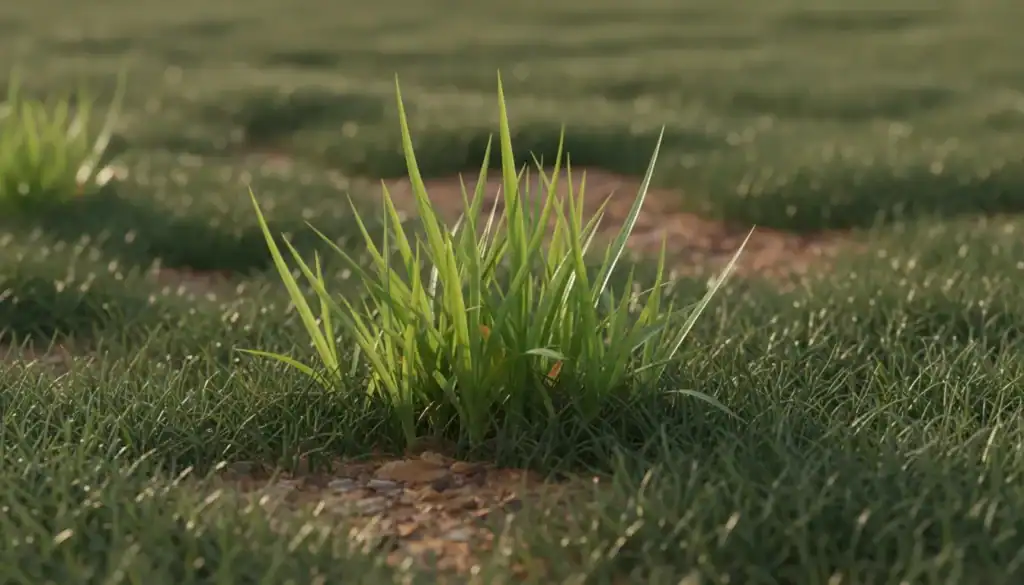
Want to get rid of weeds in your lawn? You need a one-two punch: kill existing weeds with selective herbicides while building thick, healthy grass that crowds out new invaders. For broadleaf weeds like dandelions and clover, hit them with selective herbicide containing 2,4-D in fall or spring when temperatures sit between 60-80°F. For grassy weeds like crabgrass, get ahead of them with pre-emergent herbicide in early spring before soil temperatures hit 55°F.
Key Takeaways
- Apply pre-emergent herbicide when soil temperatures reach 50-55°F to prevent grassy weeds like crabgrass
- Use selective post-emergent herbicides containing 2,4-D for broadleaf weeds when temperatures are 60-80°F
- Water deeply 1-2 times per week with 1-1.5 inches total to encourage dense grass growth
- Maintain proper mowing height: 3-4 inches for cool-season grasses, 1-3 inches for warm-season varieties
- Overseed thin areas in fall (cool-season) or late spring (warm-season) to outcompete weeds
What Types of Weeds Are You Dealing With?
Before you start spraying anything, figure out what you’re fighting. Broadleaf weeds like dandelions, clover, and plantain have wide, flat leaves and respond well to selective herbicides. Grassy weeds like crabgrass, foxtail, and goosegrass look similar to your lawn grass but grow in clumps or patches that stand out like sore thumbs.
According to the University of Illinois Extension, proper identification determines your treatment timing and herbicide selection. Grassy weeds need pre-emergent control in early spring, while most broadleaf weeds get hammered with post-emergent herbicides in fall or spring during their active growth spurts.
| Weed Type | Examples | Best Treatment Time | Herbicide Type |
|---|---|---|---|
| Broadleaf Annual | Dandelion, clover, plantain | Fall or early spring | Post-emergent selective |
| Grassy Annual | Crabgrass, foxtail | Early spring (pre-emergent) | Pre-emergent |
| Perennial Grassy | Bermuda (in cool-season lawns) | Late spring/summer | Non-selective spot treatment |
| Winter Annual | Chickweed, henbit | Early fall | Pre-emergent or post-emergent |

How Do You Prevent Weeds From Growing?
Here’s the truth: the best weed control is prevention through thick, healthy grass. Dense turf crowds out weeds by hogging all the sunlight, water, and nutrients. Follow these steps to build weed-resistant turf:
- Apply pre-emergent herbicide when forsythia blooms or soil temperatures reach 50-55°F (typically late February to early April)
- Maintain proper mowing height: 3-4 inches for cool-season grasses, 1-3 inches for warm-season varieties
- Water deeply but infrequently: 1-1.5 inches per week in 1-2 sessions to encourage deep root growth
- Fertilize appropriately: Apply nitrogen at 3-4 pounds per 1,000 square feet annually, split into 3-4 applications
- Overseed thin areas: Fall for cool-season grasses, late spring for warm-season varieties
In our experience testing various lawn care approaches, proper mowing height makes the biggest difference in weed prevention. Cut your grass too short and you’re basically rolling out the red carpet for weeds to move in.
What Chemical Herbicides Work Best for Existing Weeds?
For weeds that are already partying in your lawn, selective post-emergent herbicides target the troublemakers without harming your grass. The heavy hitters for broadleaf weeds are 2,4-D, dicamba, and MCPP (mecoprop). These mess with weed growth hormones until the weeds basically kill themselves.
Apply herbicides when temperatures sit between 60-80°F and weeds are actively growing. Skip applications during drought stress, extreme heat above 85°F, or when rain threatens within 24 hours. According to the University of Georgia Extension, fall applications often work better than spring treatments because weeds are busy storing energy in their roots for winter survival.
For grassy weeds that have already emerged, you need bigger guns. Quinclorac works well for crabgrass, while fenoxaprop or fluazifop can control other grassy invaders. These products require multiple applications 2-3 weeks apart, one shot usually won’t cut it.

How Can You Control Weeds Organically?
Organic weed control relies on cultural practices, natural products, and good old-fashioned elbow grease. While typically slower than chemical methods, organic approaches avoid synthetic pesticides and build long-term soil health.
Corn gluten meal serves as a natural pre-emergent herbicide, preventing weed seeds from germinating when applied at 20 pounds per 1,000 square feet in early spring. But it won’t touch established weeds and requires precise timing before weed seeds start sprouting.
For spot treatment of existing weeds, try these organic methods:
- Boiling water: Pour directly on weeds for immediate kill (also damages nearby grass)
- White vinegar (20% acetic acid): Spray on sunny days for best results, may require multiple applications
- Hand pulling: Most effective after rain when soil is moist, especially for dandelions and other taprooted weeds
- Dense overseeding: Crowd out weeds with thick grass coverage
When Should You Apply Different Weed Treatments?
Timing is everything with weed control. Miss the window and you’re basically throwing money at the problem. Pre-emergent herbicides must go down before weed seeds germinate, while post-emergent treatments work best when weeds are actively growing and vulnerable.
| Treatment Type | Best Application Time | Soil/Air Temperature | Target Weeds |
|---|---|---|---|
| Pre-emergent | Late February – Early April | Soil 50-55°F | Crabgrass, goosegrass |
| Post-emergent (Spring) | April – May | Air 60-80°F | Young broadleaf weeds |
| Post-emergent (Fall) | September – October | Air 60-80°F | Established perennial weeds |
| Winter pre-emergent | Late August – September | Soil cooling to 70°F | Chickweed, henbit |

How Do You Treat Specific Problem Weeds?
Different weeds need different game plans. Here’s how to handle the usual suspects that plague most lawns:
Get a Free Personalised Lawn Plan
Answer 3 quick questions about your lawn and we'll build a custom care plan — tailored to your grass type, climate, and biggest challenges.
Build My Lawn Plan →Crabgrass: Apply pre-emergent herbicide containing pendimethalin or prodiamine in early spring. For emerged crabgrass, use quinclorac-based herbicides with 2-3 applications spaced 2 weeks apart.
Dandelions: Best controlled in fall when plants are busy storing energy in their roots. Use selective herbicides containing 2,4-D and dicamba. Hand pulling works but you need to get the entire taproot or they’ll laugh at you and come back stronger.
Clover: This one’s actually telling you something, your soil is nitrogen-poor. Apply nitrogen fertilizer at 1 pound per 1,000 square feet, then treat with herbicides containing triclopyr or MCPP.
Bermuda grass (in cool-season lawns): This stuff is relentless. Use glyphosate for spot treatment, then reseed bare areas immediately. Multiple treatments required because Bermuda grass doesn’t give up easily.
We’ve found that combination products containing multiple active ingredients work better than single-ingredient herbicides for mixed weed populations. Products with 2,4-D, dicamba, and MCPP handle most broadleaf weeds in one shot.
What Should You Do After Weed Treatment?
Post-treatment care determines whether those weeds stay dead or stage a comeback. After herbicide applications, don’t mow for 24-48 hours, let the herbicide do its work. Water lightly if rain doesn’t show up within a week, but avoid heavy irrigation that washes away your investment.
Dead weed spots are like vacant lots, something’s going to move in. Overseed bare areas within 2-3 weeks of treatment for cool-season grasses, or wait until late spring for warm-season varieties. Hit the seed with starter fertilizer to get it established quickly.
Monitor treated areas for 4-6 weeks. Some perennial weeds are stubborn and may need a second round if they show signs of recovery. According to the Michigan State University Extension, fall-treated weeds may not show complete kill until the following spring, patience pays off.

Frequently Asked Questions
How long does it take for herbicides to kill weeds?
Most selective herbicides start showing results in 7-14 days, with complete kill taking 3-4 weeks. Broadleaf weeds typically yellow and curl within the first week, then gradually die back to the roots. Fast-acting contact herbicides like vinegar show results in 24-48 hours but usually need multiple applications to finish the job.
Can I apply weed killer and grass seed at the same time?
Never apply weed killer and grass seed at the same time, that’s lawn care suicide. Herbicides prevent all seeds from germinating, including your expensive grass seed. Wait at least 4 weeks after herbicide application before overseeding, or overseed first and wait 6-8 weeks before applying weed control products.
Why do weeds keep coming back after treatment?
Weeds return because you haven’t fixed what invited them in the first place. Thin grass, compacted soil, improper watering, and inadequate fertilization create prime real estate for weeds. Focus on building dense turf through proper mowing, watering, and fertilization to slam the door on reestablishment.
Is it better to pull weeds by hand or use herbicides?
Hand pulling works great for isolated weeds with taproot systems like dandelions, especially when soil is moist from recent rain. But for widespread infestations or grassy weeds, herbicides are more practical and effective. Honestly, the best approach combines both: herbicides for broad coverage, hand pulling for those stubborn individual weeds that refuse to die.
How often should I apply pre-emergent herbicide?
Apply pre-emergent herbicide once yearly in early spring for crabgrass prevention. In areas with long growing seasons or severe crabgrass problems, a second application 8-10 weeks after the first can be beneficial. Some products offer 6-month control with a single application, while others last 3-4 months, read the label and plan accordingly.