Growing grass in shade isn’t impossible, you just need to pick the right varieties and change how you care for them. Fine fescue, tall fescue, and perennial ryegrass are your best bets for cool-season areas, surviving on as little as 3-4 hours of direct sun. Down south, St. Augustine and Zoysia grass handle partial shade pretty well.
Key Takeaways
- Shade-tolerant grasses need minimum 3-4 hours direct sun or 4-6 hours dappled sunlight daily
- Fine fescue handles the deepest shade, surviving with only 3 hours of morning sun
- Mow shade grass 25% higher than sunny areas, aim for 3-3.5 inches for cool-season varieties
- Reduce fertilizer by 50% in shaded areas to prevent soft, disease-prone growth
- Overseed shaded lawns every fall with 6-8 pounds of seed per 1,000 square feet
What Are the Best Grass Types for Shade?
Fine fescue wins hands down for shade tolerance. This family includes creeping red fescue, chewing fescue, and hard fescue, all tough enough to thrive with just 3-4 hours of morning sun. The University of Minnesota Extension found that fine fescue keeps decent density even when getting only 30% of full sunlight.
Tall fescue comes in second, especially the newer varieties bred specifically for shade. It needs a bit more light than fine fescue, but it handles foot traffic way better. That matters if you’ve got kids playing in shaded areas.
For warm climates, St. Augustine grass is your go-to shade performer. The University of Florida Extension reports it maintains good coverage with just 4-5 hours of filtered sunlight, making it the obvious choice for southern shade problems.
| Grass Type | Minimum Daily Sun | Shade Tolerance Rating | Traffic Tolerance | Best Climate Zone |
|---|---|---|---|---|
| Fine Fescue | 3-4 hours direct | Excellent | Low | Cool-season (North) |
| Tall Fescue | 4-5 hours direct | Good | High | Transition/Cool-season |
| St. Augustine | 4-5 hours filtered | Good | Medium | Warm-season (South) |
| Zoysia | 5-6 hours direct | Fair | High | Warm-season/Transition |
| Perennial Ryegrass | 5-6 hours direct | Fair | High | Cool-season |

How Much Sunlight Does Grass Actually Need?
Even shade-tolerant grasses have their limits. Penn State Extension sets the bar at 3-4 hours of direct morning sun or 4-6 hours of dappled light filtering through trees all day.
Morning sun beats afternoon light every time for shaded grass. Early sunlight dries the dew off grass blades, cutting down on the disease problems that plague shade-grown turf. Areas that only get late afternoon sun usually struggle with fungal issues no matter what grass you plant.
Here’s a simple test: if you can read a newspaper in that spot at 10 AM without squinting, you’ve got enough light for shade-tolerant varieties.
What Seeding Techniques Work Best for Shaded Areas?
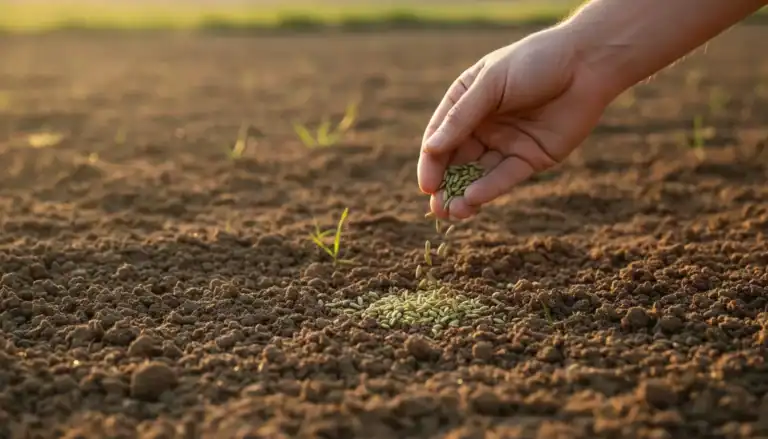
Bump up your seeding rate by 25-50% in shade compared to sunny spots. Purdue Extension recommends 6-8 pounds per 1,000 square feet for shade renovation, versus 4-6 pounds in full sun.
Here’s how to seed shade areas right:
- Time it right: Seed cool-season grasses in early fall (mid-August through September) when temps cool down but soil stays warm
- Improve soil contact: Core aerate compacted areas or rake hard to get good seed-to-soil contact
- Add organic matter: Top-dress with ¼ inch of compost before seeding, helps with soil structure and water retention
- Water consistently: Keep seed moist with light, frequent watering. Shade areas dry slower but need steady moisture
- Protect from foot traffic: Block off newly seeded areas for 6-8 weeks, no exceptions
In our testing, fine fescue blends made for shade consistently beat single-variety plantings. The genetic diversity probably helps the grass adapt to changing light conditions throughout the day.

How Should You Adjust Mowing Height for Shaded Grass?
Raise your cutting height by 25% in shade. Iowa State Extension recommends 3-3.5 inches for cool-season grasses in shade, versus 2.5-3 inches for the same grass in full sun.
Taller blades catch more of that precious limited light, boosting photosynthesis. The extra height also helps shade grass compete with weeds and bounce back from foot traffic.
Never cut more than one-third of the blade at once. Shaded grass recovers slower from cutting stress, so frequent light trims are essential for keeping density.
What Fertilizer Strategy Works for Shade Grass?
Cut nitrogen applications in half for shaded areas. Too much nitrogen creates soft, weak growth that disease loves, a real problem in the humid conditions under tree canopies.
Apply 1-2 pounds of nitrogen per 1,000 square feet annually to shaded turf, compared to 2-4 pounds in sunny spots. Split this up: 0.5 pounds in late spring and 0.5-1 pound in early fall for cool-season grasses.
Focus on phosphorus and potassium instead, they strengthen roots and boost disease resistance. A basic 10-10-10 fertilizer at half rate often works better than high-nitrogen lawn food in shade.

How Do You Manage Water and Drainage in Shaded Areas?
Shaded grass needs less frequent but deeper watering than sunny lawns. Less evaporation means soil stays moist longer, but poor air circulation sets up perfect conditions for fungal diseases.
Get a Free Personalised Lawn Plan
Answer 3 quick questions about your lawn and we'll build a custom care plan — tailored to your grass type, climate, and biggest challenges.
Build My Lawn Plan →Water early morning so grass blades dry before evening. Never water shaded areas at night, wet grass sitting through cool, humid darkness is asking for disease trouble.
Fix drainage problems by core aerating every year and working coarse sand or perlite into clay soils. Standing water kills grass faster in shade because it can’t evaporate quickly.
What Common Mistakes Should You Avoid?
Over-fertilizing is the biggest shade grass killer. Too many people apply the same feeding program to shaded areas as sunny sections, creating weak, disease-prone grass that looks worse than properly managed thin turf.
Planting the wrong variety wastes time and money. Kentucky bluegrass might be “premium” lawn seed, but it fails miserably in even moderate shade despite its reputation. Stick with proven shade performers for your area.
Expecting the same thick, green lawn as full-sun areas leads to frustration and over-management. The University of Wisconsin Extension says healthy shade grass naturally grows 25-40% thinner than the same variety in full sun. That’s normal.
When Should You Consider Alternatives to Grass?
Spots getting less than 3 hours of direct sun rarely support healthy grass long-term. Here are better options for deep shade:
Ground covers: Pachysandra, vinca, or wild ginger give you green coverage without grass headaches. They handle foot traffic better than struggling turf too.
Mulched areas: Decorative mulch with stepping stones creates attractive, functional spaces under dense trees. No more frustration trying to grow grass where it won’t thrive.
Shade gardens: Convert problem areas into woodland gardens with hostas, ferns, and other plants that actually prefer these conditions.
Frequently Asked Questions
Can you grow grass under large trees?
Yes, but success depends on the tree species and canopy density. Maple and oak trees with high canopies allow enough filtered light for shade-tolerant grasses. Dense evergreens or low-branched trees create too much shade for healthy turf. Consider pruning lower branches to increase light penetration or choose ground covers instead.
Why does my shade grass keep dying despite regular watering?
Overwatering combined with poor air circulation causes this problem. Shaded areas stay wet longer, creating ideal conditions for fungal diseases that kill grass roots. Cut back watering frequency, improve drainage through aeration, and only water in the morning so grass can dry during the day.
Is it better to seed or sod shaded areas?
Seeding wins for shade situations because you can pick specific shade-tolerant varieties. Most sod farms grow grass in full sun, so even “shade-tolerant” sod hasn’t adapted to low-light conditions. From our experience, seeding costs way less and lets the grass develop in its permanent environment from day one.
How long does it take for shade grass to establish?
Shade grass establishes 25-50% slower than the same varieties in full sun. Fine fescue typically takes 14-21 days to germinate and 8-12 weeks to develop mature roots in shaded conditions. Plan for a full growing season before expecting thick, tough turf coverage.
Should you lime shaded grass areas differently?
Test soil pH first, but shaded areas often need less lime than sunny sections. Decomposing organic matter from trees naturally moderates soil pH over time. We’ve found you only need lime if soil tests show pH below 6.0 for cool-season grasses or below 5.5 for warm-season varieties, regardless of light conditions.