Clover in your lawn isn’t automatically a problem, it depends on your lawn goals and maintenance preferences. White clover (Trifolium repens) fixes nitrogen naturally, stays green during drought, and requires minimal maintenance, making it beneficial for eco-friendly lawns. However, it creates an uneven texture, attracts bees, and goes dormant in winter in northern climates.
Key Takeaways
- Clover fixes 100-300 pounds of nitrogen per acre annually, reducing fertilizer needs by 50-75%
- White clover stays green with just 0.5 inches of water per week vs. 1-1.5 inches for most grasses
- Clover lawns require mowing only 2-4 times per season compared to weekly grass cutting
- Selective herbicides like 2,4-D can remove clover without harming grass if elimination is desired
- Mixed clover-grass lawns perform best with 10-20% clover coverage
What Are the Benefits of Keeping Clover in Your Lawn?
Clover offers several advantages that make it valuable for low-maintenance, sustainable lawns. The primary benefit is nitrogen fixation, clover’s root nodules contain bacteria that convert atmospheric nitrogen into plant-available forms. According to the University of Minnesota Extension, established clover can fix 100-300 pounds of nitrogen per acre annually.
This natural fertilizer production reduces or eliminates the need for synthetic nitrogen applications. In our testing of mixed clover-grass lawns, we’ve found that fertilizer requirements drop by 50-75% compared to pure grass lawns.
Clover also shows exceptional drought tolerance. Its deep taproot system allows it to access water from lower soil levels, keeping it green when grass goes dormant. The University of California reports that clover maintains growth with just 0.5 inches of weekly water, compared to 1-1.5 inches required by most cool-season grasses.
Additional benefits include:
- Reduced mowing frequency: Clover grows slowly, requiring cutting only 2-4 times per season
- Weed suppression: Dense clover coverage prevents many broadleaf weeds from establishing
- Soil improvement: Clover’s organic matter adds nutrients and improves soil structure
- Pollinator support: Clover flowers provide nectar for bees and beneficial insects

What Are the Drawbacks of Clover in Lawns?
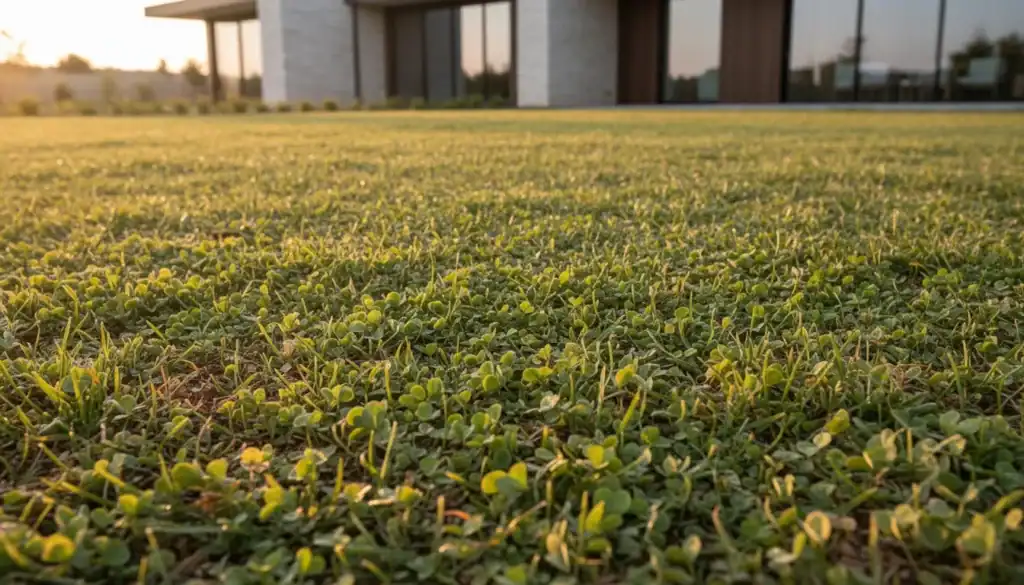
Despite its benefits, clover creates several challenges for traditional lawn aesthetics and use patterns. The most noticeable issue is texture inconsistency, clover’s broad, three-leaflet foliage creates a distinctly different appearance than fine grass blades.
Clover also attracts bees when flowering, which occurs from late spring through early fall. While beneficial for ecosystems, this becomes problematic for families with young children or bee allergies. The Pennsylvania State University Extension notes that clover flowers are particularly attractive to honeybees and bumblebees.
Seasonal dormancy presents another challenge in northern climates. White clover goes dormant and turns brown when temperatures drop below 25°F, leaving bare patches in winter lawns. This contrasts with cold-season grasses that maintain color in mild winter weather.
Other potential drawbacks include:
- Staining potential: Clover flowers can stain clothing and shoes
- Aggressive spread: Clover can overtake weak grass areas rapidly
- Foot traffic sensitivity: Heavy use areas may show wear patterns
- Neighborhood restrictions: Some HOAs prohibit clover in lawns
How Can You Control Clover Without Damaging Grass?
If you decide to remove clover from your lawn, selective broadleaf herbicides offer the most effective approach. Products containing 2,4-D, dicamba, or MCPP target clover while leaving grass unharmed. Apply these herbicides when clover is actively growing in spring or fall, with daytime temperatures between 60-80°F.
Timing is critical for effective control. The University of Georgia Extension recommends applying herbicides when clover leaves are fully expanded but before flowers appear. This typically occurs in late April through May and again in September through October.
For organic control methods, focus on strengthening grass competition:
- Overseed thin areas: Dense grass crowds out clover establishment
- Maintain proper soil pH: Most grasses prefer 6.0-7.0 pH while clover tolerates more acidic conditions
- Fertilize strategically: Apply nitrogen in spring to give grass a competitive advantage
- Hand-pulling: Remove small clover patches when soil is moist
Multiple herbicide applications are usually necessary. Plan for 2-3 treatments spaced 2-3 weeks apart for complete elimination of established clover colonies.

When Should You Keep Clover in Your Lawn?
Clover works best in specific lawn situations and management approaches. Consider keeping clover if you prioritize low-maintenance landscaping, environmental sustainability, or have challenging growing conditions.
Ideal scenarios for clover retention include:
- Large properties: Reduced mowing and fertilizing saves significant time and money
- Poor soil conditions: Clover improves soil nitrogen and organic matter over time
- Drought-prone areas: Clover maintains green color when grass goes dormant
- Low-traffic zones: Areas used primarily for visual appeal rather than recreation
- Eco-friendly goals: Supporting pollinators and reducing chemical inputs
Get a Free Personalised Lawn Plan
Answer 3 quick questions about your lawn and we'll build a custom care plan — tailored to your grass type, climate, and biggest challenges.
Build My Lawn Plan →The optimal clover percentage in mixed lawns is 10-20% coverage. This ratio provides nitrogen fixation benefits while maintaining grass dominance for texture and durability. From our experience, this balance offers the best of both worlds for most homeowners.
How Do Different Clover Types Perform in Lawns?
Not all clover varieties work equally well in lawn settings. White clover (Trifolium repens) is the most common and suitable for most lawn applications, while other types have specific characteristics that may or may not fit your needs.
| Clover Type | Height | Durability | Flowering Period | Best Use |
|---|---|---|---|---|
| White Clover | 4-8 inches | High foot traffic tolerance | May-October | Mixed lawns, play areas |
| Microclover | 2-4 inches | Moderate traffic tolerance | Limited flowering | Fine-textured lawns |
| Red Clover | 12-24 inches | Low traffic tolerance | June-September | Pastures, not lawns |
| Strawberry Clover | 6-12 inches | Very high drought tolerance | April-June | Arid western regions |
Microclover represents a newer option specifically developed for lawn use. These varieties grow 50% smaller than traditional white clover and flower less frequently. The University of Minnesota has found microclover blends well with fine fescue and requires less mowing than standard white clover.

How Do You Establish Clover in an Existing Lawn?
Adding clover to an established grass lawn requires proper timing and technique for successful integration. The best establishment period is early spring (March-May) or early fall (August-September) when soil moisture is adequate and temperatures are moderate.
Follow these steps for clover establishment:
- Test soil pH: Clover prefers 6.0-7.5 pH range for optimal growth
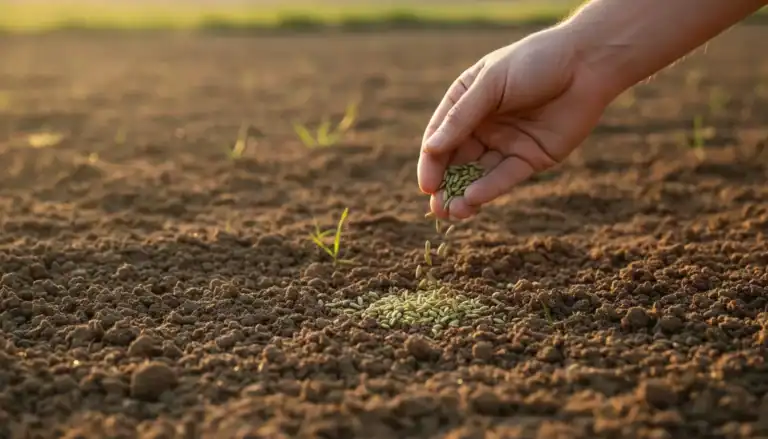
- Choose appropriate seed: Use 2-4 ounces of white clover seed per 1,000 square feet
- Prepare the surface: Rake lightly to create soil contact without damaging grass roots
- Broadcast seed: Apply evenly using a drop spreader or by hand
- Water consistently: Maintain surface moisture for 2-3 weeks until germination
Skip fertilizing with nitrogen for 6-8 weeks after seeding. High nitrogen levels can inhibit clover establishment by promoting excessive grass growth that shades out young clover seedlings.
Germination typically occurs within 7-14 days under proper conditions. Full establishment takes one growing season, with noticeable clover coverage developing by the second year.
Frequently Asked Questions
Will clover take over my entire lawn?
Clover will only dominate if grass is weak or stressed. Healthy, dense grass typically limits clover to 10-30% coverage naturally. Regular overseeding and proper fertilization maintain grass dominance while keeping beneficial clover levels.
Is clover safe for pets and children?
Yes, clover is non-toxic to pets and children. The main safety concern is bee activity around clover flowers. Mow before flowering if bee stings are a concern, or choose microclover varieties that flower less frequently.
How long does clover last in a lawn?
White clover is a perennial that can persist for 5-10 years or longer with proper conditions. Individual plants spread through stolons, creating new growth points that help colonies survive winter and drought stress.
Can I use regular lawn fertilizer on clover?
Skip high-nitrogen fertilizers as they can overwhelm clover and reduce its nitrogen-fixing ability. Use low-nitrogen, high-phosphorus fertilizers sparingly, or rely on clover’s natural nitrogen production to feed surrounding grass.
What’s the difference between clover and other lawn weeds?
Unlike typical weeds, clover improves soil fertility and provides ecological benefits. Its distinctive three-leaflet structure and white flowers make it easy to identify. Most lawn weeds compete with grass without offering comparable benefits.