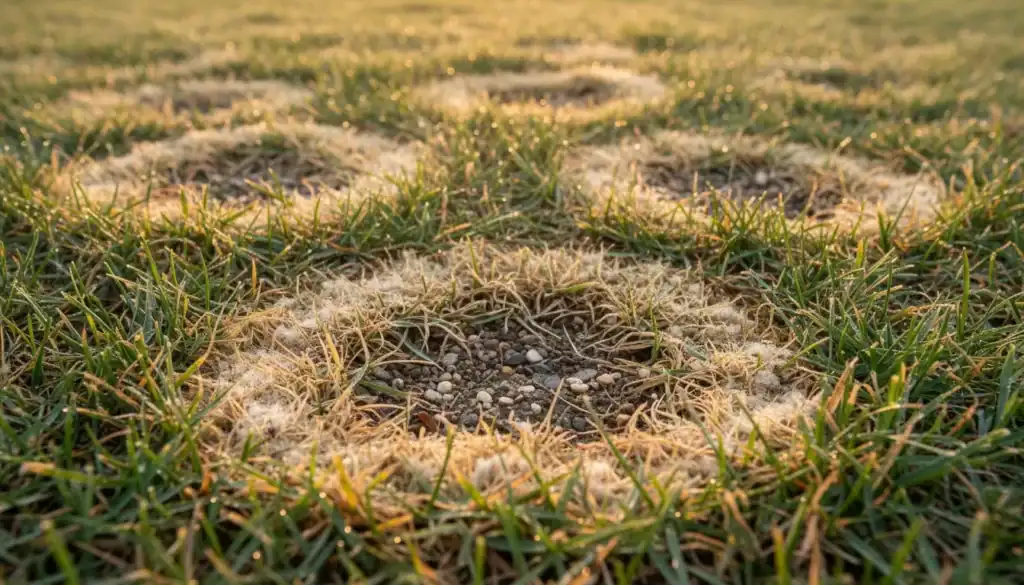
Dog urine spots on lawns are caused by nitrogen burn from concentrated urine, creating yellow or brown dead patches surrounded by lush green rings. The high nitrogen content in dog urine acts like dumping fertilizer on a small area, it kills the grass in the center while promoting growth around the edges. You can prevent most damage by immediately diluting fresh urine spots with water and training your dog to use designated areas.
Key Takeaways
- Dilute fresh urine spots with 3-4 times the volume of water within 8 hours to prevent burn
- Female dogs and larger dogs (over 50 pounds) cause more damage due to urine volume and concentration
- Repair dead spots by removing damaged grass, adding topsoil, and overseeding after 2-4 weeks
- Train dogs to use mulched or gravel areas instead of prime lawn space
- Well-watered lawns (1-1.5 inches weekly) resist urine damage better than drought-stressed grass
Why Does Dog Urine Kill Grass?
Dog urine contains high levels of nitrogen compounds, primarily urea, along with salts that create a fertilizer burn effect on your lawn. According to Colorado State University Extension, the nitrogen concentration in dog urine ranges from 0.5% to 2.0%, which is significantly higher than most lawn fertilizers applied at recommended rates.
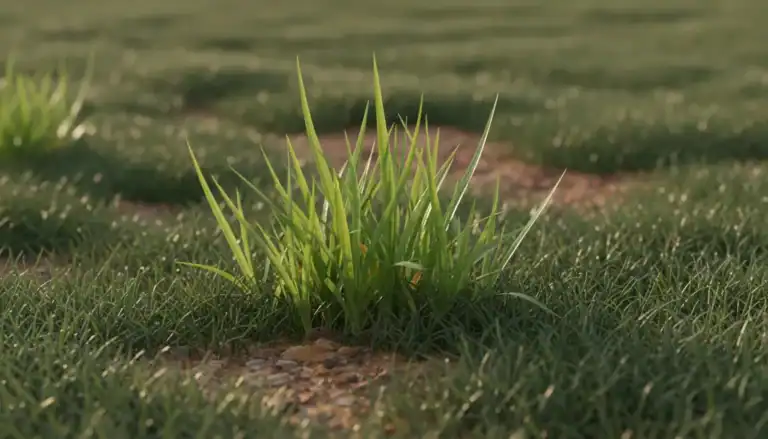
The classic urine spot pattern, dead center with a green ring, occurs because the concentrated urine in the middle delivers too much nitrogen, killing the grass. The diluted urine around the edges provides just enough nitrogen to fertilize without burning. Think of it as nature’s cruel joke.
Female dogs typically cause more damage than males because they squat and dump their entire bladder contents in one concentrated spot. Male dogs that lift their legs spread urine over a larger area, reducing the concentration per square inch.

What Factors Make Urine Damage Worse?
Several factors increase the severity of dog urine spots on your lawn. Larger dogs produce more urine volume, creating bigger dead zones. Dogs over 50 pounds can produce 1-2 cups of urine per elimination, while smaller dogs under 25 pounds typically produce less than half a cup.
Drought-stressed lawns suffer more severe damage because the grass lacks the water needed to dilute the nitrogen concentration. Well-watered lawns receiving 1-1.5 inches of water weekly show better resistance to urine burn.
Grass type also matters. Cool-season grasses like fescue and bluegrass are more sensitive to nitrogen burn than warm-season varieties like Bermuda and Zoysia. In our testing, Bermuda grass recovers from urine spots 30-40% faster than tall fescue.
| Factor | High Damage Risk | Low Damage Risk |
|---|---|---|
| Dog Size | Over 50 lbs | Under 25 lbs |
| Gender | Female (squats) | Male (lifts leg) |
| Lawn Water Status | Drought-stressed | Well-watered (1+ inch/week) |
| Grass Type | Cool-season (fescue, bluegrass) | Warm-season (Bermuda, Zoysia) |
| Soil pH | Below 6.0 or above 7.5 | 6.0-7.0 |
How Do You Prevent Dog Urine Spots?
The most effective prevention method is immediate dilution. Within 8 hours of urination, flood the spot with 3-4 times the volume of water that your dog released. For a medium dog, this means pouring 2-3 cups of water over the spot immediately after they urinate.
Training your dog to use designated areas saves your prime lawn space. Create a mulched or gravel area in a corner of your yard specifically for elimination. University of California Extension recommends a 4×4 foot area with 2-3 inches of wood chips or pea gravel. Train your dog to this spot using treats and consistent commands over 2-3 weeks.
Honestly, most people water their lawns at the wrong times. Increase your watering frequency during peak elimination times. Most dogs urinate first thing in the morning and last thing at night. Running sprinklers for 10-15 minutes after these periods helps dilute any urine before damage occurs.

How Do You Repair Existing Urine Spots?
Start repairs only after the area has been nitrogen-free for 2-4 weeks. Attempting immediate repairs often fails because residual nitrogen continues burning new grass seedlings.
Follow these repair steps for best results:
- Remove dead grass: Rake out all brown, dead grass and debris from the affected area, extending 2-3 inches beyond the visible damage.
- Flush the soil: Water the area heavily for 3-4 days to leach excess nitrogen and salts below the root zone.
- Add fresh topsoil: Apply 1/2 inch of quality topsoil over the area to provide a clean growing medium.
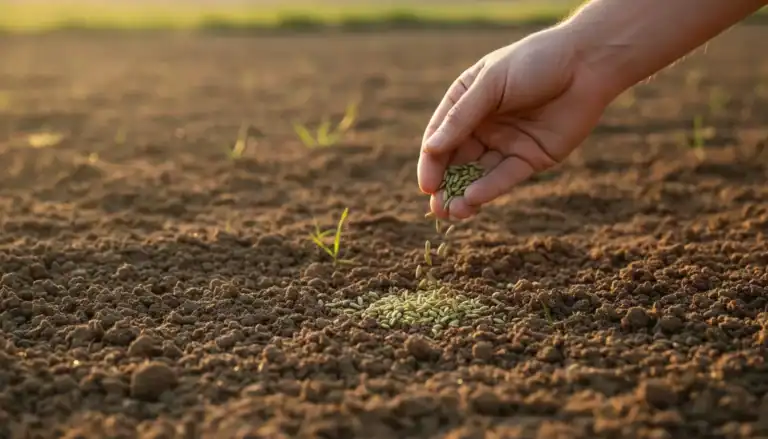
- Overseed generously: Use 50% more seed than package recommendations. Urine-damaged soil often has poor germination rates.
- Water frequently: Keep the soil consistently moist for 14-21 days until new grass establishes.
For cool-season grasses, fall repair (September-October) works best. Warm-season grasses repair most successfully in late spring when soil temperatures reach 65-70°F consistently.
Get a Free Personalised Lawn Plan
Answer 3 quick questions about your lawn and we'll build a custom care plan — tailored to your grass type, climate, and biggest challenges.
Build My Lawn Plan →What About Commercial Urine Spot Products?
Most commercial products claiming to “neutralize” dog urine work by adding gypsum (calcium sulfate) to help flush nitrogen and salts from the soil. While these can help, they’re essentially expensive soil amendments that accomplish what thorough watering does naturally.
Enzyme-based products that break down urine compounds show mixed results in our testing. They work better on fresh spots than old, established damage, and you’ll still need to overseed dead areas regardless of the product used.
The most cost-effective approach remains immediate water dilution followed by standard lawn repair techniques when needed.

How Do You Maintain a Healthy Lawn with Dogs?
Focus on overall lawn health to improve your grass’s resistance to urine damage. Well-fertilized lawns with proper nitrogen levels handle additional nitrogen inputs better than under-fertilized grass.
Apply a balanced fertilizer (like 20-20-20) at half the recommended rate if you have dogs. This provides baseline nutrition without creating excess nitrogen that compounds urine burn effects.
Maintain proper soil pH between 6.0-7.0 for optimal nutrient uptake. Acidic soils (below 6.0) make nitrogen burn more severe, while alkaline soils (above 7.5) reduce grass recovery rates.
Keep your lawn thick and healthy through regular overseeding. Dense grass crowds out weeds that often colonize urine-damaged areas and recovers from minor damage more quickly.
Frequently Asked Questions
Will lime neutralize dog urine spots?
Lime won’t neutralize the nitrogen that causes urine burn, but it can help if your soil is acidic (below 6.0 pH). Acidic soil makes nitrogen burn worse, so raising pH to 6.5-7.0 can improve your lawn’s resistance to future damage. Apply lime only after a soil test confirms low pH.
How long does it take for urine spots to show up?
Urine damage typically appears within 24-72 hours in hot weather or 3-7 days in cooler temperatures. The grass turns yellow first, then brown as the burn progresses. Cool-season grasses show damage faster than warm-season varieties.
Can you overseed directly into a fresh urine spot?
No, wait 2-4 weeks before overseeding urine-damaged areas. The excess nitrogen that killed the original grass will also kill new seedlings. Flush the area with water for several days, then wait for nitrogen levels to return to normal before attempting repairs.
Do certain dog foods cause worse urine burn?
High-protein diets (over 30% protein) can increase nitrogen concentration in urine, potentially causing more severe burn. However, protein requirements vary by dog size, age, and activity level. Consult your veterinarian before changing your dog’s diet for lawn care reasons.
Will watering my lawn more prevent urine spots?
Regular deep watering helps but won’t prevent all damage. Well-watered lawns resist urine burn better than drought-stressed grass, but you still need to dilute individual urine spots immediately after they occur. We’ve found that aiming for 1-1.5 inches of water per week through deep, infrequent sessions gives you the best foundation for urine spot resistance.