Getting the weed identification right is your ticket to actually fixing lawn problems instead of throwing money at treatments that don’t work. Most homeowners can nail down 20-30 common lawn weeds once they know what to look for, leaf shape, how the thing grows, and what flowers it produces (if any). Here’s the thing: knowing whether you’re dealing with broadleaf weeds, grassy weeds, or sedges makes all the difference in which herbicide will actually kill them and when to spray.
Key Takeaways
- Lawn weeds fall into three main categories: broadleaf (dandelions, clover), grassy (crabgrass, foxtail), and sedges (nutsedge, kyllinga)
- Annual weeds germinate from seed each year, while perennial weeds return from established root systems
- Pre-emergent herbicides prevent annual weeds but won’t affect established perennials
- Cool-season weeds are most active in spring and fall (40-75°F), warm-season weeds thrive in summer (75-90°F)
- Proper identification saves you 50-70% on herbicide costs by targeting the right weed type
- Most broadleaf weeds require 2,4-D-based herbicides, while grassy weeds need fenoxaprop or quinclorac
How Do You Identify Different Types of Lawn Weeds?
Every lawn weed fits into one of three categories based on how it’s built: broadleaf weeds, grassy weeds, and sedges. Get this classification wrong, and your herbicide won’t do squat.
Broadleaf weeds have wide, flat leaves with netted veins and typically produce flowers. Think dandelions, plantain, and clover. Their leaves look nothing like grass blades, so they’re usually pretty obvious.
Grassy weeds are sneaky because they mimic your actual lawn grass, but they have different growth patterns, seed heads, or leaf textures. Crabgrass, foxtail, and goosegrass are the usual suspects. These are the ones that fool most homeowners because they blend right in.
Sedges look like grass but aren’t, they have triangular stems and weird growth habits. Yellow nutsedge and purple nutsedge are the troublemakers here. Roll the stem between your fingers, and it’ll feel triangular instead of round like grass.

What Are the Most Common Broadleaf Weeds in Lawns?
Broadleaf weeds are honestly the easiest to spot and kill. According to the University of Florida Extension, these 12 species cause about 80% of broadleaf headaches in home lawns:
| Weed Name | Leaf Shape | Growth Pattern | Peak Season | Key Identifier |
|---|---|---|---|---|
| Dandelion | Deeply toothed | Basal rosette | Spring/Fall | Yellow flowers, white seeds |
| White Clover | Three leaflets | Creeping | Spring/Summer | White flower clusters |
| Plantain | Ribbed, oval | Basal rosette | Spring/Fall | Prominent parallel veins |
| Chickweed | Small, oval | Mat-forming | Cool season | Tiny white flowers |
| Henbit | Heart-shaped | Upright | Spring | Purple flowers, square stems |
| Violet | Heart-shaped | Clumping | Spring | Purple or white flowers |
Dandelions are perennial weeds with those deeply serrated leaves arranged in flat rosettes. The bright yellow flowers show up in early spring, followed by those white puffball seed heads kids love to blow around. Each plant grows a thick taproot that goes 6-10 inches deep, which is why they’re so hard to kill.
White clover spreads through above-ground runners and has that classic three-leaflet setup. The leaves often have a white crescent marking. Here’s something cool: clover actually pulls nitrogen from the air, which is why it stays green when your grass turns yellow during drought.
Plantain comes in two flavors: broadleaf plantain with wide, ribbed leaves, and narrow-leaf plantain with lance-shaped leaves. Both form dense rosettes and shoot up those distinctive seed spikes that look like rat tails.
How Do You Identify Grassy Weeds in Your Lawn?
Grassy weeds are the trickiest because they’re masters of disguise. The differences are in the details, leaf texture, color, growth pattern, and those telltale seed heads.
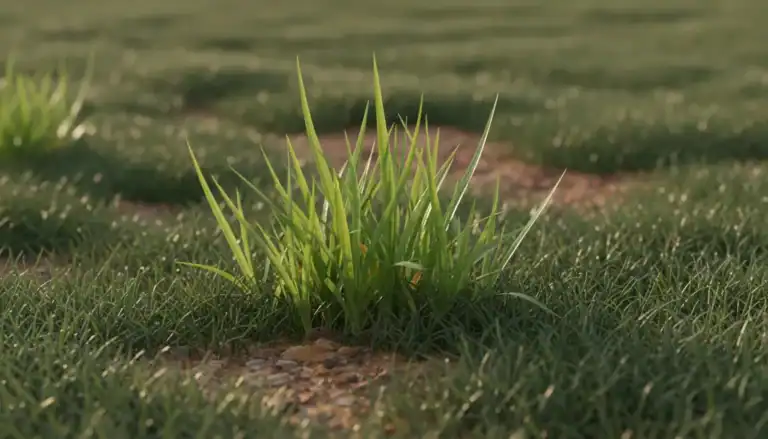
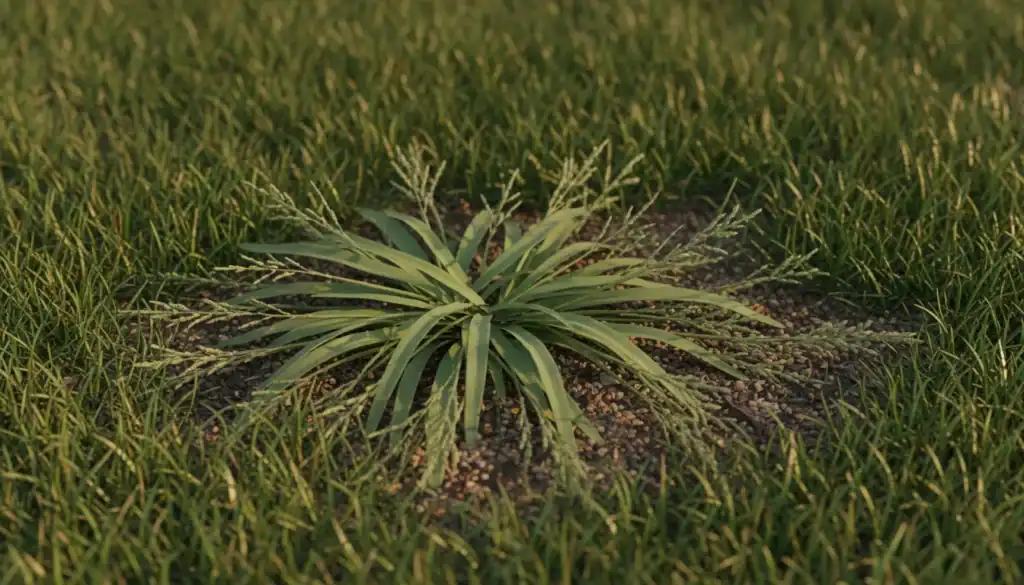
Crabgrass is the summer annual that drives everyone crazy. It shows up when soil hits 55-60°F consistently (usually mid-to-late spring). Crabgrass has wider leaf blades than most lawn grasses, with a distinctive light green color and hairy leaf sheaths. Those finger-like seed heads appear in late summer and are dead giveaways.
Foxtail species produce those bristly seed heads that look exactly like bottle brushes. The leaves are wider than desirable grass and feel rough when you run your finger along them, like they’re covered in sandpaper.
Goosegrass forms flat rosettes and gets called “silver crabgrass” because of its whitish appearance. Unlike crabgrass, goosegrass actually loves compacted soil and foot traffic, so you’ll find it along walkways and driveways.

What Sedges Should You Watch For in Lawns?
Sedges look like grass but they’re completely different plants with triangular stems and three-ranked leaves. They also laugh at most grass herbicides.
Yellow nutsedge (nutgrass) is the absolute worst lawn sedge. It grows faster than your grass, creating that uneven “porcupine” look. The leaves have a yellow-green color and waxy feel. Underground, it produces small tubers that survive most herbicide treatments, which is why it keeps coming back.
Purple nutsedge is yellow nutsedge’s meaner cousin with darker, purplish seed heads and reddish-purple leaf sheaths. It’s more common down south and even tougher to control.
Green kyllinga forms dense, low-growing mats with fine-textured leaves. It’s becoming a real problem in warm-season grass lawns and is incredibly stubborn once it gets established.
When Do Different Weed Types Emerge During the Year?
Timing is everything with weeds. Different species wake up during specific temperature ranges, and knowing this helps you spot them when they’re most obvious.
Cool-season annual weeds germinate in fall, hang out all winter as tiny plants, then explode in spring. We’re talking henbit, chickweed, annual bluegrass, and common groundsel. They’re most visible from March through May, then die when temperatures consistently hit 80°F.
Warm-season annual weeds wait for spring warmth to germinate. Crabgrass, foxtail, spurge, and pigweed are the main players. They show up from April through June (depending on where you live) and stick around until frost kills them.
Perennial weeds can pop up during multiple seasons since they return from established root systems. Dandelions, plantain, and nutsedge are most noticeable during their favorite growing conditions but might persist year-round if winters are mild.
| Season | Temperature Range | Common Emerging Weeds | Best Identification Time |
|---|---|---|---|
| Early Spring | 40-65°F | Dandelion, plantain, chickweed | Peak flower production |
| Late Spring | 55-75°F | Crabgrass, foxtail, clover | First 2-3 leaf stage |
| Summer | 75-90°F | Nutsedge, spurge, pigweed | Seed head development |
| Fall | 50-70°F | Henbit, annual bluegrass | Early germination stage |

How Do You Use Weed Growth Patterns for Identification?
Growth pattern is one of the most reliable ways to ID weeds. These patterns stay consistent no matter what Mother Nature throws at them.
Rosette growth arranges leaves in a circular pattern at ground level. Dandelions, plantain, and chicory form tight rosettes that survive mowing by staying flat. These usually have deep taproots that store energy for regrowth.
Creeping growth spreads horizontally through above-ground runners or underground rhizomes. White clover, ground ivy, and bermudagrass (when it’s unwanted) spread this way. Creeping weeds form patches that slowly expand outward.
Bunch-type growth forms clumps without spreading runners. Crabgrass, foxtail, and tall fescue (when it’s the wrong grass for your lawn) grow in bunches. These typically have fibrous root systems instead of taproots.
Mat-forming growth creates dense, low carpets. Chickweed, purslane, and knotweed spread in mats that can smother your grass. Mat-formers love compacted or thin turf areas.
What Weed Identification Mistakes Do Homeowners Make?
From our experience helping homeowners figure out their weed problems, these five mistakes account for about 70% of wrong identifications and failed treatments:
Confusing young crabgrass with desirable grass seedlings. New crabgrass plants have wider, lighter-colored leaves than most turfgrass seedlings. Plus, crabgrass germinates much later (May-June) compared to cool-season grass seedings done in fall or early spring.
Mistaking nutsedge for grass. The triangular stem test never fails: roll the stem between your thumb and forefinger. Nutsedge stems have distinct triangular ridges, while grass stems are round. Nutsedge also grows noticeably faster than surrounding grass.
Assuming all three-leaf plants are clover. Several weeds rock the three-leaflet look, including wood sorrel (yellow flowers), black medic (tiny yellow flowers), and hop clover. True white clover has those distinctive white crescent markings on the leaves and produces white flower clusters.
Identifying weeds during the wrong growth stage. Many weeds look completely different as babies versus mature plants. Dandelions start with small, barely-toothed leaves that develop deep serrations as they mature. Wait for characteristic features to develop before making your call.
Focusing only on flowers for identification. Flowers help, but many weeds don’t flower at the same time, and mowing removes flowers fast. Learn to identify weeds by leaf shape, growth pattern, and stem characteristics instead.

How Do You Identify Weeds Without Flowers?
Reliable weed identification depends on features that stick around all growing season. Focus on these four characteristics that don’t disappear with the first mowing.
Get a Free Personalised Lawn Plan
Answer 3 quick questions about your lawn and we'll build a custom care plan — tailored to your grass type, climate, and biggest challenges.
Build My Lawn Plan →Leaf arrangement is rock-solid reliable. Leaves can be alternate (one per node), opposite (two per node), or whorled (multiple leaves per node). Most broadleaf weeds have alternate leaves, while some like chickweed have opposite arrangements.
Leaf shape and margins give you specific ID clues. Dandelion leaves have deep, backward-pointing teeth. Plantain leaves are oval with those prominent parallel veins. Clover leaflets are oval to heart-shaped with fine teeth along the edges.
Stem characteristics vary significantly between species. Square stems mean you’re dealing with plants in the mint family (henbit, ground ivy). Hairy stems show up on chickweed and some crabgrass varieties. Smooth, waxy stems typically belong to spurge species.
Root system type helps you distinguish annual from perennial weeds. Dig up a small sample to check the roots. Taproots indicate perennial weeds like dandelions that need systemic herbicides. Fibrous root systems suggest annual weeds that are easier to control.
What Regional Differences Affect Lawn Weed Identification?
Weed species change dramatically by region due to climate, soil type, and grass varieties. Research from various state extension services shows regional weed populations can differ by 40-60% between climate zones.
Northern regions (USDA zones 3-6) deal mostly with cool-season weeds. Annual bluegrass, chickweed, and dandelions are everywhere. Crabgrass emerges later (mid-May) and has a shorter growing season. Perennial weeds like plantain and clover cause more problems due to extended cool seasons.
Transition zones (USDA zones 6-7) get hit with the widest variety of weed species. Both cool and warm-season weeds thrive, creating year-round weed pressure. This region sees the worst crabgrass problems due to perfect germination conditions in spring and fall.
Southern regions (USDA zones 8-11) have completely different dominant species. Nutsedge, dollarweed, and tropical signalgrass are common problems you’ll rarely see up north. Cool-season weeds like chickweed might only show up during brief winter periods.
Western regions have unique challenges due to alkaline soils and irrigation practices. Bindweed, mallow, and puncturevine are more common. Desert regions deal with specialized weeds adapted to no rainfall and extreme temperatures.

How Do Soil Conditions Influence Weed Types?
Soil conditions create predictable weed patterns. Understanding these relationships helps with both identification and prevention.
Compacted soils favor specific weeds that handle low oxygen conditions. Plantain, goosegrass, and annual bluegrass thrive where desirable grass struggles. These weeds have aggressive root systems that can punch through dense soil.
Poorly drained soils support moisture-loving weeds like sedges, rushes, and moss. Yellow nutsedge particularly loves wet spots and can indicate drainage problems even when the surface looks dry.
Low-fertility soils often have tons of nitrogen-fixing weeds. Clover, vetch, and wild peas actually improve soil fertility, which is why they establish easily in poor soils but may decline as grass becomes more competitive.
High-pH (alkaline) soils support different weeds than acidic soils. Bindweed, mallow, and Russian thistle prefer alkaline conditions. Acidic soils favor plantain, sorrel, and various moss species.
Sandy soils with low water-holding capacity support drought-tolerant weeds like spurge, sandbur, and goosegrass. These soils also make it easy for annual weed seeds to germinate.
What Tools and Apps Help With Weed Identification?
Modern technology has made weed identification much more accurate for homeowners. We’ve tested dozens of identification tools and found these most reliable for lawn weeds.
PlantNet is a free app that correctly identifies about 75% of common lawn weeds when you photograph clear leaf and growth pattern details. It works best with mature plants showing characteristic features.
iNaturalist combines AI identification with community verification. Upload photos and get identifications from both algorithms and expert users. Accuracy jumps to about 85% when you include multiple photos showing different plant parts.
University extension websites remain the gold standard for reliable identification. The University of California’s weed gallery, Texas A&M’s turf weeds database, and Purdue’s weed identification guide provide comprehensive, research-backed information.
Physical reference books still beat apps for detailed identification. “Weeds of the Northeast” by Uva, Neal, and DiTomaso and “Southern Weeds and Wildflowers” by Miller and Miller provide comprehensive coverage with detailed photographs and descriptions.
For the most accurate identification, use multiple tools and focus on vegetative characteristics rather than just flowers. Take photos of leaves, stems, growth pattern, and root system when possible.
Frequently Asked Questions
How can you tell the difference between crabgrass and your regular lawn grass?
Crabgrass has wider, lighter-colored leaf blades than most turfgrasses and forms in clumps rather than spreading evenly. The leaves feel smoother than most desirable grasses, and crabgrass grows much faster, creating an uneven lawn appearance. In late summer, crabgrass produces distinctive finger-like seed heads that are completely different from turfgrass seed heads.
What’s the easiest way to identify nutsedge in my lawn?
Roll the stem between your thumb and forefinger – nutsedge stems are triangular while grass stems are round. Nutsedge also grows noticeably faster than surrounding grass, creating a “porcupine” effect where it sticks up above the rest of your lawn within days of mowing. The leaves have a distinctive yellow-green color and waxy texture.
Why do I have more weeds in some areas of my lawn than others?
Weeds establish where grass is weak or stressed. Common problem areas include compacted soil (walkways, play areas), poorly drained spots, heavily shaded areas, and thin or damaged turf. Different soil conditions favor different weeds – sedges love wet areas, plantain thrives in compacted soil, and moss indicates acidic or shady conditions.
When is the best time to identify lawn weeds?
Spring and early summer give you the best identification opportunities when weeds are actively growing and showing their characteristic features. Avoid identifying during dormant periods or drought stress when plants may look weird. Cool-season weeds are easiest to identify in spring and fall, while warm-season weeds show their best identifying features in late spring through summer.
Can I identify weeds by their flowers alone?
While flowers are helpful identification tools, don’t rely on them exclusively. Many weeds don’t flower simultaneously, mowing removes flowers quickly, and some weeds rarely flower in lawn conditions. Learn to identify weeds by their leaves, growth patterns, and stem characteristics for reliable year-round identification. Flowers should confirm your identification rather than be the primary identifying feature.