Mushrooms growing in your lawn indicate high moisture levels and abundant organic matter in the soil. While they’re typically harmless and often beneficial to soil health, most homeowners want them gone for aesthetic reasons. The key to controlling lawn mushrooms is addressing moisture problems, improving drainage, and removing excess organic debris.
Key Takeaways
- Mushrooms thrive in moist soil with organic matter like buried wood, roots, or thatch buildup
- Most lawn mushrooms are harmless and actually improve soil by breaking down organic material
- Remove mushrooms by hand-picking before spores release (usually within 24-48 hours)
- Improve drainage and reduce watering frequency to 1-2 deep sessions per week
- Aerate compacted soil annually to improve water infiltration and reduce surface moisture
What Causes Mushrooms to Grow in Lawns?
Mushrooms appear when three conditions align: moisture, organic matter, and the right temperature range (typically 55-75°F). The fungal network (mycelium) lives underground year-round, feeding on decomposing organic material like buried wood, dead tree roots, pet waste, or thick thatch layers.
According to the University of California Extension, mushrooms most commonly emerge after periods of consistent moisture combined with warm temperatures. This explains why you’ll see more mushrooms in spring and fall, or after extended rainy periods followed by sunshine. Honestly, your lawn is just doing what nature intended, breaking down organic matter.
Common organic matter sources that fuel mushroom growth include:
- Buried construction debris or wood scraps
- Dead tree roots and stumps
- Thatch layers thicker than 0.5 inches
- Pet waste and excessive fertilizer
- Compacted soil with poor drainage

Are Lawn Mushrooms Harmful?
Most lawn mushrooms are beneficial rather than harmful. They break down organic matter, improve soil structure, and create nutrients that grass roots can absorb. The fungal networks also help grass plants communicate and share resources through mycorrhizal relationships.
However, some mushrooms can be toxic if consumed by children, pets, or wildlife. Since identifying mushroom species requires expertise, treat all lawn mushrooms as potentially dangerous if ingestion is a concern. The University of Georgia Extension recommends removing all mushrooms immediately if you have curious pets or young children.
How Do You Get Rid of Mushrooms in Your Lawn?
Remove lawn mushrooms through immediate removal and long-term environmental changes. Hand-picking works for immediate results, while addressing moisture and organic matter prevents future growth.
Immediate Removal Steps:
- Pick mushrooms by hand before they fully open and release spores (within 24-48 hours of appearance)
- Wear gloves and dispose of mushrooms in regular trash, not compost
- Mow over small mushrooms with a bagging mower to collect debris
- Apply a light nitrogen fertilizer (0.5-1 pound per 1,000 sq ft) to speed organic matter decomposition
Long-term Prevention:
- Improve soil drainage by core aerating annually in spring or fall
- Reduce watering frequency to 1-2 deep sessions per week instead of daily light watering
- Dethatch lawns when thatch layer exceeds 0.5 inches thick
- Remove buried wood debris, dead roots, and construction materials
- Ensure proper grading to prevent water pooling

What Are Fairy Rings and How Do You Treat Them?
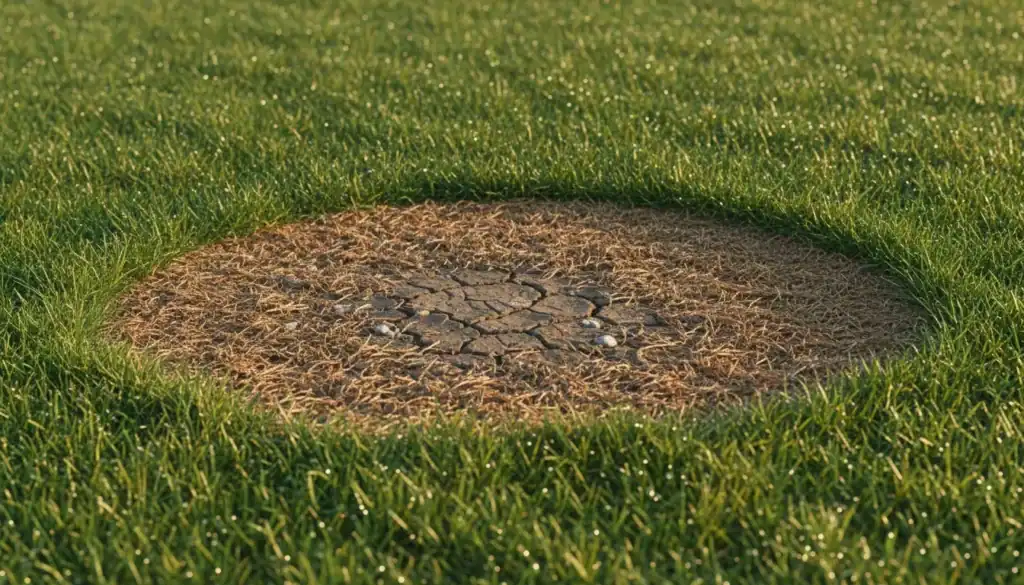
Fairy rings are circular patterns of mushrooms, dark green grass, or dead grass caused by specific fungi that grow outward from a central point. These rings can range from 3 feet to over 50 feet in diameter and expand 6-24 inches annually. From our experience, fairy rings are some of the most stubborn lawn problems you’ll encounter.
The Iowa State University Extension identifies three types of fairy rings:
| Type | Symptoms | Difficulty to Control |
|---|---|---|
| Type 1 | Dead grass ring with mushrooms | Most difficult |
| Type 2 | Dark green grass ring, no dead areas | Moderate |
| Type 3 | Mushrooms only, no grass effects | Easiest |
Treat fairy rings by improving water penetration through the hydrophobic soil the fungi create. Core aerate the ring area 4-6 inches deep, apply a wetting agent according to package directions, and water deeply to restore normal soil moisture patterns. We’ve found that patience is key here, fairy rings can take multiple seasons to fully resolve.
When Should You Apply Fungicide for Mushrooms?
Fungicides are rarely necessary or effective for controlling lawn mushrooms. Most fungicides target plant diseases, not the saprophytic fungi that produce mushrooms. The University of Minnesota Extension notes that fungicides don’t address the underlying organic matter and moisture conditions that create mushroom problems.
Get a Free Personalised Lawn Plan
Answer 3 quick questions about your lawn and we'll build a custom care plan — tailored to your grass type, climate, and biggest challenges.
Build My Lawn Plan →Skip fungicide treatments and focus on cultural controls instead. In our testing, homeowners who rely on fungicides often see mushrooms return within weeks because the root causes remain unchanged. You’re basically throwing money at the wrong problem.

How Can You Prevent Future Mushroom Growth?
Prevention focuses on managing moisture and organic matter levels in your soil. Proper lawn care practices naturally discourage mushroom formation while maintaining healthy grass.
Moisture Management:
- Water deeply 1-2 times per week rather than daily light watering
- Water early morning (6-10 AM) to reduce prolonged surface moisture
- Improve drainage with annual core aeration
- Install drainage systems in chronically wet areas
Organic Matter Control:
- Maintain thatch levels below 0.5 inches through annual dethatching
- Remove fallen leaves promptly in fall
- Clean up pet waste immediately
- Avoid over-fertilizing with organic materials
Lawn Health Practices:
- Maintain proper mowing height for your grass type (never remove more than 1/3 of blade length)
- Overseed thin areas to increase grass density
- Apply balanced fertilizer 2-4 times per growing season
- Test soil pH annually and adjust to 6.0-7.0 range for most grasses
Common Mushroom Types in Lawns
Several mushroom species commonly appear in lawns, each indicating different soil conditions. Identifying the type can help you understand what’s happening in your soil. Most homeowners don’t need to become mushroom experts, but knowing the basics helps.
| Mushroom Type | Appearance | Indicates |
|---|---|---|
| Puffballs | Round, white, golf ball-sized | Rich organic matter, good moisture |
| Honey Mushrooms | Clumped, tan caps with dark stems | Dead tree roots or buried wood |
| Inky Caps | White caps that turn black and dissolve | Rich soil with buried organic matter |
| Fairy Ring Mushrooms | Small brown caps in circular patterns | Mature fungal networks, hydrophobic soil |

Frequently Asked Questions
Will mushrooms hurt my grass?
Most mushrooms don’t harm grass and may actually help by breaking down organic matter and improving soil structure. However, fairy ring fungi can create hydrophobic soil conditions that prevent water from reaching grass roots, causing brown rings of dead grass.
Should I remove mushrooms before mowing?
Yes, pick mushrooms by hand before mowing to prevent spreading spores across your lawn. If there are too many to pick individually, use a bagging mower and dispose of clippings in regular trash rather than composting them.
Do mushrooms mean my soil is too wet?
Mushrooms typically indicate adequate to high moisture levels combined with organic matter, but not necessarily waterlogged soil. They often appear after rain followed by warm weather, which creates ideal conditions for fruiting. Improve drainage if you notice persistent moisture or standing water.
Can I eat mushrooms growing in my lawn?
Never eat mushrooms from your lawn unless you’re an expert at mushroom identification. Many edible species have toxic look-alikes, and lawn mushrooms may have absorbed chemicals from fertilizers or treatments. Always treat lawn mushrooms as potentially poisonous.
How long do mushrooms last in lawns?
Individual mushrooms typically last 3-7 days before decomposing naturally. However, the underground fungal network remains active and may produce new mushrooms whenever conditions are favorable, especially during spring and fall or after periods of rain and warm weather.