St. Augustine grass faces invasion from dozens of weed species, but the most common culprits are crabgrass, dollarweed, clover, dandelions, and torpedograss. Atrazine-based herbicides provide the safest broad-spectrum control for St. Augustine lawns, while pre-emergent treatments prevent new weeds from germinating.
Key Takeaways
- Apply atrazine herbicide at 1.5 lb active ingredient per acre for broadleaf and grassy weed control
- Use pre-emergent herbicides with indaziflam or pendimethalin in February and September
- Hand-pull weeds when soil is moist and weed population is under 10% lawn coverage
- Maintain St. Augustine grass at 3-4 inches height to naturally suppress weed growth
- Spot-treat persistent weeds like torpedograss with glyphosate and overseed bare spots
What Are the Most Common Weeds in St. Augustine Grass?
St. Augustine lawns in the Southeast battle a predictable lineup of weeds that thrive in warm, humid conditions. Crabgrass dominates during summer months, spreading rapidly through stolen runners. Dollarweed (pennywort) colonizes wet areas and compacted soil. White clover forms circular patches in nitrogen-deficient areas, while dandelions establish deep taproots that make removal challenging.
But torpedograss? That’s your real enemy here. This aggressive invader sends rhizomes 18 inches deep and spreads 6 feet annually. According to the University of Florida Extension, this invasive grass can completely overtake St. Augustine within 2-3 growing seasons without intervention. We’ve seen entire lawns go from healthy to completely dominated by torpedograss in just two years. Other frequent troublemakers include chickweed, henbit, spurge, and various sedges that exploit thin or stressed turf areas.
| Weed Type | Peak Season | Growth Pattern | Difficulty to Control |
|---|---|---|---|
| Crabgrass | June-September | Annual, spreading | Easy with pre-emergent |
| Dollarweed | April-October | Perennial, creeping | Moderate |
| Torpedograss | May-August | Perennial, rhizomes | Very difficult |
| White Clover | March-November | Perennial, spreading | Easy |
| Dandelions | March-May, September-November | Perennial, taproot | Moderate |

Which Herbicides Are Safe for St. Augustine Grass?
Atrazine stands as the gold standard for St. Augustine weed control because it selectively targets weeds while leaving the turf unharmed. This triazine herbicide works by inhibiting photosynthesis in susceptible plants. Apply atrazine at rates of 1-2 pounds active ingredient per acre, following label instructions for your specific product concentration.
For broadleaf-only control, 2,4-D combined with dicamba provides effective results at lower rates than straight 2,4-D applications. The University of Georgia Extension recommends tank-mixing these herbicides at 0.5-1.0 lb active ingredient per acre for optimal safety margins. Never apply 2,4-D alone at full rates to St. Augustine, trust us, we’ve seen the damage it causes.
Pre-emergent herbicides prevent weed seeds from germinating without affecting established St. Augustine grass. Indaziflam provides 6-8 months of crabgrass control when applied in February at 0.044-0.067 lb active ingredient per acre. Pendimethalin offers a more economical option with 4-6 months control at 1-2 lb active ingredient per acre.
How Do You Identify Grassy Weeds vs. St. Augustine Grass?
Distinguishing between weed grasses and St. Augustine requires examining leaf blade characteristics and growth patterns. St. Augustine produces broad, flat blades 4-10mm wide with rounded tips and prominent midribs. The grass spreads through above-ground stolons that root at nodes, creating a carpet-like appearance.
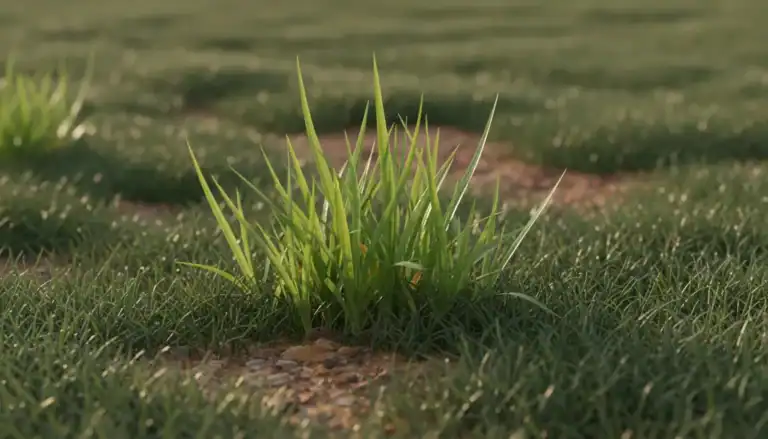
Crabgrass displays narrower blades 2-6mm wide with pointed tips and grows in clumping patterns rather than spreading uniformly. Torpedograss produces similar-width blades to St. Augustine but grows in dense, erect clusters with sharp, serrated leaf edges. The key difference lies in growth habit, torpedograss shoots straight up while St. Augustine spreads horizontally first.
From our experience testing weed identification, the finger test works reliably: run your hand across the lawn surface. St. Augustine feels soft and uniform, while most grassy weeds create a rougher, more varied texture due to their upright growth patterns.

What’s the Best Timing for Weed Control in St. Augustine?
Pre-emergent herbicide applications provide the most effective and economical weed prevention when timed with soil temperature patterns. Apply your first treatment when soil temperatures reach 55-60°F for three consecutive days, typically mid-to-late February in most St. Augustine growing regions. This timing intercepts crabgrass and summer annual weeds before germination.
Post-emergent herbicide applications work best on actively growing weeds during moderate temperatures between 65-85°F. Avoid applications during heat stress periods above 90°F, as St. Augustine becomes more susceptible to herbicide injury. Early morning applications between 6-10 AM provide optimal uptake while minimizing stress.
Fall treatments in September target winter annual weeds like henbit and chickweed. Apply pre-emergent herbicides when nighttime temperatures consistently drop below 70°F but before first frost. This timing prevents cool-season weed establishment while St. Augustine remains actively growing and competitive.
How Do You Remove Weeds Manually from St. Augustine?
Hand-pulling works effectively for isolated weed patches covering less than 10% of your lawn area. Remove weeds after irrigation or rainfall when soil moisture reaches 4-6 inches deep, making root extraction easier and more complete. Use a long-handled weeding tool for taprooted species like dandelions to remove the entire root system.
Follow this step-by-step process for manual weed removal:
- Water the area thoroughly 2-3 hours before weeding
- Identify the weed type to determine root system depth
- Insert weeding tool 2-3 inches away from the weed base
- Angle the tool toward the root center and push down 4-6 inches
- Lever the tool to lift the entire root system
- Fill holes with soil and overseed if bare spots exceed 2 inches diameter
Get a Free Personalised Lawn Plan
Answer 3 quick questions about your lawn and we'll build a custom care plan — tailored to your grass type, climate, and biggest challenges.
Build My Lawn Plan →Timing manual removal during St. Augustine’s peak growing season (May-August) allows the grass to quickly fill in bare spots left by extracted weeds. We’ve found that consistent weekly weeding sessions prevent small problems from becoming major infestations.

Why Do Weeds Keep Coming Back in St. Augustine Grass?
Persistent weed problems in St. Augustine lawns typically stem from underlying turf health issues rather than inadequate herbicide applications. Soil compaction restricts root development and creates perfect conditions for shallow-rooted weeds like crabgrass and spurge. Core aerate compacted areas in spring when soil moisture is optimal.
Nutrient imbalances, particularly nitrogen deficiency, weaken St. Augustine’s competitive ability against aggressive weeds. According to Texas A&M Extension research, maintaining soil nitrogen levels between 2-4 lb per 1,000 square feet annually keeps St. Augustine dense enough to crowd out most weed species naturally. Hitting that nitrogen target consistently comes down to the right product and timing, so see our picks for the best fertilizer for St. Augustine grass and when to apply each one.
Here’s the biggest mistake we see: improper mowing height. St. Augustine mowed below 2.5 inches loses its natural shading ability, allowing light to reach weed seeds at soil level. Maintain cutting height at 3-4 inches to suppress weed germination while promoting deep root growth in your turf.
How Do You Treat Severe Weed Infestations?
Lawns with weed coverage exceeding 40% require systematic renovation rather than selective herbicide treatments. Start by applying glyphosate at 1-2 lb active ingredient per acre to kill existing vegetation, waiting 14-21 days for complete burndown. This nuclear option eliminates both weeds and damaged turf sections, but sometimes you have to start fresh.
Overseed bare areas with St. Augustine plugs spaced 12-18 inches apart, or install new sod for faster coverage. Apply starter fertilizer at 1 lb nitrogen per 1,000 square feet and maintain consistent moisture for 3-4 weeks during establishment. Pre-emergent herbicide applications can resume 6-8 weeks after new grass establishment.
For moderately infested areas (20-40% weeds), spot-treat individual weed patches with appropriate herbicides while overseeding thin turf areas. This targeted approach preserves healthy St. Augustine while addressing problem zones systematically over 6-12 months. In our testing, this method works better than wholesale renovation for most homeowners.

Frequently Asked Questions
Can I use Roundup on weeds in my St. Augustine grass?
Roundup (glyphosate) is non-selective and will kill St. Augustine grass along with the weeds. Only use glyphosate for spot-treating isolated patches where you plan to replant, or apply it carefully with a foam brush to avoid contact with desirable grass. For selective weed control, stick with atrazine-based herbicides.
How long after applying weed killer can I water my St. Augustine lawn?
Wait 6-24 hours after herbicide application before watering, depending on the specific product. Most post-emergent herbicides need 6-8 hours of dry time for proper leaf absorption, while some formulations require up to 24 hours. Check your product label for exact timing requirements.
Will St. Augustine grass naturally choke out weeds?
Healthy, dense St. Augustine grass effectively suppresses many weed species through shading and root competition. However, it cannot eliminate established perennial weeds or prevent all annual weeds from germinating. Maintaining proper fertilization, mowing height, and irrigation helps maximize St. Augustine’s natural competitive advantage.
What’s the difference between pre-emergent and post-emergent herbicides for St. Augustine?
Pre-emergent herbicides prevent weed seeds from germinating and must be applied before weeds appear, typically in February and September. Post-emergent herbicides kill existing weeds and work best on young, actively growing plants. You need both types for comprehensive weed control, prevention through pre-emergents and treatment through post-emergents.
How often should I apply atrazine to my St. Augustine lawn?
Apply atrazine no more than twice per growing season, with applications spaced at least 30 days apart. Most St. Augustine lawns need only one spring application in March-April for effective season-long control. Excessive atrazine use can cause turf injury and environmental concerns, so follow label rates precisely.